22.01.2026.Untouchability News.(News of Dalits,Adivasi,atrocity,buddhist,Dr Ambedkar,Employement,Education news details from various sources)by Sivaji.Ayyayiram UTNews.9444917060.
Get link
Facebook
X
Pinterest
Email
Other Apps
Buddha's peepal leaf.
🎨🎨🎨🎨
*_🌹Quote for the youth🌹_*(many elderly people learnt to find fault on others)
"🍃✨When you look for the good in others, you discover the best in yourself."
*_"🧚♀️⚡When you look for the good in others, you discover the best in yourself.⚡🧚♀️"_*
🥁The qualities we actively seek and appreciate in others simultaneously awaken and strengthen those same virtues within our own being. When we make the conscious choice to look for kindness, courage, wisdom, or compassion in the people around us, we're not just being positive observers—we're actually training our minds to recognize and value these qualities, which naturally cultivates them in our own character.
🎨🎨🎨
🥁Our perception shapes our reality; by focusing on virtue, we become more virtuous. By seeking out the light in others, we illuminate the light within ourselves.
🎨🎨🎨
⚡⚡
⇨
*_✨🌹See Positive Qualities in Everyone🍃_*
➖➖➖➖➖➖➖➖➖➖➖
💥🍃Actively seeking "virtues" and "positive qualities" in every person we meet creates a profound shift in our consciousness that elevates both our daily experiences and our sangha journey. We begin to LEARN from everyone. This practice transforms us from critics to appreciators, teaching us 𝐭𝐨 𝐥𝐨𝐨𝐤 𝐛𝐞𝐲𝐨𝐧𝐝 𝐬𝐮𝐫𝐟𝐚𝐜𝐞 𝐛𝐞𝐡𝐚𝐯𝐢𝐨𝐫𝐬 and perceived flaws to discover the inherent goodness that exists within each soul. We finally see the truth that every soul is 𝐮𝐧𝐢𝐪𝐮𝐞, 𝐛𝐞𝐚𝐮𝐭𝐢𝐟𝐮𝐥, 𝐚𝐧𝐝 𝐢𝐦𝐩𝐨𝐫𝐭𝐚𝐧𝐭. We fall in love with everyone deeply and truly.
🍃💥When we consciously search for positive qualities—we see courage, gentleness, determination, or unique wisdom, and we begin to understand that every person carries divine gifts—expressed differently in beautiful ways. When we train our mind to notice goodness—𝐤𝐢𝐧𝐝𝐧𝐞𝐬𝐬 behind someone’s bluntness, 𝐝𝐞𝐝𝐢𝐜𝐚𝐭𝐢𝐨𝐧 behind someone’s quietness, or 𝐜𝐨𝐮𝐫𝐚𝐠𝐞 behind someone’s mistakes—we become less judgmental and more fair-minded.
This practice serves as one of the most powerful tools for 𝐞𝐱𝐩𝐚𝐧𝐝𝐢𝐧𝐠 𝐜𝐨𝐧𝐬𝐜𝐢𝐨𝐮𝐬𝐧𝐞𝐬𝐬 𝐚𝐧𝐝 𝐚𝐜𝐜𝐞𝐥𝐞𝐫𝐚𝐭𝐢𝐧𝐠 𝐩𝐞𝐫𝐬𝐨𝐧𝐚𝐥 𝐠𝐫𝐨𝐰𝐭𝐡. When we appreciate qualities in others, we are actually "awakening" those same potentials & virtues within ourselves. This recognition dissolves the ego's need to feel superior or separate, revealing the fundamental truth of our "interconnectedness", "oneness", and "shared divinity". Each person becomes a 𝐭𝐞𝐚𝐜𝐡𝐞𝐫, offering lessons in different expressions of 𝐥𝐨𝐯𝐞, 𝐬𝐭𝐫𝐞𝐧𝐠𝐭𝐡, 𝐜𝐫𝐞𝐚𝐭𝐢𝐯𝐢𝐭𝐲, 𝐚𝐧𝐝 𝐰𝐢𝐬𝐝𝐨𝐦 that we can integrate into our own 𝐞𝐯𝐨𝐥𝐮𝐭𝐢𝐨𝐧. By consistently choosing to see the "light" in others, especially those who challenge us, we develop what mystics call "Buddha consciousness" or Dhamma consciousness" or "Buddha nature"—the ability to perceive the sacred essence beneath all appearances.
⚡⚡⚡
Sister Chandra and how Parai Attam announced the coming of Dalit women Sakthi to the world
"I was rejected by village folk artistes as they didn’t believe a woman was strong enough to carry a parai and perform," Sister Chandra remembered.
It was the best of times, it was the worst of times for Dalit women to start performing Parai Attam, a traditional art form historically performed by Dalit men during funerals.
Sister Chandra, the woman behind this quiet cultural revolution, had been doing community service in Dindigul when she noticed how poorly paid the men performing Parai Attam were.
“I felt that people were not respecting the art or the artiste because of their social status,” she recalled.
Sister Chandra also sensed the quick shift of the villagers’ interest from folk arts to community TV. “Each village has different art forms which they used to perform during festivals, but when people started enjoying television, art forms started dying,” she went on.
Determined to revive the art form, Sister Chandra decided to form a troupe of her own. But being a woman, she had to also fight many gendered stereotypes around the art form, which was considered exclusively the domain of Dalit men.
“I was rejected by village folk artistes as they didn’t believe a woman was strong enough to carry a parai and perform,” she remembered.
At last, seeing her persistence, traditional village folk artiste Guru Ramadass taught her Parai Attam. Soon, Sister Felci and a group of village women joined, becoming the first batch of what would eventually be known as the Sakthi group.
Now, Sister Felci has taken charge of it. As public perceptions changed, Sakthi’s popularity grew significantly. It began teaching more than 20 art forms including Parai Attam, Oyil Attam, and Silambam.
Along with an offline batch of 20 students, two batches of online art classes were also introduced. They perform in and around several districts of Tamil Nadu and have also made their mark on the international stage. Sakthi is now flourishing.
‘Finally, you are making our girls take up Parai?’
In ancient Tamil society, parai, a hollow drum made out of a wooden frame and cow skin, was used as a percussion instrument to gather people and make announcements. Over time, it evolved into an art form predominantly performed by Dalit men.
In the beginning, the idea of women performing Parai Attam was alarming to a society fed with stereotypical narratives on the art form. Concerned about their social status and perpetuating caste stereotypes, families strongly opposed the participation of their daughters.
Parai artistes did not want their daughters to take up the art form as they believed their children would be discriminated against for their social status.
“Initially, parents resisted sending their daughters to learn Parai Attam,” Sister Felci reminisced. They were met with questions filled with disbelief and anxiety such as ‘How can you make our girls take up Parai?’
Yet, against all odds, the team’s first performance became both a personal victory for Sister Chandra and a cultural milestone.
“After that, we were invited to several villages to perform,” she said.
Sakthi went on to become one of the earliest all-women Parai Attam troupes in Tamil Nadu. Sister Chandra and Sister Felci, driven by their mission to empower Dalits and women, were posted in Dindigul by their congregation, the Missionary Sisters of the Immaculate Heart of Mary, ICM.
Every year, a new batch of twenty students joined Sister Chandra’s year-long residential course to learn various folk art forms such as Parai Attam, Oyil Attam, and Karagattam. The mix included young women who were school dropouts.
“We encourage school dropouts to finish their studies and enroll in college. Some of them later became folk dance teachers in nearby village schools,” said Sister Chandra.
Martial arts such as silambam and taekwondo are also taught by Sakthi.
“This is a life-oriented program as women are also taught vocational skills such as tailoring, besides sex education and other lessons,” she said.
Performances with social messages
Rather than performing solely for entertainment, Sakthi’s programs are society-oriented. To spark a social dialogue and make society rethink its assumptions became the group’s goal. Sister Chandra believes that the dialogue initiated after performances has brought changes in society.
She proudly spoke about how turning Parai Attam into an inclusive art form is part of such a change. “Now, women from non-Dalit communities also train for Parai Attam with the Sakthi group, which shows acceptance and how people are willing to challenge stereotypes,” she said.
Sakthi’s unique style of incorporating social messages with performances made the team stand out.
“Our performances raise awareness about social issues such as women empowerment, communal harmony, sexual harassment, caste, globalisation and unemployment,” said Sister Chandra.
The importance of developing a reading habit is a recurring theme expressed by the team whenever it is invited for book launches and similar events.
To instill confidence and capability among young talents, Sister Chandra believed that the group should be involved in choreographing, decision-making and every other aspect of their performance. This let the girls feel empowered by occupying spaces which were dominated by men, she said.
‘To build a better humanity, we have to break the chains of oppression’ is Sakthi’s motto. The group’s name reflects its goal of holding on to the female ‘energy’ and empowering women by creating a space exclusive to them.
As recently as the early 2000s, women across different states were excluded from performing certain folk art forms. “For example, in Kerala, women were not allowed to perform chenda melam, an art form that involved drums. This trend is slowly changing nowadays,” said Sister Chandra.
The logo of Sakthi depicts one foot of a performer bound by a chain, signifying the historical oppression, and the other foot adorned with an anklet, representing resilience and the struggle to break free from marginalisation.
Taking Parai attam to the world
The team of performers has kept changing over the years as many women dropped out after marriage and childbirth. However, that didn’t stop Sakthi from carrying forward its mission. The group has put together more than 2,700 programmes since its inception, garnering national and international attention.
A major breakthrough came in 2012 when it performed at the World Tamil Conference in the United States, marking the art form’s entry into the Western world.
Members of the Tamil diaspora were deeply impressed and began establishing schools to teach Tamil folk arts in the US. The Sakthi group played a crucial role in this effort by providing books and syllabi.
The year 2000 marked their first international performance in South Africa. A conference on the topic of racism was their stage. Later in 2005, the team was invited to South Korea for a gathering of musicians across the globe, with Sakthi representing India. Such performances boosted the popularity of parai as an art form in the international realm.
Sister Chandra received an award from the Japanese government in 2008 for using folk art to revolutionise society. At her insistence, the whole group went to receive the award. The team also stayed in Japan in 2009 to teach and perform Parai Attam to students of Japanese schools and colleges.
Sister Chandra says that the journey of Sakthi is a testimony to how society is becoming more accepting of women in folk art forms. The parai’s transformation into an instrument of caste liberation has led to a growing interest in this art form, promising a future where generations will continue to move to its powerful beats and rhythms, she adds with quiet confidence.
Elsa Sunny
Courtesy : TNIE
2Dalit Youth Murder Sparks Outrage in UP, Heavy Police Force Deployed, Highway Blocked
Bareilly: A tragic and shocking incident has come to light in Bareilly district of Uttar Pradesh. Rahul Sagar, a 26-year-old Dalit youth from Dohra village in the Baradari police station area, was brutally beaten to death by a group of men. After battling for his life in the hospital for a week, Rahul succumbed to his injuries during treatment. As soon as the news of the youth's death spread in the village and surrounding areas, widespread anger erupted.
Following Rahul’s death, his family members and villagers blocked the highway by placing his body in front of the post-mortem house. The protesters leveled serious allegations against the police and demanded justice. A heavy police force has been deployed at the spot, and officials are trying to pacify the people.
Attack over borrowed money
The family members allege that the incident took place on January 14. Rahul’s father, Pappu, said that Rahul had left home with Rs 30,000 to pay his brother-in-law’s hospital bill. On the way, he went to meet a man named Bhima with his two friends, Lalu and Sachin. Bhima owed Rahul Rs 20,000, which Rahul had been asking for for a long time.
When Rahul asked for the money back, Bhima got angry. Bhima then called his accomplices, Lucky Labheda and Akash Thakur. The three of them surrounded Rahul near Kashiram Park and started brutally beating him with sticks and rods. Rahul was beaten until he fell unconscious.
During the attack, the accused also snatched Rs 30,000 and his mobile phone from Rahul. Rahul’s friends tried to intervene, but the accused threatened to kill them as well. Somehow, Rahul was taken from there and admitted first to Abhiram Hospital and then to Narayan Hospital.
Death during treatment, questions raised about the police
Rahul’s condition was extremely critical. Doctors tried their best to save him, but he died after about a week. Rahul’s family is completely devastated after his death. His relatives allege that the police did not immediately arrest the accused after the incident. They claim that while Rahul was hospitalized, the police were trying to hush up the matter and pressure them into a compromise.
Due to this anger, the enraged family members and villagers blocked the highway. The protesters are demanding that all the accused be arrested immediately and that action be taken against the police officers who were negligent. The people say that the protest will continue until they are assured of justice.
A father’s protective shadow has been lifted from the innocent children.
Rahul earned a living by working as a laborer to support his family. With his death, there is no one left to earn a living for the family. He leaves behind his wife Shivani and three young children. The youngest child is just 15 days old. The elder son, Aryan, is four years old, and the other son, Dev, is two and a half years old. These innocent children do not even understand that their father will never return.
There is an atmosphere of mourning throughout the village. Every eye is teary, and everyone is asking the same question: when will this poor and Dalit family get justice? The villagers have demanded that the administration give the strictest possible punishment to the culprits.
Courtesy: Hindi News
3
Dalit man refuses to hand over sunglasses, beaten with sticks in Gujarat’Patan district
Ahmedabad: A 26-year-old Dalit labourer was allegedly assaulted and abused with caste slurs in Piparala village of Santalpur taluka in Patan district after he refused to lend his sunglasses to a villager, police said on Wednesday. A complaint was filed late on Tuesday with Santalpur police.
The complainant, Tulsi Solanki, a resident of Piparala village, told police that he was standing near the Hanuman temple in the village around 7pm, when the accused individual, Devshi Koli, approached him. Koli allegedly asked Solanki to take off his sunglasses and give it to him. When Solanki refused, the accused allegedly started abusing him and hurled caste abuses, leading to a brief argument, after which Solanki returned home.
About 30 minutes later, Devshi Koli allegedly returned to Solanki’s house along with Bhikhu Koli on a motorcycle. The duo allegedly hurled caste-based abuses and questioned Solanki for not giving the sunglasses. When Solanki, along with his parents, Vela and Demaben, came out and asked them to stop abusing, a third accused, Mandan Koli, allegedly arrived on another motorcycle carrying a wooden stick.
The complaint states that Mandan allegedly struck Solanki on his left shoulder with the stick, causing him to fall. He then allegedly hit Solanki again on his left leg below the knee. When Solanki’s father tried to intervene, Bhikhu allegedly pushed him to the ground. The accused allegedly continued to beat Solanki with fists and kicks and threatened to kill him with dire consequences.
Hearing the commotion, villagers gathered at the spot, following which the three accused fled on their motorcycles. Solanki said he suffered severe pain and dialled the 108 emergency service. He was first taken to Santalpur govt hospital, where he was given preliminary treatment, and was later referred to Dharpur hospital for further care.
Based on the complaint, Santalpur police registered a case against the three accused under sections of the Bharatiya Nyaya Sanhita and relevant provisions of the Scheduled Castes and Scheduled Tribes (Prevention of Atrocities) Act.
Courtesy : TOI
4
Rs 269.9 cr sops released for Dalit, tribal entrepreneurs
Vijayawada: The state government released the second tranche of industrial incentives to support Dalit and tribal entrepreneurs, minister for micro, small and medium enterprises (MSME) Kondapalli Srinivas said on Wednesday.
The minister said in a statement that during the current financial year so far, the government has extended industrial incentives amounting to Rs 269.90 crore to 11,451 Dalit and tribal entrepreneurs as part of its commitment to promote inclusive industrial growth.
Acting on the directions of Chief Minister N Chandrababu Naidu, the government has taken these steps to further strengthen and expand entrepreneurship among Scheduled Castes (SCs) and Scheduled Tribes (STs), he added.
The minister said that in the 2025–26 financial year, industrial incentives for Dalit and tribal entrepreneurs were being released in two phases. In the first phase, released in October 2025, the government had disbursed Rs 178.75 crore to 6,675 SC entrepreneurs and Rs 30.94 crore to 1,159 ST entrepreneurs.
In line with the assurances given by the coalition government and to cover all approved industrial units, additional funds have now been released in the second phase, subject to budget availability, he said. Under this tranche, on Tuesday, incentives worth Rs 53.05 crore were released to 3,122 SC entrepreneurs, while Rs 7.16 crore was disbursed to 495 ST entrepreneurs.
With this, during the 2025–26 financial year so far, a total of Rs 231.80 crore has been released to 9,797 SC entrepreneurs across two phases, and Rs 38.10 crore to 1,654 ST entrepreneurs, the Minister explained.
Despite facing several fiscal constraints, the State government has adopted a phased approach to clear pending incentive payments, demonstrating its firm commitment to addressing the financial challenges faced by SC and ST entrepreneurs, Srinivas said.
He noted that these incentives would significantly help beneficiary units meet their immediate operational requirements and support their long-term growth objectives, reinforcing the government’s resolve to empower Dalit and tribal entrepreneurs and bring them into the mainstream of industrial development.
Courtesy : THI
Man Accused In Five Murder Cases Gets Life Term For Killing Dalit Woman In Gurugram
A man was sentenced to life by Gurugram court for kidnapping and killing a Dalit woman in 2021. He confessed to other murders. Key evidence included his recorded confession.
Police said the accused was working as a security guard at a private hospital in Sector 16 in 2021 when he molested a Dalit woman. (Canva)
A Gurugram court has sentenced a man, accused in five murder cases, to life imprisonment for the kidnapping and killing of a 20-year-old dalit woman in December 2021. The court found him guilty in the case and awarded the sentence after completion of the trial.
According to Rekha JS Jangra, deputy district attorney, after the convict Singh Raj was arrested for the murder of the woman on January 7, 2022, he confessed to murdering three more minor girls in 2019, 2020 and 2021 for protesting to his molestation attempt.
“Singh had dumped bodies of all three minors in Agra canal near Sector 7 after the murders. Trials are ongoing against him in these cases. He had also confessed to murdering his uncle and cousin in 1987 but was acquitted due to lack of evidence in those cases,” she said.
Police said Raj was working as a security guard at a private hospital in Sector 16 in 2021 when he molested a Dalit woman. Officers added that Raj confessed to killing her after she allegedly tried to extort money by threatening to file a police complaint against him, Hindustan Times reported.
Jangra said he asked the woman to meet him in Sector 16 on December 31, 2021, where he strangled her to death.
“He then transported the body on a bicycle to dump it in the canal. Her family in Bhupani had filed a missing complaint at Old Faridabad police station on January 2, 2022. However, this time, the body was trapped in vegetation and was recovered by police on January 6, 2022,” she said.
As per the investigators, on January 5, Raj rang the woman’s family and confessed to murdering her. Her family had recorded his confession on another phone and contacted the police.
Sobhita Dhulipala Radiates Timeless Charm In A Traditional South Indian Look For Her Haldi Ceremony
“The cell tower location of the deceased and Singh were found to be at the same location at the time of the murder. The recording of his confession along the location was the key evidence for prosecution along with 29 witnesses,” said Jangra.
The court of additional sessions judge Purushottam Kumar also imposed a total fine of ₹2.1 lakh on convict Singh Raj after finding him guilty under Sections 302 (murder), 364 (kidnapping with intent to murder) and 201 (causing disappearance of evidence) of the Indian Penal Code, along with Section 3(2)(v) of the Scheduled Castes and Scheduled Tribes (Prevention of Atrocities) Act.
Curated By : Aanchal Sinha
Courtesy : News18
6
A Cultural Burden: The ascending hierarchy of caste warfare and the crisis of the Indian republicAs caste violence moves from fields to campuses, courts, and online spaces, India faces an uncomfortable truth: constitutional equality remains an aspiration, not a reality
20, Jan 2026 | Tanya Arora
Understanding violence against Dalits necessitates moving beyond a mere enumeration of physical atrocities to defining the systemic denial of dignity and the imposition of comprehensive social exclusion. The persistence of caste discrimination, despite the constitutional abolition of untouchability, reveals that caste operates as a profound societal architecture—a “state of the mind”—that actively facilitates dehumanisation. Dr. B.R. Ambedkar’s seminal critique identified Hinduism as a structure fostering beliefs inherently unjust and oppressive.
Historical practices underscore the institutional roots of this humiliation, which are alarmingly mirrored and even innovated upon in contemporary India. Accounts from the Peshwa rule describe how untouchables were prevented from using public streets due to the polluting effect of their shadow; in Poona, they were forced to wear a broom attached to their waist to sweep away their footprints. Visuals of such a humiliating practice has been immortalised by Dalit writers and poets (Dalit shahirs)—performers in the late 19th and 20th centuries—that created a body of literature and theatre known as Dalit jalse.[1] Such ritual enforcement of segregation persists today in modernised forms of humiliation. This includes incidents where a 12-year-old Dalit boy died by suicide after being locked in a cowshed and shamed for accidentally entering an upper-caste house in Himachal Pradesh (October 2025), or the horrific case of a 14-year-old Dalit child forced to consume his own faeces (July 2020).
CJP is dedicated to finding and bringing to light instances of Hate Speech, so that the bigots propagating these venomous ideas can be unmasked and brought to justice. To learn more about our campaign against hate speech, please become a member. To support our initiatives, please donate now!
The continuance –in the 21st century — of these ritualistic forms of violence, seven decades after India’s independence, confirms a profound failure of the constitutional promise of equality. The violence is often preceded by symbolic degradation—the imposition of dominant caste thought and perception—which acts as a necessary pre-condition for the subsequent material and physical violence. This structural denial of humanity maintains the cultural and ritual authority of the caste system, fundamentally resisting constitutional mandates.
In 1950, the Constitution of India promised a radical rupture: the abolition of untouchability (Article 17), equality before the law (Article 14), and a vision of dignity that sought to transcend birth-based hierarchy. Even then, as Indians celebrated a vision of equality and non-discrimination, there was vocal resistance (in the Constituent Assembly) to a complete and total abolition of Caste itself at the time of the Constituent Assembly debates; finally, as a compromise, Article 17 was enacted. Seven decades later, the persistence and intensification of violence against Dalits across regions and institutions suggest that even the limited promise remains incomplete.
In recent years, this crude form of violence and exclusion has acquired new visibility — and new legitimacy. Incidents of caste humiliation no longer remain confined to villages or agrarian conflicts; they permeate public spaces, reflective of the re-legitimisation of this othering by the dominance of the political ideology ruling at the Centre and over a dozen states: Schools, cities, social media, and even the judiciary’s symbolic space have been breached: it is as if a shrill messaging is being broadcast of the casteist majoritarian regime in power; that caste exclusion and hierarchy is not simply justified but will be violently imposed. When an advocate of India’s apex court “dares” flinging a shoe at the present Chief Justice of India (CJI), a Buddhist and this is followed by singular racial abuse online, it shatters the comforting belief that institutional achievement insulates against stigma. Such episodes illuminate a wider social truth: caste not only continues to function as India’s deepest grammar of power, adapting to modern structures rather than disappearing within them. Caste resurgence is the order of the day, being re-imposed, brutally by this dispensation. What India is witnessing is the classic form of counter-revolution.
This article maps this regression. Mostly drawing upon recent incidents documented in 2025 —including those in Thoothukudi, Panvel, Meerut, and Madhya Pradesh—it reconstructs what can be termed the “new architecture of caste attacks.” Major incidents before 2025 have also been included to show a pattern. Violence and exclusion today occur through overlapping arenas: the village, the city, the school, the digital sphere, and the state itself. Each arena reveals how caste’s social logic survives despite constitutional guarantees.
Notably, all the incidents referred to in this piece has been provided in detail in a separate document below:
The Ascending Hierarchy of Attack: From ritual to institutional apex
Dr. B.R. Ambedkar envisioned the Constitution as a path towards both a moral and social revolution. The formal abolition of untouchability was meant not merely to criminalise discrimination but to destroy its social roots. Yet Ambedkar warned in the Constituent Assembly that “political equality” without “social and economic equality” would leave democracy vulnerable to caste hierarchy’s return.
The decades following independence saw significant legislative advances—the Protection of Civil Rights Act (1955), the Scheduled Castes and Scheduled Tribes (Prevention of Atrocities) Act (1989)—but these were accompanied by obdurate police and administrative non-application and followed by a persistent social backlash. Caste privilege adapted: open exclusion gave way to subtler forms of humiliation and violence disguised as defence of “tradition,” “honour,” or “religion.”
The post-2014 political climate added a new layer. In 1999, India had already experienced a glimpse of what was in store to come, when the National Democratic Alliance (in its first form) had the RSS-inspired Bharatiya Janata Party (BJP) only as a minority. Yet, following the 2002 Gujarat pogrom, the ghastly lynching of five Dalit men in the village of Dulina, Jhajjar district, Haryana, after being falsely accused of cow slaughter, on October 15, 2002, shook the nation. A spate of such crimes continued and were documented.[2] The complicity of the police and the alleged involvement of far right organisations like the Vishwa Hindu Parishad (VHP) was part of the details recorded.
The ascent of cultural majoritarianism, the mainstreaming of “Sanatani” rhetoric, and the weaponisation of social media have together normalised casteist discourse while weakening institutional checks. The result is not the re-emergence of caste, but its reconfiguration through new technologies, idioms, and legitimations.
The analysis of caste violence must recognise its escalating and diversifying trajectory. The attacks are no longer confined solely to remote rural pockets but have ascended a hierarchy of space and institution, moving from localised ritual control to sophisticated psychological control in urban institutions, and finally culminating in explicit political and ideological confrontation with the nation’s highest constitutional offices.
The sheer volume of reported cases underscores the crisis. According to National Crime Records Bureau (NCRB) data, in 2023, 57,789 cases of crimes against SCs were registered, a slight 0.4% increase from 57,582 cases in 2022. Looking at a wider period reveals a substantial escalation. A study by the Dalit Human Rights Defenders Network noted a 177.6% rise in crimes against SCs between 1991 and 2021.
This violence is not exclusive to villages; urban centres exhibit alarming rates. As per the statistics, Uttar Pradesh (15,130 cases) reported the highest number of crimes against SCs, followed by Rajasthan (8,449), Madhya Pradesh (8,232), and Bihar (7,064). Despite these statistics, the true incidence is severely underreported. Research suggests that only about 5% of assaults are officially recorded, often due to police indifference, bribery demands, or outright dismissal of complaints, particularly rape reports.
The structural progression of violence can be categorised across distinct spheres, illustrating the systemic nature of exclusion in the modern Republic.
Table 1: Typology of Caste Atrocities: The continuum of humiliation
Sphere of Attack
Nature of Incident
Primary Violation
Key Snippet Examples
Rural/Traditional
Denial of access (water, temple, road), economic boycott, honour killings.
Student suicides (IITs/Universities), denial of administrative roles, caste slurs in AIIMS
Political/Symbolic
Targeting of high-ranking officials, online hate campaigns, ritual exclusion.
Constitutional Authority/Equality
CJI attack, exclusion of President Murmu, casteist online abuse
Ground Zero: Traditional sites of visceral violence (village to street)
Despite rapid urbanisation, the village remains the most enduring theatre of caste violence. In rural Madhya Pradesh, Dalit families were beaten and their seeds confiscated for cultivating common land (July 2025); in Chhatarpur, twenty families faced social boycott for accepting prasad from a Dalit neighbour (January 2025). Similar patterns appear across Uttar Pradesh, Rajasthan, and Bihar.
1. Controlling the Essentials: Land, water, and ritual space
In rural India, the primary mechanisms of caste control revolve around denying access to essential resources and ritual spaces, thereby enforcing physical and ritual segregation. Access to water, a non-negotiable human right, remains violently conditional upon caste status. The case of the 8-year-old Dalit boy in Barmer, Rajasthan, who was severely beaten and hung upside down for touching a water pot intended for upper castes, is a visceral demonstration of this control (September 2025). Similarly, the suicide of the 12-year-old Dalit boy in Himachal Pradesh was a direct consequence of humiliation for trespassing on upper-caste property (October 2025).
Ritual spaces, intended to be public, are often violently guarded to enforce untouchability. Dalits have been barred from offering prayers at a Durga Puja Pandal in Madhya Pradesh (September 2025) and violently assaulted for attempting to enter a temple during a religious procession in Churu, Rajasthan (September 2025). The Madras High Court was recently compelled to intervene and issue instructions to the Tenkasi administration regarding the equitable distribution of water due to persistent caste bias, highlighting how essential services are used as weapons of caste control (July 2025). The requirement for police to guard a Dalit wedding in Gujarat, sometimes using drones, underscores the fragility of civil rights protection when faced with entrenched local hierarchy (May 2025).
2. Policing Dalit Assertion: Rites of passage and mobility
Caste violence is inherently triggered not just by deviation from purity codes but by the assertion of equality and self-respect. This is most vividly manifest in attacks aimed at policing Dalit mobility and rites of passage, particularly wedding processions (baraats).
The act of a Dalit groom riding a horse, traditionally reserved for dominant castes, often leads to violence. Incidents across Uttar Pradesh and Rajasthan involve grooms being pulled off their horses and guests being attacked (February 2025). This violence becomes ideologically intensified when Dalit identity is asserted. In Mathura, a Dalit baraat was attacked with stones and sticks after the Thakur community objected to the playing of songs related to Dr. Ambedkar and the Jatav community (July 2025). This deliberate suppression of public visibility and self-respect confirms that the violence is preventative, aimed at suppressing any public display of Dalit parity, thereby revealing the fundamentally anti-democratic nature of caste control.
Furthermore, intimate choices that threaten the integrity of caste endogamy are met with brutal force. Honor killings and extreme violence against inter-caste relationships are widespread. A Dalit youth in Tamil Nadu was hacked to death over an inter-caste relationship, with his girlfriend implicating her own family. In another incident, a Dalit boy in Tamil Nadu was stripped, beaten, and subjected to caste slurs for meeting a Vanniyar girl. (July 2025) The alleged honour killing of a Dalit man in Pune over his marriage to a Maratha woman, characterised by his family as a caste murder, confirms that this policing of reproductive choices transcends the rural-urban divide (February 2025).
3. The geography of forced servitude and political disobedience
Economic empowerment and political participation by Dalits are routinely met with retributive violence designed to re-establish feudal control. Violence often flares up when Dalits refuse forced labour or assert their rights over agricultural resources. In Madhya Pradesh, a Dalit youth was brutally beaten and his house set ablaze for refusing to work as a labourer (August 2025). Other attacks have involved dominant caste men snatching seeds and assaulting Dalit families cultivating their land (June 2025).
The targeting extends explicitly to Dalit political empowerment. A Dalit woman Sarpanch and her husband in Rajasthan were attacked with an axe over disputes regarding MNREGA road work (June 2025). This illustrates that achieving political mobility through constitutional offices is tolerated only as long as it does not challenge the economic and social dominance of local power structures. When a Dalit woman attempts to administer public projects (MNREGA), the challenge to local caste authority is met with physical terror, fundamentally linking economic development to caste subjugation.
The Modern Crucible: Institutionalised discrimination (city to school)
Cities were once imagined as caste’s antithesis—sites of anonymity and merit. Yet attacks on Dalit wedding processions in Agra and Meerut, and stone-pelting during Ambedkar-Jayanti rallies in Rajasthan, show that urbanity merely relocates caste antagonism.
Public celebrations become battlegrounds for visibility. The sight of a Dalit groom on a horse, or the sound of Ambedkarite songs, is treated as provocation. The violence is performative: it polices who may occupy the street, who may celebrate publicly, and which forms of joy are legitimate. In several districts, local authorities have begun escorting Dalit weddings with police and drones—an image at once tragic and telling.
Urban caste violence underscores how modern citizenship collides with inherited status. It also demonstrates the selective nature of state protection: preventive deployment rather than structural reform, treating equality as an event to be managed, not a norm to be lived.
1. The Cost of Merit: Caste in elite academia
Caste discrimination has infiltrated the highest echelons of Indian society, shifting the site of exclusion from the village field to the university lecture hall, resulting in a disturbing incidence of student suicides. Elite educational institutions, far from being meritocratic safe spaces, operate under a constant atmosphere of systemic, psychological violence against marginalised students. This structural violence is enacted through ridicule, ostracism, administrative bias, and academic sabotage.
Between November and December 2025 itself, three deaths of Dalit students across India underscored the lethal intersection of caste discrimination, institutional neglect, and structural exclusion in educational spaces. On November 6, a 19-year-old Dalit student of Deshbandhu College, Delhi University, and sister of JNUSU presidential candidate Raj Ratan Rajoriya, was found dead in her Govindpuri rented flat, with BAPSA alleging grave procedural lapses by the police, absence of medical personnel and female officers, and broader “institutional apathy” by Delhi University, including its failure to provide adequate hostel accommodation for marginalised students, forcing them into unsafe and isolating housing conditions. On November 20, an 18-year-old Dalit student, S Gajini, from Government Arignar Anna Arts College in Villupuram, succumbed to injuries ten days after attempting suicide, allegedly driven by caste-based abuse and assault by men from a dominant caste following a road altercation; despite an FIR under the SC/ST Act, the accused remain unidentified. On December 12, a 17-year-old Dalit student at a DIET institute in Kurnool died by suicide after prolonged distress linked to her struggle with English-medium coursework, highlighting how language barriers, caste location, and lack of institutional academic support continue to disproportionately burden first-generation and marginalised learners.
The environment becomes hostile because of the active weaponisation of meritocracy. Dalit students are frequently taunted as “non-meritorious” or “quota products”. This psychological assault on their intellect and dignity constitutes epistemic violence, a modernised replacement for ritual pollution, turning academic spaces into sites of structural harassment.
Case studies vividly illustrate this pattern:
Rohith Vemula, 2016 (Hyderabad University)[3]: Vemula’s administrative exclusion, which forced him and four others to sleep in a makeshift “Dalit ghetto,” was recognised by his peers as a modern form of villevarda. While his death sparked a national political movement, the later police closure report attempted to undermine the caste-based motivation by questioning his Scheduled Caste status, thereby reinforcing the pernicious stigma of “fake merit”.
Darshan Solanki, 2023 (IIT Bombay)[4]: Solanki died by suicide after allegedly facing ostracisation and ridicule from peers for asking basic questions in technical subjects. The institutional response from IIT Bombay, which prematurely denied any caste discrimination before a full inquiry was completed, exemplified institutional denial and refusal to confront endemic caste bias.
This environment of toxic exclusion is responsible for widespread trauma, with reports indicating that 80% of suicides in seven IITs were committed by Dalit students. Furthermore, the bias extends beyond performance, affecting administrative representation. Ten Dalit professors at Bangalore University resigned from their administrative roles, citing discrimination. The perpetuation of this violence reveals a fundamental rigidity: caste acts as a boundary that professional success cannot breach.
Table 2: Manifestations of exclusion in educational institutions
Site of Exclusion
Mechanism of Discrimination
Impact (Observed Outcome)
Key Snippet Examples
Academic Evaluation
Deliberate failure, denial of supervisors, questioning competency.
Loss of scholarship/degree, severe depression, suicide.
Kota student suicide (forced failure), Senthil Kumar (Tamil Nadu), Professor denied chamber 6
Campus Environment
Ostracism, subtle taunts regarding merit, use of caste slurs (e.g., AIIMS Raebareli graffiti).
Alienation, internalised trauma, social segregation.
Darshan Solanki/Rohith Vemula suicides, AIIMS caste slurs 6
Administrative Response
Delay/failure in registering grievances, institutional denial, police closure reports.
Institutional normalisation of caste bigotry, lack of accountability.
2. Invisible Barriers: Urban exclusion and professional glass ceilings
For Dalits who successfully navigate the hostile academic environment and achieve high professional status, the violence persists, though it adopts subtler, institutionalised forms. This reality demonstrates that economic independence does not translate into the annihilation of caste.
The suicide of Dalit IPS officer Puran Kumar, who questioned unfair promotions and postings, tragically illustrated that rank and wealth do not grant immunity; caste prejudice penetrates the highest echelons of bureaucracy (October 2025). Similarly, a Dalit Assistant Professor at SV Veterinary University was subjected to public humiliation when his chair was allegedly removed, forcing him to perform his duties while sitting on the floor (June 2025).
Discrimination is also structural in the dynamic urban private sector. Research indicates that job applicants with a Dalit name face significant discrimination, having approximately two-thirds the odds of receiving an interview compared to dominant-caste Hindu applicants with equivalent qualifications. This demonstrates that social exclusion is not a rural remnant but is actively practiced in the most modern sectors of the economy. This systemic sabotage of upward mobility means that educational and professional achievements merely shift the form of violence from physical assault to debilitating psychological and institutional harassment.
3. The digitalisation of hate and incitement
The rise of digital media has provided a new, pervasive medium for the normalisation and amplification of caste hatred. Based on a 2019 report by the human rights organisation Equality Labs, caste-based hate speech was found to make up 13% of the hate content reviewed on Facebook India. This digital sphere has facilitated the de facto normalisation of caste-hate speech and is recognised as a medium for oppressing and humiliating Dalits.
This toxic online envionment is actively utilized by right-wing extremist organisations, which have grown in prominence, sometimes using platforms like Instagram to promote hateful content and even fundraising. Major digital platforms demonstrated a historical disregard for addressing this issue, taking years to incorporate “caste” as a protected characteristic in their hate speech policies, and often failing to list it as an option in their reporting forms.
This digital rhetoric creates a climate of ideological validation that can incite physical violence. Harassment campaigns against high-profile Dalit figures, such as the Chief Justice of India, function as a coordinated form of symbolic violence intended to normalise the rejection of constitutional equality and test the boundaries of legal impunity.
The Politicalisation of Caste Warfare: The current regime context
Beyond violence lies symbolic appropriation. Dalit culture—its festivals, songs, and icons—is increasingly commodified or sanitised within a homogenised “Sanatani” narrative. The exclusion of India’s tribal President from the Ram Mandir inauguration exemplifies this politics of selective inclusion: representation without recognition.
In West Bengal, the “vegetarianisation” of Durga Puja since 2019 reflects a subtler transformation. Non-Sanatani groups, including many Dalit and Bahujan communities, are labelled “non-sattvic,” their rituals cast as impure. This recoding of religiosity transforms caste into cultural hierarchy.
At the same time, Ambedkar’s image is everywhere—on posters, statues, and government programmes—yet his emancipatory thought is domesticated. The appropriation of Ambedkar without the politics of equality amounts to symbolic capture: a neutralised memory that conceals continuing oppression.
Cultural exclusion thus performs two contradictory gestures—erasure and incorporation—both of which depoliticise Dalit assertion while reaffirming upper-caste control over meaning.
1. The Rise of Neo-Traditionalism: Sanatana dharma and exclusion
The period following 2014 has been marked by a significant ideological shift, where the ruling party’s emphasis on Hindu nationalism has provided an explicit political and cultural sanction for traditional caste principles. The concept of Sanatana Dharma has become a central ideological tool. Critics argue that this philosophy inherently justifies and maintains the rigid caste hierarchy, contrasting sharply with the constitutional ideals of liberty and equality. Any critique of caste discrimination, such as those made by Udhayanidhi Stalin regarding the system prevalent in Sanatana Dharma, is immediately framed by the dominant political ecosystem as an attack on Hinduism, aimed at polarising the electorate.
This ideological polarisation was directly responsible for the attempted shoe attack on Chief Justice B.R. Gavai (October 2025). The attacker, Rakesh Kishore, specifically shouted, “Sanatan ka apmaan nahi sahenge” (We will not tolerate the insult of Sanatan Dharma). This action linked a perceived anti-Hindu judicial stance (related to the Khajuraho deity ruling) directly to the caste identity of the judge. The incident functioned as an ideological declaration: constitutional morality, when used by a Dalit judge to challenge majoritarian religious claims, is deemed an “insult” that must be violently resisted, placing religious tradition above constitutional law.
2. Selective appropriation of Ambedkar and Hindutva strategy
The Rashtriya Swayamsevak Sangh (RSS) and its political affiliates have engaged in a sustained and deliberate political strategy to appropriate the legacy of Dr. B.R. Ambedkar, primarily to secure electoral gains and neutralise the profound ideological threat his philosophy poses to the foundational principles of Hindutva.
This strategy involves selectively invoking aspects of Ambedkar’s life, such as his conversion to Buddhism, while simultaneously minimising or ignoring his radical denunciation of Hinduism as being incompatible with democratic values. The attempt is to portray Ambedkar as a “Hindu social reformer” rather than a foundational critic of the caste system, thereby drawing Dalit politics into a unified, but hierarchical, “Hindu” fold. This co-option strategy is further highlighted by political attempts to link Ambedkar to RSS founders, despite historical evidence to the contrary.
The tactical use of Ambedkar’s image is often contradicted by ground realities. For instance, symbolic gestures are performed alongside reported policy failures, such as the denial of scholarships to 3,500 Dalit students in Uttar Pradesh, forcing public condemnation from Dalit leaders (June 2025). This gap between rhetoric and action confirms that the strategy is one of symbolic integration designed to neutralise dissent, rather than a genuine commitment to substantive social justice.
3. Symbolic constitutional exclusion
The pattern of exclusion extends to high constitutional functionaries from marginalised communities. The noticeable absence of President Droupadi Murmu, an Adivasi (Scheduled Tribe) and the constitutional head of state, from the inauguration of the highly politicised Ram Mandir in Ayodhya was widely criticised by opposition leaders, who connected it to her earlier exclusion from the Parliament building inauguration.
Although President Murmu belongs to the Adivasi community, the incident forms part of a larger pattern of ritual exclusion of marginalised constitutional authorities from highly faith-based state functions. The event, serving as a defining moment for the new majoritarian ideology, suggests a reordering of constitutional hierarchy. The exclusion of the head of state, particularly one from a marginalised background, implies that ritual purity and majoritarian religious identity are positioned to supersede constitutional hierarchy and the democratic principle of representation.
The Assault on the Constitutional Apex: Targeting the judiciary
1. The CJI Incident: From judicial remark to caste attack
The attempted shoe attack on Chief Justice of India B.R. Gavai stands as the most explicit act of caste-based political defiance directed at the core institutions of the Republic. The violence was ideologically motivated, following the CJI’s remarks during a hearing about a Vishnu idol in Khajuraho.
The caste dimension was immediately clear. The ideological defence of the attacker, Rakesh Kishore, who invoked Sanatan Dharma, and the support of influential right-wing figures like YouTuber Ajeet Bharti, who called Gavai a “lousy, undeserving judge” and accused him of “anti-Hindu sentiments”, establishes a crucial political point. The attack was not aimed at judicial competence but at the perceived “anti-Sanatan” judicial decision, rooted in the judge’s Dalit identity. This confrontation establishes that challenging ritual caste authority through constitutional interpretation is now publicly deemed an act of ideological treason.
2. Impunity and state response
The response of the state apparatus to the assault and subsequent incitement has set a dangerous precedent of selective justice. The attacker, Rakesh Kishore, was released shortly after questioning because the CJI declined to press charges. Kishore subsequently expressed no remorse for his actions.
Crucially, those who digitally incited further violence were also handled with remarkable leniency. YouTuber Ajeet Bharti, who made provocative remarks about the CJI and allegedly suggested actions such as spitting on the judge, was briefly taken in for questioning by Noida Police but was not arrested and was later released.
This lenient approach towards both the physical attacker and the digital instigator demonstrates a deep political hesitation to punish ideologically driven attacks rooted in majoritarian caste sentiment, even when directed at the highest judicial authority. This establishes a political environment that minimises the gravity of such threats, potentially intimidating the judiciary and compromising its ability to enforce social justice laws without fear of retribution.
Gendered Violence and Custodial Deaths: The deepest layer of impunity
Caste and gender intersect to produce some of India’s most brutal crimes. Dalit women continue to face disproportionate sexual violence, often as retribution for asserting dignity or property rights. Cases from Uttar Pradesh’s Sitapur district (2023) and Madhya Pradesh’s Sidhi forest region (2024) illustrate patterns where rape is both punishment and warning.
Custodial deaths compound the pattern. Dalit men arrested on minor charges have died in custody under suspicious circumstances, their families alleging torture. Investigations are often perfunctory, medical reports delayed, and officers reinstated. Such cases demonstrate how state power fuses with social prejudice, converting constitutional guardians into instruments of caste discipline.
The intersection of caste and gender is absent from mainstream criminal jurisprudence. The law individualises crime; caste violence is collective. Without recognising this collective dimension, justice remains procedural rather than transformative.
Regional Patterns: The southern paradox
Contrary to common perception, official data and recent reportage show high incidence of atrocities in southern states—Tamil Nadu, Andhra Pradesh, Karnataka, and Kerala—regions long celebrated for social reform. The Thoothukudi incident (2023) and the string of attacks in Tirunelveli district (over 1,000 cases in five years) reveal both persistence and visibility.
This “southern paradox” has sociological roots: assertive Dalit movements and higher reporting rates coexist with dominant-caste backlash. Greater literacy and media presence ensure documentation but not necessarily deterrence. The violence is thus both a measure of progress (assertion) and of resistance (repression).
The Post-2014 Inflection: Normalisation and silence
The last decade marks a qualitative shift. Three developments stand out:
Cultural majoritarianism: The language of “Sanatan Dharma” has become a political grammar through which caste is re-inscribed as divine order. Public discourse valorises hierarchy as heritage.
Digital propagation: Organised online ecosystems amplify caste-coded slurs and mobilise outrage with unprecedented speed.
Institutional silence: From police stations to ministries, selective inertia signals tacit endorsement. Silence becomes policy.
This triad—rhetoric, technology, and silence—has rendered caste violence socially negotiable. The constitutional ethos of equality competes with a cultural ethos of graded dignity.
The Constitutional Abyss: Implications for the Indian republic
1. The Failure of the SC/ST (PoA) Act: Legal protections as fiction
The rampant escalation of violence highlights the systemic failure of the Scheduled Castes and Scheduled Tribes (Prevention of Atrocities) Act, 1989 (PoA Act). Designed as a potent legal shield, the Act is continually undermined by institutional resistance and poor enforcement, leading to low conviction rates.[5]
Police inaction is endemic; research documents the prevalent practice of police failing to register FIRs or prematurely closing cases through “Final Reports”. Despite the Supreme Court’s, clear directive that FIR registration is mandatory for cognizable offenses, police show a “differential stance” on enforcing the PoA Act compared to other statutes, demonstrating systemic bias in justice delivery.
Moreover, the state apparatus frequently operates as an agent of caste oppression. Incidents include police custody deaths of Dalit individuals, police brutality against a Dalit woman in Haryana, and officers being booked for assaulting a retired Dalit official. This pattern demonstrates that the constitutional mandate to protect Dalits is often betrayed by the very instruments of state power, rendering legal protections fictional.
The SC/ST (Prevention of Atrocities) Act 1989 and its 2015 Amendment remain India’s most potent instruments against caste violence, yet enforcement deficits persist. The act mandates immediate FIR registration, establishment of special courts, and protection of victims. Ground reports show chronic under-registration, downgrading of charges, and police bias.
Judicial interpretation oscillates between protection and dilution. The Supreme Court’s 2018 Subhash Kashinath Mahajan judgment introduced safeguards against “false cases,” effectively softening arrest provisions until partially reversed by Parliament. This episode revealed how institutional anxiety about misuse can overshadow concern for victims’ safety.
At stake is not merely criminal justice but constitutional morality—Ambedkar’s phrase for the ethical framework that must animate state action. When police or courts treat caste violence as routine, they erode that morality. The Republic then survives in form but not in substance.
2. The conceptual meaning of exclusion and humiliation
The pervasive violence is structurally maintained through exclusion, which is the combined outcome of deliberate deprivation and systemic discrimination, preventing Dalits from exercising full economic, social, and political rights.
Humiliation serves as a continuous psychological weapon, seeking to deny the basic humanity of the Dalit individual and enforce ritual hierarchy. Whether through being stripped and beaten, forced into humiliating acts, or subjected to taunts questioning their merit, the goal remains the denial of constitutional dignity. Dr. Ambedkar’s formulation established that democracy requires the foundational principles of liberty, equality, and fraternity. The evidence suggests that when Dalits attempt to live a democratic life—by asserting social equality (riding a horse), achieving academic merit (joining an elite institution), or claiming high constitutional office (CJI)—they are met with structural violence and, frequently, death. This structural opposition confirms that the traditional social order fundamentally rejects the core ethical commitments of the Indian Constitutional Republic.
Conclusion: Safeguarding constitutional morality
Philosophers from Avishai Margalit to Axel Honneth define humiliation as the denial of recognition essential to personhood. Caste violence operates precisely through such denial. Its power lies not only in inflicting pain but in publicly authorising inequality. When a Dalit child is beaten for entering a temple, or when a Chief Justice is abused online, the message is continuous: certain bodies remain conditional citizens. Humiliation thus functions as pedagogy—teaching both victim and perpetrator the limits of equality. To counter it requires more than punishment; it requires re-socialisation—a transformation of cultural consciousness that law alone cannot produce.
The investigation into the hierarchy of attacks against Dalits, tracing the violence from ritual control in the village to ideological confrontation at the highest constitutional levels, confirms a severe crisis of constitutional morality in India. The nature of caste warfare has transitioned from covert rural brutality to overt, high-profile ideological confrontations in the urban and judicial spheres. This escalation is profoundly enabled by a political climate that prioritises majoritarian traditionalism over the egalitarian principles of the Constitution. The targeting of a Dalit Chief Justice, sanctioned by ideological rhetoric and met with institutional leniency, signifies that the foundational democratic tenet of equality is now under explicit, active threat.
To address this existential challenge, a set of structural and policy reforms is necessary to transform nominal guarantees into substantive equality:
Mandatory and independent police accountability: Legislation must be introduced to mandate the immediate and unconditional registration of FIRs under the SC/ST (Prevention of Atrocities) Act for all cognizable offenses, coupled with the establishment of independent police accountability commissions with the authority to prosecute officers who violate or fail to enforce the Act.
Criminalising institutional caste bias: Stringent anti-discrimination laws, backed by criminal penalties, must be implemented across all educational, corporate, and governmental institutions to address structural and psychological harassment, ending the systemic institutional denial of caste discrimination.
Digital accountability for incitement: Robust legal and regulatory measures are necessary to hold social media platforms accountable for the unchecked proliferation of caste-based hate speech and the incitement of violence, recognising it as a direct threat to public order and democratic principles.
The escalation of caste violence against Dalits—from the exclusion of a child from water access to the political assault on the Chief Justice—is a gauge of the Republic’s health. If the judiciary cannot be protected from attacks based on the caste identity of its leader, the entire legal and democratic framework built to secure social justice stands compromised.
More than seventy-five years after independence, the Indian Republic stands at a moral crossroads. Formally, it is a constitutional democracy; substantively, it remains stratified by caste. The incidents chronicled in 2025 itsef—stretching from rural Madhya Pradesh to the Supreme Court’s digital corridors—suggest not an aberration but a continuum.
The question is therefore not whether caste survives, but how the state and society have adapted to its survival. The new architecture of attacks—spanning villages, cities, institutions, and cyberspace—reveals that violence and exclusion now coexist comfortably with democratic form.
Ambedkar warned that “Democracy in India is only a top-dressing on an Indian soil which is essentially undemocratic.” The task ahead is to deepen the soil—to cultivate a culture where dignity is not negotiable, where equality is not episodic, and where the law’s promise finally becomes social reality. Until then, every assault on a Dalit body, image, or word remains an assault on the Constitution itself.
“Why Must We Always Be Untouchable?” Deepmala’s Fight from Manual Scavenging to Empowering Dalit Girl
Twelve years ago, in Ranipur, a small village in Ghazipur, Uttar Pradesh, Deepmala stood in the sarpanch’s courtyard and asked a question that no one had dared to ask before. The sarpanch was a woman, but real power lay with her husband, a policeman. Inside their home, they had built a pit latrine that was emptied manually by someone else because the women of that household were not allowed to step outside. During a meeting in their courtyard, Deepmala discovered that her own mausi was being forced to clean the latrine.
She protested, but the sarpanch accused her of creating unnecessary trouble. Undeterred, Deepmala said, “If what you are doing is right, then write it down and give it to the police. Tell them that this practice of ours is justified.” The sarpanch’s family dismissed her words, and their son threatened her, warning her never to return to the village.
This struggle was not new to Deepmala. Born in Mohammadabad into a community that had been forced for generations into manual scavenging, she had long questioned the practice. As a child, she wondered, “Why only us? Why this work? Why must we always be untouchable?” These questions guided her path and eventually brought her to the sarpanch’s courtyard.
Discover more
The Observer Post
Two months later, Deepmala learned that the toilet had been rebuilt so that no one had to clean it by hand. Though a small structure, the change it represented was far greater than the bricks. The incident strengthened her courage and inspired her to question people further, talking to them and listening to their perspectives. Many resisted, saying, “If we stop, what will we feed our children?” But she persisted, asking, “If others can survive through different work, why should our children inherit this?”
Discover more
The Observer Post
Her fight against caste discrimination led her to confront other challenges as well. She realized how deeply caste and gender were entangled. In her basti, girls were not allowed to cross the chauraha, the main village square. Families feared harassment, abduction, and shame. Even girls with degrees often could not read a paragraph; education was considered only a ticket to marriage, not independence. Deepmala used her own story to challenge this mindset, sharing how her father had sent her all the way to Allahabad to study. If she could, why not others? Her questions made people pause and reflect.
Discover more
The Observer Post
Deepmala’s determination planted seeds of change. Families began to declare that they would be the last generation to do scavenging and that their children would not inherit this life. Girls, once hidden away, began stepping out. Today, daughters from her basti are studying in Banaras, Lucknow, and Allahabad, enrolling in colleges, preparing for competitive exams, and dreaming of futures their mothers could never imagine.
Discover more
The Observer Post
Her work has grown beyond her own community. Deepmala now collaborates with Global Champions for Dalit Women. She has also worked independently and with various groups. During her time as a Disom Fellow, she attended a capacity-building training with We The People Abhiyan, where she learned to turn conversations into structured discussions using training modules and explaining constitutional rights in ways people could understand. These tools amplified her impact. With young people, she also started an Ambedkar Social Café, a space for debate, learning, and imagining equality.
Discover more
The Observer Post
The story of change in Deepmala’s community is neither simple nor linear. It is a loop of threats and courage, resistance and hope, slow progress and sudden breakthroughs. Sometimes her own people opposed her. Sometimes organizations refused to support her. But she held on to one belief: change is possible.
Ambedkar created two types of Dalit women,’ says MacArthur scholar Shailaja Paik
Ambedkar created two types of Dalit women,’ says MacArthur scholar Shailaja Paik
‘The so-called prostitute, the Tamasha woman, were looked upon as dishonourable because they threatened Dalit radicalism,’ said US-based professor Shailaja Paik on a recent visit to Delhi.MANISHA MONDAL21 January, 2026 02:24 pm IS
Shailaja Paik, professor of history at the University of Cincinnati, during her visit to Delhi, where she discussed her book ‘The Vulgarity of Caste’ | Photo: Manisha Mondal | ThePrint
Follow Us :
Text Size:
What You Need to Know
Dalit MacArthur fellow Shailaja Paik critiques B.R. Ambedkar, arguing his upliftment methods inadvertently divided Dalit women into "moral" and "immoral" categories. Her book, "The Vulgarity of Caste," highlights how this marginalized women like Tamasha performers. Paik emphasizes understanding these actions as a response to complex societal pressures, aiming to reclaim Dalit personhood.
*AI-generated summary. Check context in original text.
New Delhi: India’s first Dalit MacArthur fellow, Shailaja Paik doesn’t shy away from critiquing BR Ambedkar’s methods. She argues that his ideas on upliftment divided Dalit women into two camps.
“I have critiqued him in terms of how he created two kinds of women: a moral woman, as opposed to an immoral woman,” Paik told ThePrint during a whirlwind visit from the US to Delhi this month. At venues such as IIT and the India International Centre, she discussed her acclaimed book,The Vulgarity of Caste: Dalits, Sexuality and Humanity in Modern India, to standing-room-only audiences.
She argued that in the campaign to reclaimDalit manuski, or personhood, Ambedkar placed the responsibility of upliftment on the oppressed women rather than the system that oppresses them.
Independent media survivesbecause of people like you.Join us in strengthening free journalism &enjoy exclusive subscription benefits!Subscription starts at just ₹500 a month.
Contribute NowView Benefits
Now a US citizen, Paik teaches history at the University of Cincinnati and wasawarded the $800,000 MacArthur Fellowship, known as the ‘genius grant’, in 2024 to further her research. Though she has several new projects underway, includingThe Cambridge Companion to Dr B R Ambedkar, her Delhi stop focused onThe Vulgarity of Caste(2022), which won the American Historical Association’s John F Richards Prize, among other awards.
While Paik extends Ambedkar’s theories on caste and endogamy, she takes a sharp-eyed view of his gender politics, specifically in the context of sexualised Dalit women theatrical performers in Maharashtra.
“The so-called prostitute, the Tamasha woman, the Jogini, were looked upon as dishonourable because they were threatening Dalit radicalism,” said Paik, weighing each word carefully. “On the other hand, a Dalit woman toiling away in factories becomes the respectable Dalit woman.”
In 1927, Ambedkarrejecteda donation from Patthe Bapurao, the husband of Tamasha performer Pavalabai Hivargaokarin, saying the movement did not want money earned from the exploitation of Mahar and Mang women. In herbook, Paik also writes of how Ambedkarite activists turned folk theatre into a “sanitised” form called Jalsa by stripping away its “ashlil” (obscene) themes to make the movement look more respectable to the outside world. This new version effectively erased women like Pavalabai.
The unintended consequence of such a stance, according to Paik, was a “cleansing” and “disciplining” of women whose survival depended on the very art forms the movement sought to disown.
However, she cautioned against reading this as “patriarchal”, instead calling it a response to complex pressures.
“Dalits as a community were depicted as docile, animal-like, ignorant,” she added. “What Ambedkar was trying to do was erase these depictions. This move was also important to regain Dalitmanuskiand to uplift the community in its own eyes and in the eyes of society. Calling it a patriarchal move is not the way to look at this.”
Students and academics jostled for space at a basement hall in IIC for Paik’s book reading and discussion. Before moving into passages dense with nuance, she paused and stressed words such as Tamasha, manuski, and exploitation. She made it look like these pauses were intentional. They signalled her insistence that the audience not merely listen, but connect with the lived realities embedded in the stories she encountered during her fieldwork.
Paik resists being boxed in as only a MacArthur Fellow in the United States. She started out from a single room in Pune’s Yerawada, received a Ford Foundation grant for her PhD at the University of Warwick, and has spent more than two decades working at the intersections of caste and gender.
And yet she is not immune to the prevailing discrimination in the US. Caste has global implications, which Paik realised when she was repeatedly asked what her surname was by other Maharashtrians she’d encounter in the country.
“I might not have faced casteism overtly, yet it was always there. People would want to constantly know my surname because Paik is not a common surname found among Marathis,” she said.
There are now also the pressures of being an academic in the Trump era, particularly in fields dismissed as ‘woke’ by the political right.
“A lot of changes have taken place at the institutional level, but I have been able to manage and shape the work that I want to do. That said, the use of certain words is not allowed, so we are just thinking about how we can continue to do the work,” she said, referring to the expanding list of words flagged or scrubbed from government websites under the Trump administration,including‘woman’, ‘gender’, ‘identity’, and ‘discrimination’.
Shailaja Paik discusses The Vulgarity of Caste at the India International Centre on 14 January. She said the ‘social location’ of Dalit women performers could not be separated from the performance | Photo: Manisha Mondal | ThePrint
Despite this, Paik said, scholars are finding ways to navigate these constraints. She draws parallels between Black and Dalit feminism, while acknowledging differences in location, culture, and context.
“It’s important for us to understand the parallels of oppression, the ways women from these communities have resisted, how they have challenged both public patriarchy and private patriarchy, and how they have been resilient,” she said, adding that she is also co-editing a volume titledCaste, Race, and Indigeneity in and beyond South Asia.
When it comes to India, Paik said, Dalit issues are still “undermined” in the media, and at best “sprinkled” sparsely in the overall news coverage. The larger question, she added, is who gets to make decisions in newsrooms.
“It also depends on who is in the office — and who allows it,” Paik said.
After the reading, the floor opened for questions. They came thick and fast, on caste, performance, sexuality. Paik noted each question carefully on a sheet of paper with a pencil before responding in short, clipped sentences.
Divig Kare, a student from Ambedkar University, asked about the absence of Dalits in public spaces and whether anything had changed over time.
On this, Paik spoke of how Dalits found a voice in art forms such as Jalsa.
“Dalits, through the medium of Jalsa—the song, the drama—showed how they experienced public space and how they demanded their place in it,” she said.
Shailaja Paik signs a copy of her 2022 book The Vulgarity of Caste at the India International Centre | Photo: Manisha Mondal | ThePrint
Another audience member, Shantya, wanted to know if erotica had always been part of Tamasha performances.
Paik had a nuanced response. In forms such as Tamasha and Lavani, she said, women’s bodies and work were consumed, yet they were excluded from the public sphere. That contradiction continued even in Marathi cinema.
Films such asPinjara(1972) andNatarang(2009) brought Tamasha performers in to train actors, but “paid no attention to the caste, the social location and politics of the actors.”
On erotica in Tamasha, Paik urged for a new focus. “What is happening here, and whose body is on display?” she asked. The “social location” of that body, she said, could not be separated from the performance.
Tamasha, however, is a mode of survival for families and can also be a lucrative business.
“The system, Tamasha, has exploited Dalit women, hence they are exploiting Tamasha. It is a double whammy,” she told ThePrint.
But Paik added Tamasha should not be equated with the agency of modern women expressing their sexuality on platforms such as social media.
“This was caste slavery,” she said. “Tamasha women performers came from families bound for generations to caste-based servitude, where women and their families were coerced through violence, arson, and forced displacement.”
She also pointed to a “gendered division” within Dalit Tamasha troupes.
“Dalit men often depended on women’s labour for survival while simultaneously oppressing them. Women sang, danced, and wrote lyrics, while men controlled the logistics,” she said.
Another form of oppression is also a near-universal one in India: the obsession with light skin. Pavalabai, for one, was extolled by writers for skin that was so fair that when she ate paan, her throat turned red.
“She would be given more value compared to a dark-skinned woman,” Paik said. “The artists are always putting makeup and a lot of powder and so on to look fairer.”
India needs fair, non-hyphenated and questioning journalism, packed with on-ground reporting. ThePrint – with exceptional reporters, columnists and editors – is doing just that.
Sustaining this needs support from wonderful readers like you.
Whether you live in India or overseas, you can take a paid subscription by clickinghere.
As of January 22, 2026, several significant updates regarding Dalits and Scheduled Castes (SC) have emerged across India, ranging from new national educational regulations to state-specific political and social movements.
National News: New UGC Anti-Discrimination Rules
The University Grants Commission (UGC) has notified the Promotion of Equity in Higher Education Institutions Regulations, 2026.
* Purpose: These legally enforceable rules aim to eliminate caste-based discrimination in universities and colleges.
* Mandates: All institutions must establish Equal Opportunity Centres (EOCs) and Equity Committees.
* Monitoring: A national-level committee will meet twice a year to oversee compliance and address grievances from SC, ST, and OBC students.
State-Wise Updates
Jharkhand (Dhanbad)
* Protests: Members of the Dalit community staged a major sit-in at Randhir Verma Chowk on January 22.
* Issue: The protest is against the government's decision to de-reserve the Dhanbad municipal seat (changing it from SC-reserved to unreserved) ahead of civic body elections.
* Status: A petition has been filed in the Ranchi High Court; the community is awaiting a judicial verdict.
Kerala
* Election Dynamics: Analysts report a fragmentation of the "Dalit vote" ahead of the 2026 Assembly elections.
* Shift: Traditionally a unified bloc, the SC vote is splitting between the LDF (secular protection rallies), UDF (reviving "Gandhi Gramam" development), and NDA (appealing to urban aspirants).
* Key Issues: Sub-categorization of castes and "creamy layer" exclusions remain central to the political debate.
Punjab
* Internal Factionalism: The Congress high command (Mallikarjun Kharge and Rahul Gandhi) held a meeting on January 22 to address a "caste row" within the state unit.
* Representation Demand: Former CM Charanjit Singh Channi has called for greater Dalit representation in the party’s leadership, given that Dalits make up roughly 35–38% of Punjab's population. State party chief Raja Warring has cautioned against "caste-based politics."
Andhra Pradesh
* Political Allegations: YSRCP president Y.S. Jagan Mohan Reddy directed MPs on January 22 to raise the issue of "rising atrocities" against Dalits in Parliament.
* Key Incident: He specifically cited the recent murder of Manda Salman, a Dalit supporter, alleging a breakdown of law and order under the current TDP-led government.
Data & Policy Updates
* Atrocity Tracking: The National Helpline Against Atrocities (14566) and its web portal saw updated activity this month, with activists pushing for better implementation of the PoA Act, 1989.
* Crime Trends: Recent reports continue to flag Uttar Pradesh, Rajasthan, and Madhya Pradesh as the states with the highest reported cases of crimes against Scheduled Castes.
As of January 22, 2026, several significant developments concerning Adivasis and Scheduled Tribes (ST) have emerged across India. The news highlights a mix of grassroots protests, judicial rulings, and intensified political maneuvering ahead of state elections.
📍 State-Wise Updates
Maharashtra: Tribal "Long March" Suspended
Following massive protests, the 55-km "Long March" from Palghar to Mumbai was officially suspended on January 22, 2026.
* The Protest: Over 30,000 tribals demanded the proper implementation of the Forest Rights Act (FRA) and an end to delays in the Jal Jeevan Mission.
* The Outcome: The state administration provided a time-bound written assurance to settle 11,464 pending land claims by April 30, 2026. Officials also agreed to conduct physical inspections of lands where tribal farmers received less acreage than they historically cultivated.
Andaman & Nicobar Islands: Great Nicobar Project Tensions
Tribal council chiefs in Great Nicobar held a press conference on January 22, 2026, alleging administrative pressure.
* Key Issue: Leaders claim they were asked to sign certificates "surrendering" ancestral land to facilitate the ₹81,000-crore Great Nicobar development project.
* Demands: The Nicobarese communities are demanding the return of lands they were relocated from after the 2004 tsunami, citing that the FRA has not been properly implemented in the region.
Assam: Political Stir in Haflong (ST) Seat
With the 2026 Assam Assembly elections approaching, the Haflong (ST) constituency has become a major flashpoint.
* Contest: A three-way battle is brewing between the BJP, Congress, and the newly formed People’s Party, which is running on a dedicated tribal rights platform.
* Context: The recent passing of former MLA Bir Bhadra Hagjer in early January has led parties to fast-track their candidate selection from tribal wings.
Chhattisgarh: Industrial Safety and Empowerment
* Tragedy: On January 22, six workers were tragically killed in an industrial accident within the state.
* Women's Welfare: President Droupadi Murmu recently lauded "Jashcraft," an initiative empowering tribal women in the Jashpur district, highlighting the state's push for "Vocal for Local" in tribal crafts.
⚖️ National & Judicial Developments
* Supreme Court Ruling on Reservations: On January 22, 2026, the Supreme Court declined a plea seeking reservations for SC/ST advocates in State Bar Councils and the Bar Council of India. The Court ruled that such changes require a statutory amendment to the Advocates Act, 1961 by Parliament, rather than a judicial directive.
* Forest Relocation Policy: The Ministry of Tribal Affairs has drafted a new framework, "Reconciling Conservation and Community Rights," to address the often-forced relocation of tribes from Tiger Reserves. The policy aims to ensure relocations are truly voluntary and legally compliant.
* Central Welfare Schemes: The Pradhan Mantri Janjatiya Unnat Gram Abhiyan (PM-JUGA) is currently in high gear, with the government aiming to operationalize 728 Eklavya Model Residential Schools (EMRS) by March 2026 to benefit 3.5 lakh tribal students.
> Note: Many of these developments are centered on the implementation of the Forest Rights Act (FRA) 2006, which remains the primary legal battleground for Adivasi land ownership and resource rights in 2026.
As of January 22, 2026, there is significant activity in India regarding Buddhist diplomacy, Ambedkarite memorials, and cultural festivals. Here is a breakdown of the key news and events:
1. Global Buddhist Summit 2026
The Ministry of Culture, in collaboration with the International Buddhist Confederation (IBC), has officially announced the 2nd Global Buddhist Summit (GBS).
* Dates: January 24–25, 2026.
* Venue: Bharat Mandapam, New Delhi.
* Theme: "Collective Wisdom, United Voice, and Mutual Coexistence."
* Details: Over 800 participants, including 200 international delegates such as Supreme Patriarchs and eminent scholars, are arriving to discuss social harmony and the application of Buddhist philosophy to contemporary global challenges.
2. Buddha Mahotsav at Bodh Gaya
A three-day Buddha Mahotsav kicked off today, January 22, at the Kalchakra Ground in Bodh Gaya, Bihar.
* Cultural Focus: International artists from Vietnam, Thailand, Laos, Sri Lanka, and Japan are performing traditional dances.
* Development: Bihar state officials highlighted the ongoing development of the Buddhist, Jain, and Sufi circuits to boost international tourism.
3. Ambedkarite & Social News
* Ambedkar Memorial Upgrades: In Chennai, Ambedkarite groups (People’s Educational Trust) have formally petitioned the state government to improve amenities at the local Ambedkar Memorial and have called for the installation of a massive statue to match those in Andhra Pradesh and Telangana.
* Zanskar Buddhist Association: A delegation from the Zanskar region of Ladakh met with the Home Ministry today. They are seeking a separate district notification and an independent hill council to protect their distinct Buddhist cultural and religious identity.
* Telangana Legislative Move: The Telangana government announced plans to introduce the "Rohith Vemula Act" soon to combat caste-based discrimination in educational institutions, a move strongly supported by Ambedkarite student groups.
4. Upcoming Key Dates
While today is a day of active preparation and local festivals, the following major dates are approaching:
* January 23: Netaji Subhas Chandra Bose Jayanti (observed widely across India).
* January 25: National conference on "Samvidhan@75" hosted by the Dr. Ambedkar Foundation.
Information on the 2nd Global Buddhist Summit
This video provides context on major Buddhist gatherings in India, similar to the 69th Dhamma Chakra Pravartan Din celebrations and upcoming international summits.
Would you like me to look up specific details on the agenda for the Global Buddhist Summit in New Delhi?
YouTube video views will be stored in your YouTube History, and your data will be stored and used by YouTube according to its Terms of Service
Sivaji Ayyayi r kiam. UT News. The creamy layer concept, which excludes economically advanced individuals from reservation benefits, currently applies only to Other Backward Classes (OBCs) in India (typically those with family income above ₹8 lakh per year). It does not apply to Scheduled Castes (SC) and Scheduled Tribes (ST) reservations. Supreme Court Observations (August 2024) In a landmark 6:1 majority judgment in State of Punjab v. Davinder Singh (1 August 2024), a seven-judge Constitution Bench allowed states to sub-classify SC/ST groups to provide more targeted quotas to the most disadvantaged sub-groups. Several judges (including Justices B.R. Gavai, Vikram Nath, and others) observed that states should identify and exclude a "creamy layer" (socially/economically advanced sections) within SC/ST from reservation benefits, arguing this would ensure benefits reach the truly needy and achieve "real equality." They suggested criteria for SC/ST creamy ...
Dr Ambedkar through constitution paved the way to enter, 1)Power House...Parliament.Legislative Assembly.for empowerment under reservation. 2)Educational Institutions. for empowerment.under reservation. 3)Employement institutions.for empowerment.under reservation. 4)Promotion reservation. 5)Asset procurement.for empowerment. .... Political Map of SC.ST CMs.in various states. இந்தியாவில் உள்ள பட்டியலிடப்பட்ட சாதி (SC) சமூகங்களைச் சேர்ந்த முதல்வர்கள் 🟠 1. ஆந்திரப் பிரதேசம் தாமோதரம் சஞ்சீவய்யா ஆந்திரப் பிரதேசத்தின் 2வது முதலமைச்சராக (1960-1962) பணியாற்றினார். 2)பீகார். A)போலா பாஸ்வான் சாஸ்திரி 1968 மற்றும் 1972 க்கு இடையில் மூன்று முறை முதல்வராக பணியாற்றினார். B)ராம் சுந்தர் தாஸ்,cm. C)ஜிதன் ராம் மஞ்சி.cm ........ 3). உத்தரப் பிரதேசம் மாயாவதி உத்திரப் பிரதேசத்தின் முன்னாள் முதல்வர் மற்றும் இந்தியாவின் மிக முக்கியமான தலித் அரசியல்வாதிகளில் ஒருவர். ....... 4)இந்தியாவின் ஆரம்பகால எஸ்சி முதல்வர்களில் ஒருவர். 2010கள் பஞ்சாப் சரஞ்சித் சிங் சன்னி பஞ்சாப் முன்னாள் மு...




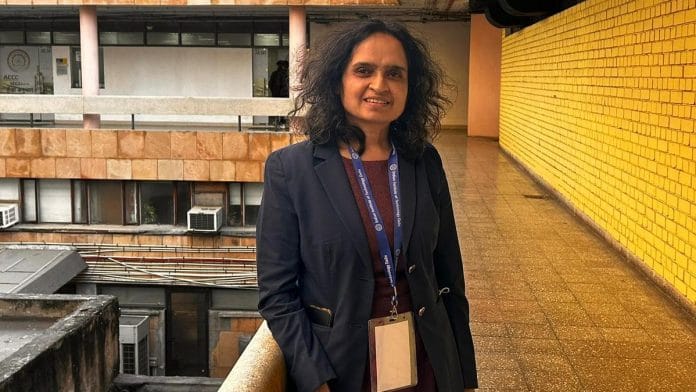



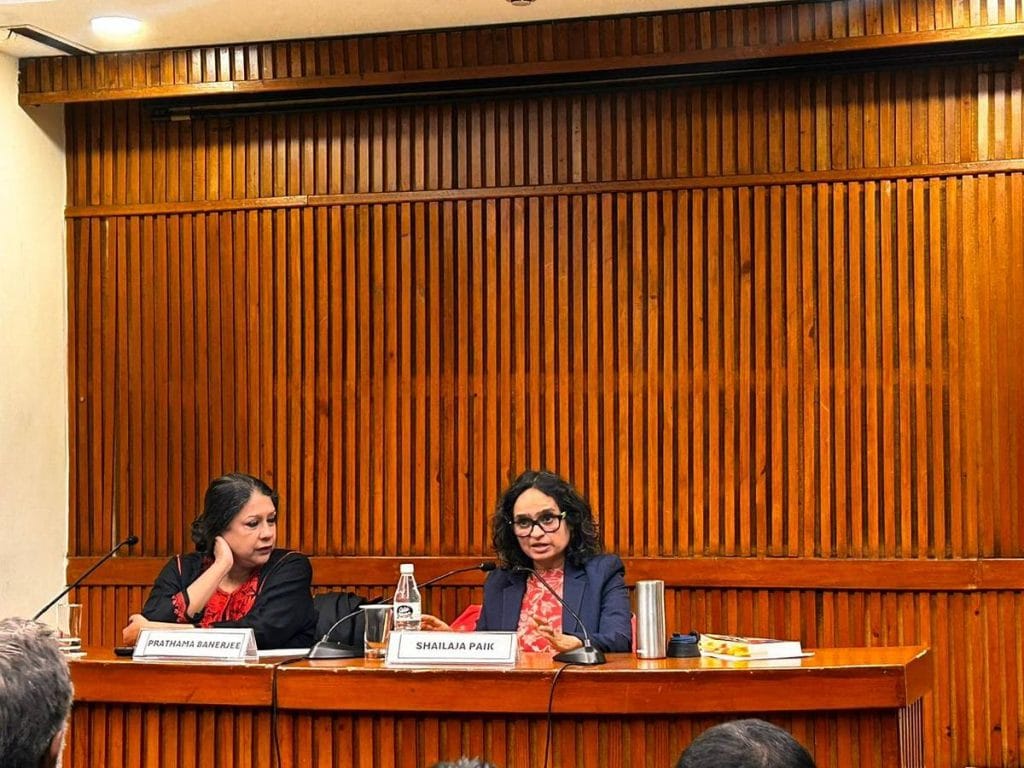
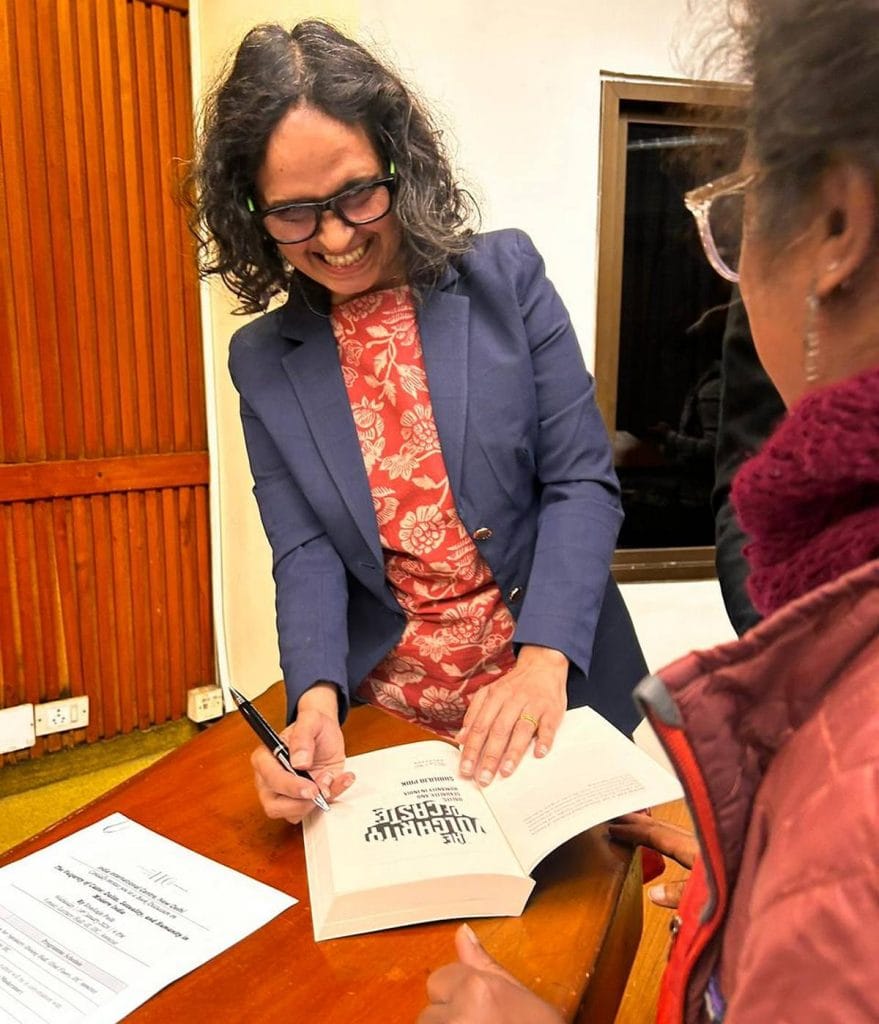


Comments
Post a Comment