14.04.2026.Untouchability News.(News of Dalits,Adivasi,atrocity,buddhist,Dr Ambedkar,Employement,Education news details from various sources)by Sivaji.Ayyayiram UTNews.9444917060.

Hidden Stories: Palwankar Baloo, India’s first bowling superstar, who was made to drink tea outside the pavilion
Left-arm spinner Palwankar Baloo was a hero to thousands of Dalits, including Dr BR Ambedkar. He later lost to Ambedkar in the Bombay Legislative Assembly elections.
- Written by: Dipanita Nath
- 7 min readPune
On September 15, 1911, large crowds gathered in Bombay to cheer the SS Salsette that was bringing home a special group of men—the very first all-India cricket team. Prashant Kidambi, an academician and author, writes in Cricket Country that the tour was the vision of “an unlikely coalition of imperial and Indian elites”. According to him, it had taken 12 years and three failed attempts before an “Indian” cricket team could make “its debut on the playing fields of imperial Britain”.
The star of the hour was a left-arm bowler from Maharashtra, Palwankar Baloo, a Dalit ‘untouchable’. He had performed better than his teammates, who were members of the upper castes, higher classes, and other religions. It was a moment of justifiable pride for the country—and Baloo’s community.
“From what I have read, it seems that Palwankar Baloo was a spinner of great skill and subtlety, a worthy forerunner of such world-class Indian slow, left-arm bowlers as Vinoo Mankad and Bishan Bedi,” author, historian and cricket buff Ramachandra Guha writes in his book, A Corner of a Foreign Field: The Indian History of a British Sport.
“This, according to the doyenne of historians of Untouchability, Eleanor Zelliot, was the first public appearance of the man who was to become the greatest of all lower-caste politicians and reformers, and a figure of surpassing importance in modern Indian history. By virtue solely of his deeds on the cricket field, Baloo had become a hero and inspiration to countless Untouchables. And the young BR Ambedkar was one of them,” writes Guha.
Today, Indians seem to have forgotten Baloo, remembering only that he was a legend from the lower rungs of the caste ladder.
A family makes its mark in the gentleman’s game
Baloo was born, the eldest of four sons, in July 1875 to a family of chamars (a Dalit community associated with leather work) in Dharwad. Two other brothers, Shivram and Vithal, were legends in their own right. The youngest Palwankar brother, Ganpat, impressed all who saw him play, but his life was cut short at 27.
Baloo would stand tallest as a patriarch. His life in cricket started in Poona, where his father worked for the army either in the ammunition factory in Kirkee or in the 112th Infantry Regiment as a sepoy. This was where Baloo and Shivram picked up the gentleman’s game with equipment that the army officers had discarded.
“Baloo’s own first job was at a cricket club run by Parsis. Here he swept and rolled the pitch, and occasionally bowled to the members at the nets. For this work he took home Rs 3 a month,” writes Guha.
An important step in Baloo’s career was at Poona Club, which paid him Rs 4 to roll and mark the pitch, erect the nets and, crucially, bowl to members, among whom was one of the top English cricketers of the time, Captain J G Greig. Over many hours, as Greig improved his technique, Baloo strengthened his bowling.
The bowler began to get noticed, including by a Hindu club in Poona that was striving to challenge and defeat the Europeans in cricket. Of course, the question of including a chamar in the team divided the Hindu cricketers. It was Greig who said that the Hindus would be foolish if they did not include Baloo.
“It was not that Greig had the instincts of a social reformer—his commitment to his race was scarcely less strict than the Poona Brahmin’s commitment to his caste—but, rather, that he wished to test his skills against his net bowler in the fierce heat of match competition,” writes Guha.
Baloo was included in the Poona Hindus team, winning difficult matches, but he was still reminded of his caste status. “At the tea interval, that ceremony sacred to cricket, Baloo was served the liquid outside the pavilion, and in a disposable clay matka, while his colleagues drank in white porcelain cups. inside. If he wished to wash his hands and face, an Untouchable servant of the club took a kettle out into a corner of the field and poured water from it. Baloo also ate his lunch off a separate plate, and on a separate table. But he took plenty of wickets all the same. Due chiefly to Baloo’s bowling the Poona Hindus defeated the Poona Europeans and other local sides as well,” says Guha.
Cast as a reformer
After an important victory, scholar and reformer Mahadev Govind Ranade garlanded Baloo at a public function in Poona; Bal Gangadhar Tilak heaped him with praise. The caste divide, whose cracks run through Indian society even now, would stalk the Palwankars all their lives, but the orthodox population of Poona did warm up to them, if only for their skills.
As the years passed, reform movements strengthened in India, with Mahatma Gandhi vocal against untouchability. In 1923, Vithal would become the first Dalit captain of the Hindus cricket team in the prestigious Bombay Quadrangular cricket championship. He would lead the Hindus to three victories.
“Baloo was never allowed to enter the pavilion of the Poona Club, but it was in that pavilion that Vithal received the Quadrangular trophy. At the ground and afterwards, he received tributes aplenty. He and his men were fêted with At Homes and pan suparis, and even congratulated by the now conservative Mahratta for coming out ‘with flying colours against the Europeans in a game native to them’,” writes Guha.
Gandhian to the core
Baloo was a loyal supporter of Gandhi’s vision, even when it pitched him against Ambedkar. The cricketer believed that Gandhi’s call to the upper castes to treat the Depressed Classes more fairly would pave the way to a solution. “Ambedkar, on the other hand, was convinced that they would get a fair deal only outside the rubric of Hinduism,” writes Guha.
When Gandhi went on a fast-unto-death in Yerawada Jail against the Communal Award of August 4, 1932, a proposal by the British government to allow ‘untouchables’ to become an electorate separate from the main Hindu community, which Ambedkar supported, Baloo was among those who went to speak to the Dalit leader to change his mind. Ambedkar relented, leading to the signing of the Poona Pact on electoral representation of the ‘Depressed Classes’.
By 1935, Ambedkar had disavowed the Poona Pact. After brutal attacks on ‘untouchables’ in Gujarat, Ambedkar said that there was no future for the lower castes in Hinduism and he and his supporters would convert to another religion.
Baloo, however, remained steadfast in his belief that India had begun to change and there was little discrimination, at least in cities. In 1937, the Congress selected Baloo to fight Ambedkar in the Bombay Legislative Assembly elections. When the ballot was counted, Baloo had received 11,225 votes, 2,200 fewer than Ambedkar’s.
“Baloo’s decision to stand for election seems to have been a ‘world first’ as far as the professional cricketer was concerned, anticipating, by many years, the move into politics of such men as Pakistan’s Imran Khan and Guyana’s Roy Fredericks,” writes Guha.
The cricketing legend died in July 1955, and the sports world paid homage not only to the bowler but also to the person who changed who could play the game.
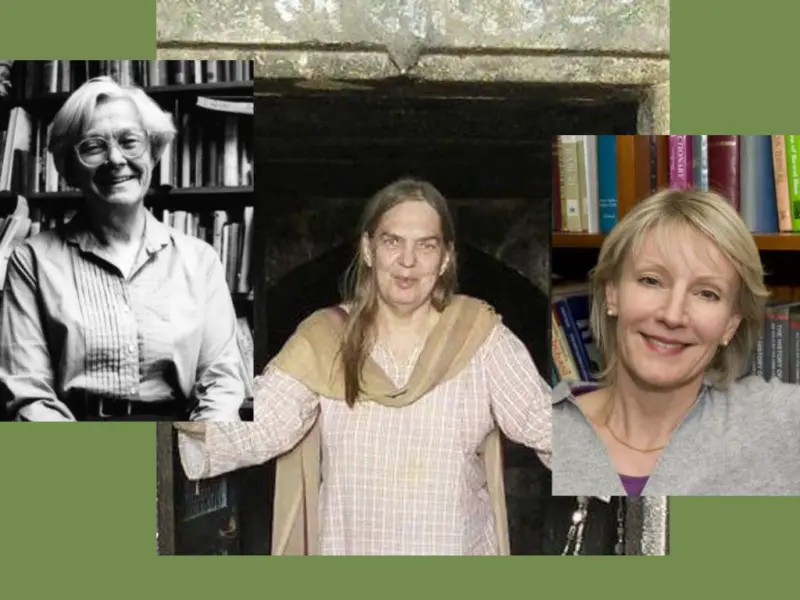
இந்தியாவின் சாதி எதிர்ப்பு இயக்கங்கள் குறித்த ஆய்வில் முன்னோடிகளாகத் திகழ்ந்த மூன்று மேற்கத்திய பெண் அறிஞர்கள்

டிஏப்ரல் 11 முதல் 14 வரையிலான வாரம், இந்தியாவின் சாதி எதிர்ப்பு மரபின் வம்சாவளியை வரையறுக்கும் இரண்டு தேதிகளை ஒன்றிணைக்கிறது: மகாத்மா ஜோதிராவ் பூலேவின் பிறந்தநாள் மற்றும் டாக்டர் பாபாசாகேப் அம்பேத்கர் ஜெயந்தி.
Three Western Women Scholars Who Pioneered the Study of India's Anti-Caste Movements
The week between April 11 and 14 brings together two dates that frame the genealogy of India's anti-caste tradition: Mahatma Jotirao Phule's birth anniversary and Dr Babasaheb Ambedkar Jayanti.
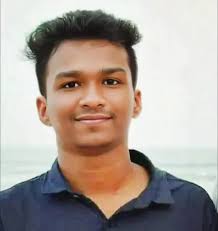
The suicide of a first-year BDS Dalit student in Kerala’s Kannur district has sparked widespread outrage, with various organizations taking to the streets to demand strict action against the teachers held responsible. (DC) Student, youth, women organisations, call it “institutional murder” demand stringent action against accuse
Thiruvananthapuram: The suicide of a first-year BDS Dalit student in Kerala’s Kannur district has sparked widespread outrage, with various organizations taking to the streets to demand strict action against the teachers held responsible.
On Monday, student, youth, and women’s groups linked to the CPM, Congress, and BJP staged separate protest marches to Kannur Dental College in Anjarakandy, accusing the police of protecting the culprits. Protesters called the death an “institutional murder” and demanded justice. Nithin, 26, was found on April 10 lying on a stone-paved area between the campus’s administrative block and hospital building.
The police registered a case of unnatural death under Section 194 of the Bharatiya Nagrik Suraksha Sanhita (BNSS). They also booked two teachers, Dr. K. M. Ram, head of the department, and K. T. Sangeetha Nambiar, after Nithin’s family alleged harassment and caste-based abuse. The absconding teachers have been charged under Section 3(1)(r) of the Scheduled Castes and Scheduled Tribes (Prevention of Atrocities) Act, which addresses intentional insult or intimidation of an SC/ST community member in public, and Section 108 of the BNS for abetment of suicide. The case followed the emergence of audio clips in which Nithin alleged caste-based harassment. On Monday, a police team from Kannur visited Nithin’s home in Uzhamalakkal, Thiruvananthapuram district, to record statements from his parents and relatives.
A seven-member Special Investigation Team (SIT), including cyber experts, has been formed to investigate the case. Three audio clips linked to Nithin have emerged, in which he accuses a faculty member of making casteist remarks, insulting him, and issuing threats. In one clip, he says he was called an “idiot” in the staff room and threatened with physical harm. “I tolerated the insults as much as I could,” he says in the recording.
Dental College Principal Vinod Moni, however, told media persons on the day of the incident that no complaints related to caste abuse have been received. He said the academic administration will fully cooperate with the police for a detailed probe.
Police are also looking into a loan angle
Kannur City Police earlier mentioned a loan repayment issue as a possible factor in Nithin Raj’s death by suicide. His family stated that he had taken the loan with their knowledge to pay for his mother’s treatment.
Kannur City police commissioner Nidhinraj said that an analysis of Nithin’s mobile phone call records showed he had taken a loan through a mobile app between December and January. Nithin had received several calls about the loan, and the lending agency had even obtained the contact number of one of his teachers. When the loan went unpaid, the agency reached out to the teacher, with similar calls made on April 10, which may have caused mental stress. However, the family said neither the teacher nor the institution informed them about the matter. “They have my contact details; they could have told me at least once. I would have cleared my son’s dues,” said Nithin’s father.
Students allege harassment
Some students from Ancharakandi Dental College revealed on Monday that the accused teacher, Ram, was a constant source of trouble. “He often uses foul language, body shames girls, tells boys to hit girls, and threatens to lower marks,” said one student.
“Even though we faced harassment, we stayed silent out of fear. He would claim that all the external examiners were his colleagues or juniors, and if we complained, he’d instruct them to fail us,” added another studen
Courtesy : Deccan Chronicle.
......
4️⃣🔴🔴🔴🔴🔴🔴🔴🔴🔵🔵🔵🔵🔵🔵
Man is the architect of his own destiny
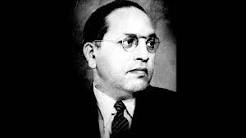
Behind the success of every individual is his or her thinking, perception, and the society around. The world recognizes the greatness of the person through great contributions and deeds. The person becomes eternal in history through education, culture, practices, the scientific approach and attitude.
April 14th is Bhim Jayanti, celebrating the birth of Dr Bhimrao Ambedkar, ‘’Father of the Indian Constitution’’. It is also Equality Day.
Ambedkar is not a brand or a banner being used by politicians very freely. His legacy goes beyond politics-he is a philosophy, a set of principles, and a symbol of struggle and success. His name represents passion meeting purpose. He lived by his words: “Life should be great rather than long”.
A fighter in the cause of annihilation of caste, he was born in a low caste Mahar family. His life was one of struggles as his radical proposals to deal with the caste system met with stiff hostility from upper castes. He suffered bitter caste humiliation and finally succeeded by making the downtrodden politically aware of their situation. What he said to Dalits then bears immense importance even today– “educate, agitate, and organize”.
He believed that education is more important than temple entry for the downtrodden because God whom we consider the most powerful is omnipresent. He believed that education is a tool to empower every citizen to build an egalitarian society. This tool he believed would break the social shackles and discriminatory social practices. He faced humiliation in school and college and at all levels and even after he joined Baroda Public service. But that did not deter him from pursuing his goal. He turned to legal practice and teaching. He soon established his leadership among Dalits, founded several journals on their behalf and succeeded in obtaining special representation for them in the legislative councils of the government.
Babasaheb said, “I measure the progress of a community by the degree of progress which women have achieved”. He was the lonely man standing for women’s rights those days. He passed a Hindu Code Bill Law for women and all the committee members rejected as they considered women as zero, but later it was successfully passed in 1955, 56 and women now equally stand with the men because of Ambedkar. He was not a man for Dalits, he was a man for women’s rights. He said that in politics, Bhakti or hero worship is a sure road to degradation and to eventual dictatorship. We are Indians firstly and lastly.
Babasaheb strongly desired to have Sanskrit as the national language, keeping in mind the ancient and historical greatness of the language. Unfortunately, due to the disapproval of other members, Sanskrit could not be recognized as our national language, a distinction that was accorded to Hindi, much to his disappointment.
For him destiny is not a matter of chance but of choice. It is not a thing to be waited for; it is a thing to be achieved. By destiny he meant our future. In other words, our future does not come about by chance and is not something that merely happens to us. A person often meets his destiny on the road he took to avoid it.
Ambedkar was first man in Asia to get 32 degrees. He believed that it is not in the stars to hold our destiny but within us. With all odds stacked against him he achieved a great deal. His knowledge was deep as an ocean and wide as sky. He was dedicated in his life to seeking knowledge and enlightenment. Columbia University made a list of the world’s top 100 scholars in 2004 and the first name in that list was Dr Bhimrao Ambedkar.
Character cannot be developed in ease and quiet. Only through experience of trial and suffering can the soul be strengthened, vision cleared, ambition inspired, and success achieved. It is in the most trying times that our real character is shaped and revealed. Success is not measured by what you accomplish but by the opposition you have encountered and the courage with which you have maintained the struggle against overwhelming odds. A dream does not become reality through magic; it takes sweat, toil and determination.
Dr Ambedkar even surpassed Ashoka the Great in his greatness. Samrat Ashoka had all the access to bring positive changes in his kingdom being an emperor, but Ambedkar only had his personal qualities to rely upon and the most fantastic dream of equality, liberty, fraternity and justice for all.
“Man becomes great by deeds not by birth. Cultivation of mind should be the ultimate aim of human existence”.
By Dr Hyma Moorty
Courtesy : THI
5️⃣🔵🔵🔵🔵🔵🔵🔵🔵🔵🔵🔵🔵🔵
GTU study maps Dalit entrepreneurship in Gujarat
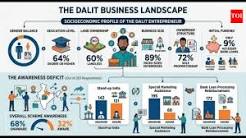
Ahmedabad: A doctoral study from Gujarat Technological University (GTU) offers one of the most comprehensive assessments to date of Dalit entrepreneurship in Gujarat, detailing how many within the community are turning to business ownership as a means of economic independence and self reliance, an idea articulated by Dr B R Ambedkar.
The PhD thesis, titled ‘An In Depth Study of Dalit Entrepreneurship in Gujarat’, by research scholar Jay Raval, is based on a survey of 263 Dalit entrepreneurs across all 31 districts of the state. The study is supported by 35 in depth interviews, discussions with eight bankers and government officials, and case studies from Ahmedabad, Bhavnagar and Sanand.
Raval says, “The absence of land makes formal finance almost inaccessible. That one structural gap shapes everything.” According to the study, the lack of land ownership affects access to institutional finance and influences business operations. One entrepreneur from the outskirts of Gandhinagar reported that his vehicle sales remained at 2-3 units a month until he changed his surname, after which sales rose to 8-10 units a month. Another entrepreneur, originally surnamed ‘Parmar’, adopted an upper caste name. Overall, 45% of respondents said they actively conceal their surnames to avoid bias.
The research also notes the limited presence of Dalit entrepreneurs in food and hospitality. Raval writes that “caste notions of ‘purity’ govern consumer behaviour,” resulting in Dalit entrepreneurs being more concentrated in sectors such as construction and labour contracting.
Bindiya Soni, Raval’s research guide and a professor at Anand Institute of Management and Information Science, described entrepreneurship as “the most powerful tool for social reform” while pointing out that access to government support remains uneven. The study found that 68% of respondents were unaware of any entrepreneurship scheme, including 195 out of the 263 who had no knowledge of the Special Marketing Assistance Scheme. At the same time, 55% of Dalit entrepreneurs reported employing workers from other communities. “As first generation entrepreneurs, our money mathematics is different,” said Devendra Khuman, an entrepreneur from Ahmedabad and former functionary of the Dalit Indian Chamber of Commerce & Industry (DICCI). “The barrier is not only caste: it’s capital, confidence, and an ecosystem that is still forming.”
The study records relatively high educational attainment, with 64% of respondents holding a graduation degree or higher. However, 60% of those surveyed are landless. Among those who own land, 23% possess less than 0.5 acre, limiting their access to collateral-based institutional lending.
As a result, 89% of Dalit-owned enterprises are micro-sized, and 72% operate as sole proprietorships. Half of the respondents reported a median annual turnover of less than Rs 6.5 lakh. The community’s entrepreneurial participation also remains skewed by gender, with 92% male and 8% female entrepreneurs.
Raval describes the financing gap as a “chicken and egg” situation. Only 9% of respondents secured bank loans for startup capital. Instead, 44% relied on family savings, 28% on loans from friends, and about 100 respondents used their own funds entirely. The study finds that 88% of entrepreneurs own a single business, reflecting limited scope for expansion.
6️⃣🔴🔴🔴🔴🔴🔴🔴🔴🔴🔴🔴🔴🔴🔴🔴🔴
Noida traffic advisory: Traffic diversions announced in Noida for Ambedkar Jayanti Event at Dalit Prerna Sthal
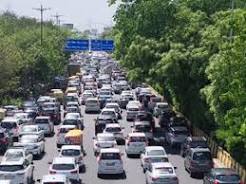
The traffic police in Gautam Buddh Nagar have issued a detailed traffic advisory ahead of a major public event scheduled on April 14, 2026, at Dalit Prerna Sthal in Sector 95, Noida. The programme is being organised to mark the birth anniversary of Dr. Bhimrao Ambedkar, and is expected to draw a significant number of visitors, prompting authorities to implement temporary traffic diversions and parking arrangements across key routes in the city.
According to the advisory posted by the official handle of Noida Traffic Police (@Noidatraffic) on X, traffic congestion is anticipated particularly along the Noida–Greater Noida Expressway and adjoining sectors, which serve as major access points to the event location.
For commuters travelling from Greater Noida towards Noida via the Noida–Greater Noida Expressway, diversions will be enforced in case of increased traffic pressure near Dalit Prerna Sthal. Vehicles will be rerouted from the Mahamaya Flyover towards Sector 37. From there, commuters can continue their journey via Atta Peer Chowk, Rajnigandha Chowk, and Sector 15 Golchakkar to reach their destinations.
In another contingency plan for the same route, if congestion intensifies near Gate No.
04 of the Dalit Prerna Sthal, traffic will be diverted from the Film City Flyover towards Sector 18. Vehicles will then be able to proceed through Rajnigandha Chowk, Sector 15 Golchakkar, or use the Sector 18 underpass and elevated road network for onward travel.
Traffic movement from Noida towards Greater Noida will also be affected. In the event of congestion near the DND Flyway or Film City Flyover, vehicles will be redirected from the Sector 14A Flyover towards Sector 15 Golchakkar. From this point, commuters can take the route via Rajnigandha Chowk, Atta Peer Chowk, and Sector 37 to continue towards their destination.
In addition to traffic diversions, authorities have outlined specific parking arrangements for attendees arriving from different directions. Light vehicles coming from Pari Chowk, Sector 37, and Greater Noida West will be accommodated inside Gate No. 01 of the Dalit Prerna Sthal premises. Vehicles approaching from Delhi will be directed to use the designated multi-level parking facility within Film City.
For travelers coming from the Kalindi Kunj end, provision of parking space has been made at the underground parking adjacent to the Sector 95 nala (Ganda Nala), near the Dalit Prerna Sthal. This has been done to ease vehicular management and prevent crowding on the roads.
Further, the notice states that ambulances, fire engines, and other emergency vehicles will not be hindered by the traffic diversion and will have free access to all points during the period. The traffic police will manage traffic at important intersections and help commuters where required.
It is requested that the citizens follow the traffic management plan and use alternate routes to reduce traffic. In case of any problem or help, they can call the traffic helpline number at 9971009001.
Given the massive attendance expected for Ambedkar Jayanti, it becomes essential that citizens follow the notice strictly.
Courtesy : TOI
7️⃣🔵🔵🔵🔵🔵🔵🔵🔵🔵🔵🔵🔵🔵🔵🔵🔵
Here is your 📰 India-wide SC/ST, Dalit, Adivasi, Buddhist & Ambedkar News Roundup for 14 April 2026 (Ambedkar Jayanti) with state-wise + national coverage, and English + Hindi + Tamil summaries, based on verified recent news sources.
📰 🇮🇳 INDIA ROUNDUP – 14 APRIL 2026 (AMBEDKAR JAYANTI)
The Times of India
The Times of India
City's Midnight Tryst With Ambedkar On His Jayanti
K'taka cabinet clears Rohith Vemula Bill; Rs 10L fine for caste bias
April 15
Today
🇮🇳 NATIONAL (ALL INDIA)
1) Ambedkar Jayanti celebrated nationwide (National Holiday)
April 14 observed as Dr. B.R. Ambedkar’s birth anniversary across India. �
The Economic Times
English:
Government offices, courts, schools closed; nationwide tributes and rallies held.
Hindi:
पूरे देश में आंबेडकर जयंती — सरकारी अवकाश और श्रद्धांजलि कार्यक्रम।
Tamil:
நாடு முழுவதும் அம்பேத்கர் ஜெயந்தி — அரசு விடுமுறை மற்றும் நினைவு நிகழ்ச்சிகள்.
2) Ambedkar Jayanti linked to Dalit History Month & social justice debates
Calls to use the occasion to address caste inequalities (water, dignity, rights). �
Down To Earth
English:
Experts highlight need for real reforms beyond symbolic celebrations.
Hindi:
केवल समारोह नहीं — सामाजिक न्याय पर ठोस कार्रवाई की मांग।
Tamil:
விழாவை தாண்டி சமூக நீதி நடவடிக்கைகள் அவசியம் என்ற கோரிக்கை.
🏛️ WEST INDIA
🇲🇭 Maharashtra (Epicentre of Ambedkarite movement)
3) Massive Buddhist–Dalit gathering at Deekshabhoomi, Nagpur
Thousands gathered at Deekshabhoomi for prayers, rallies, and social programs. �
The Times of India
English:
Includes Buddhist rituals (Trisharan, Panchsheel), blood donation, youth participation.
Hindi:
दीक्षाभूमि में हजारों लोगों की भीड़ — बौद्ध प्रार्थना और सामाजिक कार्यक्रम।
Tamil:
நாக்பூர் தீக்ஷாபூமியில் ஆயிரக்கணக்கானோர் — புத்த மத நிகழ்ச்சிகள்.
4) Massive crowd & security at Chaityabhoomi (Mumbai)
Lakhs expected; govt arranged sanitation, transport, medical support. �
The Times of India
English:
One of the largest Dalit gatherings in India.
Hindi:
चैत्यभूमि में लाखों श्रद्धालु — बड़े पैमाने पर सुरक्षा व्यवस्था।
Tamil:
சைத்யபூமியில் மிகப்பெரிய திரள் — பாதுகாப்பு ஏற்பாடுகள்.
🏛️ SOUTH INDIA
🇹🇳 Tamil Nadu
5) Dalit art exhibition in Chennai during Ambedkar Jayanti
Major exhibition organised by Neelam Cultural Centre. �
The Times of India
English:
Dalit art used as political and cultural assertion; themes include caste violence & Ambedkarite identity.
Hindi:
दलित कला प्रदर्शन — सामाजिक संघर्ष और पहचान की अभिव्यक्ति।
Tamil:
தலித் கலை கண்காட்சி — சமூக எதிர்ப்பு மற்றும் அடையாள வெளிப்பாடு.
🇰🇦 Karnataka
6) Rohith Vemula Bill approved (historic anti-discrimination law)
₹10 lakh penalty for caste discrimination in educational institutions. �
The Times of India
English:
Major step against caste discrimination in universities.
Hindi:
शैक्षणिक संस्थानों में जातीय भेदभाव पर कड़ा कानून।
Tamil:
கல்வி நிறுவனங்களில் சாதி பாகுபாட்டுக்கு கடும் சட்டம்.
7) Housing scheme for SC/ST communities
“Buddha–Basava–Ambedkar” layout scheme launched. �
The Times of India
English:
Aims to provide private-layout level infrastructure for SC/ST housing.
Hindi:
एससी/एसटी के लिए आधुनिक आवास योजना।
Tamil:
SC/ST மக்களுக்கு மேம்பட்ட குடியிருப்பு திட்டம்.
🏛️ NORTH INDIA
🇺🇵 Uttar Pradesh
8) Massive Ambedkar Jayanti gathering at Dalit Prerna Sthal (Noida)
Traffic diversions due to large crowd turnout. �
The Times of India
English:
Shows scale of Dalit mobilisation in North India.
Hindi:
नोएडा में भारी भीड़ — यातायात व्यवस्था बदली।
Tamil:
நொய்டாவில் பெரிய கூட்டம் — போக்குவரத்து மாற்றங்கள்.
🏛️ CENTRAL / SOUTH-WEST
🇰🇦 Karnataka (Koppal)
9) Desecration of Ambedkar portraits sparks protests
Dalit organisations protest after vandalism incident. �
The Times of India
English:
Highlights ongoing caste tensions and symbolic conflicts.
Hindi:
आंबेडकर की तस्वीर अपमानित — विरोध प्रदर्शन।
Tamil:
அம்பேத்கர் படங்கள் அவமதிப்பு — போராட்டம்.
☸️ BUDDHIST / AMBEDKARITE MOVEMENT
10) Peak mobilisation of Neo-Buddhists across India
Major centres:
Nagpur (Deekshabhoomi)
Mumbai (Chaityabhoomi)
English:
Ambedkar Jayanti is the largest annual mobilisation of Ambedkarite Buddhists.
Hindi:
यह नव-बौद्ध समुदाय का सबसे बड़ा आयोजन है।
Tamil:
இது அம்பேத்கரிய புத்த மத சமூகத்தின் மிகப்பெரிய திரள்.
🌿 ADIVASI / TRIBAL CONTEXT
11) Increasing Dalit–Adivasi unity narrative
Events and speeches increasingly include tribal issues.
English:
Ambedkar Jayanti evolving into broader Bahujan assertion platform.
Hindi:
दलित–आदिवासी एकता पर जोर।
Tamil:
தலித்–ஆதிவாசி ஒற்றுமை வலுப்பெறுகிறது.
🧠 KEY THEMES (14 APRIL 2026)
🔥 1) Largest Dalit mobilisation day in India
Lakhs gather across states
🔥 2) From symbolism → policy
Laws (Karnataka bill), schemes (housing)
🔥 3) Cultural assertion rising
Art, festivals, public spaces
🔥 4) Caste tensions persist
Vandalism, protests
🔥 5) Buddhism central to Ambedkarite identity
Visible in Nagpur, Maharashtra
📊 QUICK SUMMARY TABLE
Category
Key Development
National
Holiday + nationwide mobilisation
Maharashtra
Deekshabhoomi + Chaityabhoomi mass gatherings
Tamil Nadu
Dalit art & cultural assertion
Karnataka
Anti-discrimination law + housing scheme
UP
Massive public gatherings
Conflict
Ambedkar portrait desecration protests
Movement
Buddhist–Dalit unity peak
By,
Sivaji.A.UT news.
An appeal.
Bros, Sisters..We would like to inform that we have to subscribe to various news papers,website LINKS to get full news to publish in our channel.There fore in order to subscribe we seek your help in donating one time contribution any amount from Rs 10(because we are poor)(Rich will never help but enjoy,but poor only bothers about the community like Dr Ambedkar who lived poor till his death)in GPAY,PHONEPAY to 9444917060.Sivaji.A.Thanks.Jai bhim.!


Comments
Post a Comment