19.04.2026.Untouchability News.(News of Dalits,Adivasi,atrocity,buddhist,Dr Ambedkar,Employement,Education news details from various sources)by Sivaji.Ayyayiram UTNews.9444917060.

Attempted Abduction of Dalit Woman in Gorakhpur: Woman Heading to Market Rescued by Bystanders; Case Registered

A case involving the attempted abduction of a young Dalit woman has come to light in Gorakhpur. The woman was on her way to the market to shop for her wedding when a young man attempted to forcibly pull her into his vehicle. Thanks to the timely intervention of passersby, the woman managed to escape unharmed.
3️⃣📢📢📢📢📢📢📢📢📢📢📢📢📢📢📢📢📢📢📢📢📢📢📢
Bulldozers Roll Over Dalit Homes in Basti! No Action Taken Despite Pleas for Justice

In Rampur village, within the jurisdiction of the Munderwa police station, the administration has demolished a Dalit’s house using a JCB machine in the presence of the police. The affected family members have been forced to take shelter with neighbors or live under the open sky.
There is widespread outrage among the people as, despite sending letters to the Divisional Commissioner, District Magistrate, and Superintendent of Police pleading for justice, no action has been taken thus far.
The semi-permanent and temporary houses belonging to Dalit residents of the Munderwa police station area—specifically Ram Awadh (son of Gobari), Rajendra (son of Ram Velas), Prem Sagar, and Ram Deen (sons of Ram Pher)—were demolished using a JCB in the presence of police forces. This act was carried out in blatant contempt of a court order, allegedly at the instigation of Abdul Wahid, a former village headman and known land mafia figure. This incident has sparked deep resentment among the citizenry.
Dharmendra Kumar, the District IT Cell Convener of the Hindu Yuva Vahini—along with other office bearers and activists—had submitted a letter to the Divisional Commissioner demanding an impartial inquiry into the matter and punitive action against the culprits. Vahini officials have been continuously pleading for justice, yet their appeals have gone unheard so far.
The letter addressed to senior officials states that on April 13, Revenue Official (Lekhpal) Virendra Kumar Pandey, the Naib Tehsildar, a Sub-Inspector, and other police personnel acted in contempt of the decisions of both the District Magistrate and the High Court by orchestrating the demolition of the Dalits’ homes. Furthermore, these individuals allegedly facilitated the erection of an illegal thatched structure on land parcel (Gata) number 611 for Appu, Subhash, and Bablu—sons of Munnilal—who are residents of the same village. The letter demands that a case be registered against the guilty parties and that new homes be constructed for the affected Dalits.
Dharmendra Kumar, the Hindu Yuva Vahini District IT Cell Convener, has warned that if action is not taken against the culprits and if new houses are not built for the Dalits, the matter will be escalated directly to the Chief Minister. Residents of Rampur, located within the jurisdiction of the Munderwa Police Station, have reported that the former village head—a land mafia figure named Abdul Wahid—instills fear among the poor in the village and even prevents them from celebrating the birth anniversary of Baba Saheb Dr. Bhimrao Ambedkar.
Residents of Rampur village—including Ram Awadh, Rajendra, Indal, Haribharan, Prem Sagar, Ramdeen, Sunil, Pramesh, Urmila, Shanti, Sheela, Kamalavati, Manju, Gudiya, Shumantri, Nilu, Chandravati, Sarita, Vedkala, Seema, and Vimla Devi—have appealed to the administration. They demand that action be taken against the culprits, that homes demolished using a JCB be reconstructed for those affected, and that strict punitive measures be initiated against the perpetrators.
Courtesy: Hindi News
4️⃣📢📢📢📢📢📢📢📢📢📢📢📢📢📢📢📢📢📢📢📢📢📢📢
Why Did a Dalit Youth Set Himself on Fire in Muzaffarnagar? Allegations of Assault Surface; Know the Full Story

In Muzaffarnagar, Uttar Pradesh, a Dalit youth, distressed by caste-based harassment, attempted suicide by setting himself on fire. After he refused to perform manual labor, the farm owner subjected him to casteist slurs and physically assaulted him, leaving the youth critically injured. He has since been referred to Delhi for treatment. The police have arrested the accused and registered a case under the SC/ST Act.
A spine-chilling video has emerged from the Muzaffarnagar district of Uttar Pradesh, showing a Dalit youth openly dousing himself with petrol and setting himself ablaze. In a matter of moments, the youth was engulfed in flames; bystanders struggled to extinguish the fire and rushed the critically injured Dalit youth to a hospital for treatment. Given the severity of his condition, doctors subsequently referred him to Delhi.
According to reports, the victim—a Dalit youth—worked as a laborer on the farm of a farmer belonging to the Rajput community. It is alleged that on Friday morning, the farm owner asked the victim to load a cart with flowers. When the victim refused, the accused—in the presence of others—hurled casteist slurs at him and physically assaulted him. Driven by deep humiliation and distress over this incident, the victim poured petrol over himself in an attempt to commit suicide.
Himanshu, a 22-year-old resident of Gangdhadi village within the Khatauli Kotwali police station area, sprinkled petrol on himself and set himself on fire. The incident was captured by a CCTV camera installed at a nearby house and subsequently went viral on social media. Himanshu sustained severe injuries in the incident and was admitted to a hospital for treatment; however, due to his critical condition, doctors referred him to Delhi.
What Did the Victim’s Family Say?
The victim’s family alleges that Himanshu worked as a laborer on the farm of a fellow villager named Tinku (alias Gaurav Rajput). Yesterday, the farm owner, Tinku, asked Himanshu to load a cart with flowers in the field. However, when Himanshu refused to do so, Tinku—in the presence of others—verbally abused him using caste-based slurs and physically assaulted him. It is further alleged that, driven by deep distress and humiliation, Himanshu attempted to end his life late that night by setting himself on fire.
Bittu, the brother of the victim—a young Dalit man named Himanshu—alleges that the farm owner, Tinku (alias Gaurav Rajput), would frequently subject Himanshu to verbal abuse and physical violence. Meanwhile, acting on a written complaint filed by the victim’s family, the police have registered a case against the accused under the Scheduled Castes and Scheduled Tribes (Prevention of Atrocities) Act and have taken the accused into custody.
**Accused Person Arrested**
CO (Circle Officer) of Khatauli, Ramashish Yadav, stated that the police received information around 10:45 PM regarding a young man named Himanshu (son of Bedu) who had set himself on fire. Acting immediately upon this report, the police rushed to the scene. With the assistance of his family members, Himanshu was admitted to a hospital, where his condition is currently stable, and he is receiving the best possible medical treatment. Upon visiting the scene to conduct an inquiry into the incident, it came to light that Himanshu had been involved in an altercation with another young man from his own village named Gaurav (alias Tinku). Tinku (alias Gaurav) had physically assaulted him, and it was this act of violence that caused Himanshu such distress that he set himself on fire. In connection with this matter, the accused has been taken into custody, and an investigation is currently underway.
Courtesy: Hindi News
5️⃣📢📢📢📢📢📢📢📢📢📢📢📢📢📢📢📢📢📢📢📢📢📢📢
Ayodhya News: Attack on Dalit Family in Kaithani; FIR Filed Against Seven Individuals

Sohawal: An incident involving physical assault and verbal abuse against a Dalit family has come to light in Kaithani—a hamlet within the Mustafabad Baragaon Gram Panchayat, under the jurisdiction of the Raunahi police station.
Acting on a written complaint filed by the victim, Premchand, the police have registered a case against seven named accused individuals under various sections of the law, including the SC/ST Act.
In his written complaint, the victim, Premchand, stated that influential local figures carried out the attack over a trivial dispute. It is alleged that the incident was triggered when a goat, while grazing, wandered into the accused’s house. A group comprising Mustakim, Zubair, Shahzadi, Saiyak, Amir, Bholu, Alma, and others barged into Premchand’s home; while hurling caste-based slurs, they began physically assaulting the family members. Upon hearing the commotion, Premchand’s mother and sister rushed to their aid but were also beaten. During the attack—which involved the use of iron rods and sharp-edged weapons—the sister sustained a head injury resulting in a deep gash. Premchand suffered injuries to his nose and head. The accused have also threatened the entire family with dire consequences.
Arvind Sonkar, the Circle Officer (CO) of the Sadar zone, has initiated an investigation into the matter. CO Sonkar has given assurances that a fair and impartial inquiry will be conducted, and that protection will be provided to the victimized family.
Samvad News Agency, Ayodhya
Courtesy: Hindi News
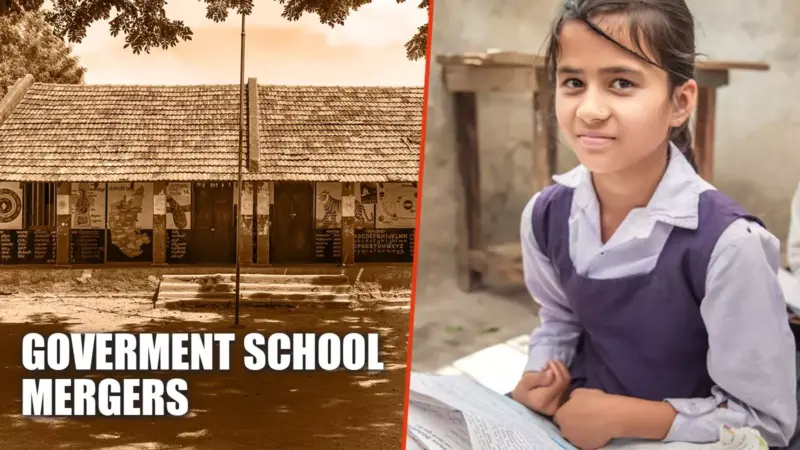
How government school mergers hit Dalit, Adivasi, girl students hardest

School consolidation in India is neither uniform in design nor consistent in implementation. Each state applies its own criteria - often based on distance and enrolment thresholds to rationalise schools.
Yet, one common thread runs across states: the effects of this government policy are deeply unequal.
Read Part 1 | Why students and parents bear the brunt of govt schools' consolidation
Read Part 2 |How government school mergers have triggered varied fallout across states
Studies and expert accounts suggest that closures are not affecting all children in the same way. Instead, the burden is falling disproportionately on those already at the margins - girls, Dalit and Adivasi students, and children in rural and remote areas.
Ignoring social composition
Evidence from research shows that this is not incidental, but built into how the policy is designed. A 2025 study by Nikhitha Mary Mathew of the National University of Singapore found that consolidation decisions frequently overlook the social composition of communities.
"These consolidation decisions were made based solely on enrolment thresholds, without considering the social composition of affected communities. In India's context of caste-based residential segregation, this is particularly problematic: sparsely populated habitations are often home to marginalised caste groups," she noted.
The result is a measurable and uneven decline. Across five states - Andhra Pradesh, Assam, Haryana, Madhya Pradesh and Odisha - public school enrolment fell by 6.62 per cent following closures. But among Scheduled Castes, the decline was sharper at nearly 11.8 per cent. In villages with fewer basic amenities, enrolment dropped by over 10 per cent, while in better-off areas it remained largely unchanged.
Infra, geography widen gaps
Infrastructure and geography further deepen these gaps. In villages without public bus services, enrolment declined by more than 8 per cent, with sharper drops among SC, OBC and ST students. Mathew also found that in areas marked by high caste segregation, there was a "negative" effect on enrolment. For example, the decline in enrolment of SC and OBC students in such areas was as high as 30 per cent.
"Schools with a higher share of marginalised students are more likely to face closures under consolidation policies. That is, even within a village, schools that cater to a higher share of marginalised students are more likely to close, given the current enrolment-based criteria. This result shows that relying solely on a quantitative threshold to determine school closures may result in unintended and disproportionate targeting of marginalised social groups," Mathew wrote in her paper.
On the ground, these numbers translate into everyday barriers. In tribal and hilly regions, where settlements are scattered and transport is limited, the closure of neighbourhood schools often makes education physically inaccessible. Younger children struggle to travel long distances, while parents, particularly of girls, are reluctant to send them across isolated terrain.
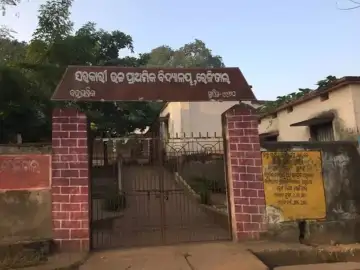
Areas like Rayagada are among the worst affected, with the highest number of school closures and mergers. Most children here live in hilly, remote regions, making it difficult for them to travel to other schools. Representative photo: Wikimedia Commons
"Areas like Rayagada are among the worst affected, with the highest number of school closures and mergers. Most children here live in hilly, remote regions, making it difficult for them to travel to other schools. In just two blocks, over 500 children have dropped out. Those most affected are from tribal communities," Blorin Mohanty, Odisha RTE (Right to Education) Forum told The Federal.
Caste factor
In many states, caste plays a defining role since government schools remain the primary site of education for marginalised communities, making them particularly vulnerable to closures.
Schools serving marginalised communities are more likely to be shut, and the consequences of that loss are borne unevenly."About 62 per cent of girls in Himachal Pradesh are enrolled in government schools. The dependence is even higher among Scheduled Castes - around 72 per cent of SC students study in government institutions. Any closure of these schools will disproportionately impact the rural poor, especially girls and Dalit students," pointed out educationist OP Bhuraita.
In Haryana, similar concerns have emerged. "More than 1,400 government schools have already been merged. The impact is being felt most by girls and Dalit children, who form the overwhelming majority of students in these schools," said Pramod Gouri, Bharatiya Gyan Vigyan Samiti (BGVS).
Girls bear the brunt of it all
Gender and class add further layers to the inequality. A multi-state study in 2017 done by Jawaharlal Nehru University professor S Srinivasa Rao found that "discontinuation of their (girls') education often leads to early marriage".
"The study found that the girls from Ranginiguda (in Odisha) did not continue after primary education as the high schools are located in Jeypore, 5 km away or in Tankua, at a distance of 1.5 km. Parents also hesitate to send their daughters alone and would allow them to go only in groups," it noted.
"In Rajasthan, when the only girl schools were callously merged with co-educational schools it led to many drop outs. As such the girl child confronts a very hostile and insensitive patriarchal attitude even when she is at school. She has to face everyday sexism and struggle her way to complete education, besides her everyday struggles to negotiate with the structures of differentiation at home and in the community which continues to see her as a 'burden' and a 'liability'. Investment on a girl child is seen as a waste and this perception has been found to be rampant in the field sites as well," the study further noted.
Long way to go
In a chapter in 'Contextualising Educational Studies in India' (Routledge India, 2021), Aysha Malik of the National Institute of Educational Planning and Administration (NIEPA) noted that girls were among the most affected.
"Female students were most affected under this policy, as they had to travel farther from their respective homes to the newly-created schools. The school environment is an issue for children in these newly-created schools because of cultural differences. Language is another issue faced by students in newly- merged schools. The study found that 15 per cent of the students from closed schools joined low-fee private schools because of the long distance of the newly-created school from their home, which is a burden for poor families. Most of the students who moved to private schools belonged to families whose monthly income was Rs 5,000 to Rs 10,000," she wrote.
The uneven loss
For some, the outcome is even more severe. In regions where child labour is prevalent, the absence of a nearby school reduces the likelihood of continued education altogether, according to the 2017 study by professor Rao.
"The impact of school closures is high in regions where child labourers are more such as Mahbubnagar in Telangana, Banswara in Rajasthan and Koraput in Odisha…In such regions, where children are engaged as labourers, the presence of a school and keeping them in classrooms becomes all the more necessary. The absence of a neighbourhood school in sight means that parents may not make the extra effort to send a child to a faraway merged school," it noted.
The risks are even higher for children with disabilities. In one case documented in Odisha, a child with speech impairment dropped out after his neighbourhood school was closed, as travelling to a distant school was not a feasible option for his family.
Clear structural pattern
What ties these experiences together is a clear structural pattern. Schools serving marginalised communities are more likely to be shut, and the consequences of that loss are borne unevenly.
It is this pattern that worries activists in Karnataka, where the proposed rollout of KPS magnet schools has revived concerns around access and exclusion.
"The magnet schools will deprive wage labourers, children of farmers and especially girls from remote areas of their right to education," said Subhash Bettadakoppa of the All India Democratic Students' Organisation.
Whether Karnataka becomes the norm or the exception remains to be seen.
(With inputs from Chandrappa M in Bengaluru.)
.....


Comments
Post a Comment