28.04.2026.News Untouchable.(Voice of Sc.STs,Buddhists,Ambedkar ites,Anti SC.ST atrocity news,Employement news)by Sivaji Ayyayiram.9444917060.asivaji1962@gmail.com.FB.sivaji yoga Tiruvannamalai.x.shivajia479023.


Officials told to work in a coordinated manner to benefit SCs, STs
The Karnataka State Commission for Scheduled Castes and Scheduled Tribes chairman convenes meeting at Suvarna Soudha in Belagavi
Published - April 27, 2026 07:07 pm IST - Belagavi


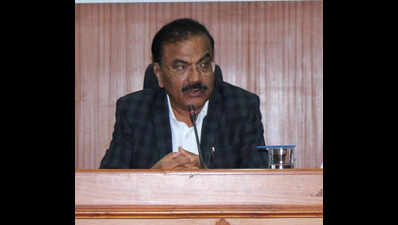
Members of the Karnataka State SCs, STs Commission holding a meeting at the Suvarna Soudha in Belagavi on Monday. | Photo Credit: P.K. BADIGER
Karnataka State Commission for Scheduled Castes and Scheduled Tribes chairman L. Murthy has directed officials of various departments to work in a coordinated manner to see that members of Scheduled Castes and Scheduled Tribes communities do not suffer injustice and that eligible beneficiaries get benefits of government schemes.
At a meeting in Suvarna Soudha in Belagavi on Monday, Dr. Murthy urged all officials to act in a prompt and timely manner to resolve issues of these communities.

SC/ST panel flags fake caste certificates, land disputes in Belagavi


Hyderabad: Scheduled castes (SCs) and scheduled tribes (STs) are three times more backward than the general castes in Telangana while it is 2.7 times in the case of the backward classes (BCs), according to the Socio-Economic Educational, Employment, Political and Caste (SEEEPC) 2024 survey.
There are further divisions within the three broad groups, as the expert panel that analysed the survey findings says “every backward caste is not equally backward”. Consider this: 135 of 242 castes (67 percent of population) are more backward than the state average. Within SCs,18 of 59 castes fall in this category, while it is 7 of 32 in the case of STs.
The report, covering the state’s 3.55 crore people and 242 castes, was released Wednesday evening.
A lack of access to quality education, occupation trapping, and poor living conditions are the most dominant drivers of backwardness for SC, ST, and BC.
For the relatively advanced general castes, education is the main contributor to their progress, reflecting how educational advantage translates into economic advantage.
The expert committee headed by Justice B. Sudershan Reddy, a former Supreme Court judge, also inferred that the chain of disadvantage flows from educational deprivation to occupational exclusion to poor living conditions that further led to low income levels, perpetuating the cycle of deprivation.
Some of the starkest disparities the findings revealed are the employment and education, and living patterns among different castes.
Over 45 percent of SCs are daily wage workers as compared to just 10.9 percent of Other Castes. Only 9.6 percent of SC children attend private schools as compared to 30 percent of OC children. Nearly 33 percent of ST households have no toilets vis-a-vis 4.5 percent of OC households.
The Telangana caste survey also outlined the caste composition in the state as per its population. The SCs account for 17.4 percent, STs 10.5 percent, BCs 56.3 percent (of which Muslim minorities are 10.1 percent), and other castes total up to 15.8 percent. The BC category is further sub-divided into BC-A through BC-E, with BC-E being the Muslim backward classes.
The SEEEPC survey further gave a breakdown of beneficiaries of the government schemes in each of the 242 caste groups. It pointed to a welfare scheme misdirection: 30 percent of Telangana’s total welfare expenditure goes to caste groups that are less backward than state average.
In agricultural schemes such as Rythu Bharosa (a farm support scheme) and free electricity, 15 percent of beneficiaries are from the general category while only 12 percent are SC. Conversely, free bus travel for women reaches SCs at 20 percent as compared to the general caste at 10 percent, suggesting it functions as a truer welfare mechanism.
Additionally, the SEEEPC dataset provided an opportunity to examine the idea of ‘castelessness’ or ‘No Caste’. Nearly 15 lakh people (3.4 percent) in Telangana identified themselves as ‘casteless’.
While this empirical group responded to all the questions, the survey committee noted that this cohort ranks among the least backward groups of Telangana and are more developed in most parameters than the rest.
After the survey was completed in 2024, the Telangana government constituted a nine-member independent expert working group (IEWG) to undertake a comprehensive analysis of the survey.
In its report, the IEWG offered a nuanced interpretation of the data identifying socio‑economic, education, employment and other disparities, assessing backwardness, and situating findings within Telangana’s constitutional and socio‑historical context.
The survey, published as a four-volume report, provided the analytical framework and the composite backwardness index (CBI) methodology used for the findings.
The above-mentioned methodology was chosen to understand the relative backwardness of a particular caste in an objective and transparent manner.
To measure deprivation, backwardness, and progress at an aggregate level, the experts identified 42 equally weighted parameters across eight categories to draw a distinction between rural and urban living standards among others.
The eight categories include education, occupation, living standards, income, land and assets, gender, discrimination, and finally, access to finance. While the weighted average is 81, a caste deemed as most backward gets a score of 126 while it is 0 in the reverse case.
(Edited by Tony Rai)

Jaipur, Apr 27 (PTI) Four policemen, including a station house officer (SHO), have been booked in connection with the alleged assault of a minor Dalit boy in Bhiwadi town of Rajasthan, police said on Monday.
Superintendent of Police Brijesh Jyoti Upadhyay said that a case has been registered against the four personnel under relevant sections of law.
The 16-year-old boy, Lokesh, was allegedly beaten after being taken into custody on April 21 in connection with a theft case. Police said he was seen in CCTV footage related to the incident.
According to officials, the boy is currently undergoing treatment at a hospital. “His condition is stable, and he is being treated for a lung infection,” the SP said.
The incident has sparked a political row, with Leader of Opposition in Rajasthan Assembly Tikaram Jully criticising the state government over the alleged assault.
Terming the incident “deeply condemnable”, Jully alleged that atrocities against Dalits and other vulnerable sections were increasing in the state.
“When the protectors themselves become predators, where does the common man go?” he said, urging Chief Minister Bhajanlal Sharma to take cognisance of the matter and ensure strict action against those responsible.
Calling the incident a “blot on humanity”, Jully claimed that the rule of law had “collapsed” and alleged that incidents of atrocities against Dalits, the poor and women were rising.
He also alleged that the victim’s family was being pressured and their complaint was not initially registered, and said he had spoken to the SP and the boy’s family regarding the matter.
Citing data from the Union home ministry, Jully claimed that Rajasthan had recorded a high number of custodial deaths in recent months, raising concerns over policing in the state.
Police said further investigation into the case is underway. PTI AG AMJ AMJ.


Comments
Post a Comment