UNTOUCHABLES NEWS.10.04.2024.By.Team Sivaji.chennai.9444917060.whatsapp.
 . ,
. ,

A dalit farmer was beaten by a bully who entered his house.

Malihabad, Lucknow. A bully entered the house of a Dalit farmer, kicked and punched him, his wife and daughter-in-law, used caste based abuses and threatened to kill him and then ran away. Dalit farmer Prasadi, resident of Tikrikala village of Mal police station area, has alleged in the report that he was sitting outside the house of Anil Singh of the same village at around 8.30 pm on March 23.
Then Rajendra Singh from the village came and started abusing the Dalit farmer on caste basis. When Rajendra protested, he threatened to kill the victim and ran away. Next day, on March 24, in the morning, Rajendra Singh entered the house of Dalit farmer Prasadi and beat him with kicks and punches. The victim’s wife and daughter-in-law, who came to his rescue, were pushed to the ground. On the complaint of the victim Dalit farmer, the Mall Police has registered a case under serious sections including the SCST Act.
 U
UThe 197th birth anniversary of Father of the Nation Jyotiba Rao Phule will be celebrated with great pomp on 11 April.

Aligarh. The 197th birth anniversary of Father of the Nation Jyotiba Rao Phule will be celebrated with great pomp by Bharatiya Mali (Saini) Samaj Utthan and Vikas Samiti, Uttar Pradesh, Saini Yuva Kranti District, Aligarh and United Saini, Kushwaha, Shakya, Maurya. 11.
On April 2024. While addressing a press conference held at a restaurant on Tuesday, committee chairman tax advocate Mukesh Kumar Saini, Rakesh Saini Lambardar, Bantu Saini, Amit Saini said that on Thursday, April 11, on the 197th birth anniversary of Father of the Nation Jyotiba Rao Phule, this information was given. Various programs will be organized.
On this occasion, the 5th Sankalp Yatra (Run for Jyotiba Phule) will be inaugurated by lighting the lamp from Keshav Vatika, Nagla Tikona at 8 am in the morning. The main objective of this Sankalp Yatra is to awaken the light of Jyotiba Rao’s education and to imbibe his ideal thoughts. Father of the Nation Phule ji was a great social reformer, social enlightener, thinker, writer, philosopher, social worker, revolutionary and a versatile personality.
He started the talk of women’s liberation from his own home and was the first savior of women. President Mukesh Kumar Saini told that the Sankalp Yatra will start from Keshav Vatika and pass through Chandaniya Chowk, Thapar Square, Meenakshi Bridge, Padav Dubey, Manik Chowk, Madar Gate Square, Achal Tal, Naurangabad, Marghat Wali Gali and will end at Keshav Vatika. A function to honor the intelligentsia, social workers, elderly people etc. will be organized in the auditorium of Vatika. The chief guests of the program will be Shri Swami Gyan Sagar Ji Peethadhishwar Jagadguru Vishwakarma Upshankarcharya Prayagraj Allahabad, Founder Amarnath Sanatan Yugvendra and National Fire Army. Prominent in the press conference were Mukesh Saini (Dishwale), Ganesh Saini, Dr. Chetan Saini, Laxman Saini, Brijkishore Saini, Sher Singh Saini (Sabhasad), Sachin Saini (Bharat Kesari), Banwari Lal Pradhanji, Rajesh Saini (Chashma), Dushyant Saini, Vikas Saini, Mukesh Saini, Ankit Paliwal etc. were present.

Dalit groom ordered not to ride on mare in wedding, demands security from Collector-SP
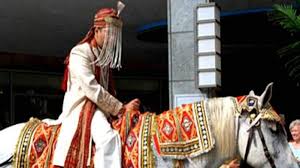
Ranjit Bairwa of Beelamata village of Tonk Gram Panchayat Lambakalan has reached the district headquarters along with his family members and sought security in his marriage. Because he fears that upper caste people will stop him from riding the mare and there will be a dispute. Therefore, he has given a memorandum to Collector Dr. Soumya Jha and SP Sanjeev Nain demanding to provide security in the wedding procession.
Ranjit told that on April 17, on Ram Navami, he is to be married to Sona Bairwa, daughter of Prahlad Bairwa, resident of Handikalan village of Piplu tehsil. The influential people of his village have issued a decree for the past many years that any person from the Dalit community in the village will be taken out of the village in a procession sitting on a mare. The matter was made known through a memorandum given to the Collector’s personal secretary and later to the SP, demanding security. Bhim Sena District President Ashok Bairwa said that strict legal action should be taken against such people.
Those who gave the memorandum Ranjit Bairwa, Ramswaroop Bairwa, Sukhpal Bairwa were also present. Had talked to the influential people of the family: Ranjit, who came to submit the memorandum, told that regarding the marriage, he and his family had talked to the influential people of the village and requested for the marriage procession to be taken out on mare. But they rejected the request of the family members. Therefore, in this case, police protection has been demanded for taking out the procession.

Pratapgarh Gangrape: Councilor’s wife brutalized, rod inserted in private part after gangrape

Pratapgarh Rape Case News: A case of gang rape of a councilor’s wife has come to light in Pratapgarh. The family alleges that the accused inserted a rod into the woman’s private parts after the rape to damage her private parts. The woman has been admitted to the medical college in critical condition due to excessive bleeding. The condition of the woman remains serious. The BJP MP is also being accused of giving protection to the accused in the case. The incident took place in Gadwara Town of Antu police station.
Gang rape with councilor’s wife
The police is considering this incident as an assault and after receiving the complaint, they are talking about registering a case and taking legal action. In this case, Additional Superintendent of Police East Durgesh Singh issued a statement saying that a person from the village had given a piece of his land to the victim. But the person making the deed
Construction was being done on it by the brother. On receiving the complaint on Wednesday, challan 107/16 has been issued to both the parties. Regarding the incident, ASP claims that information has been received about fighting with bricks and stones, the complaint has not been received yet. On receiving the complaint, a case will be registered and legal action will be taken.
Not the first such incident in the area: ASP
ASP Durgesh Singh says that this is not the first such incident in the district. In the year 2018, on 6th February, in Teunga of Nagar Kotwali area, criminals entered the house of Rabia, who was living alone, and carried out the incident of gang rape. They also inserted an iron rod into his private parts and attacked him.
By doing this both his arms and legs were broken. He later died during treatment.
Courtesy : News Track.

Outrage over the murder of Dalit youth in Indore: People of Balai community surrounded Lasudia police station, road remained blocked for hours.

Durgesh Solanki murder case: On Friday night in Ravidas Nagar, Indore, bullies entered the house and murdered Durgesh Solanki. Due to which the angry people of Balai community surrounded the police station on Saturday.
Durgesh Solanki murder case: There is anger in the area over the murder of Dalit youth Durgesh Solanki on Friday in Ravidas Nagar, Indore. Members of the All India Balai Mahasangh along with their families staged a protest outside the Lasudia police station demanding demolition of the houses of the accused and relief money to the dependents of the deceased. The road remained blocked for hours due to the protest.
Dalit leader Manoj Parmar told the police officers that the third member of the Dalit community has been murdered in the last 15 days. The police are not taking action, hence the morale of the accused is high. If we do not get justice, there will be a violent protest.
Manoj Parmar, while referring to the recent murder in Banganga area, said that a few days ago, Koteshwar Chaure and his father Balram were also murdered by influential people. The police administration had given assurance, but neither the houses of the accused were demolished nor any relief amount was sanctioned.
Manoj Parmar raised questions on the lax attitude of the police. Said, crimes are increasing only due to the negligence of the police. The murder of Durgesh Solanki is also the result of this laziness. The police have demanded that the houses of the accused be demolished as soon as possible. Also, relief amount should be provided to the family of the deceased.
Participated in protests
During the protest, Balai Mahasangh’s Chintu Malviya, Lucky Malviya, Shubham Malviya, Santosh Alone, Laxman Khede, Vikas Pathrod, Dinesh Hirve, Rikku Soni, Dinesh Kulpare, Pawan Bhavsar, Sachin Kochle, Prashant Savner, Kanha Bakawale, Rakesh Solanki, Gaurav Wankhede Rishit Malviya and others were present.

Tribute paid to martyr emperor Matadin Bhangi ji on his martyrdom day.
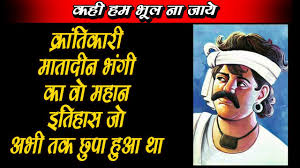
On 08-04-2024, on the martyrdom day of the architect of the first (1857) revolution of independence, the great Dalit native revolutionary, the brave great hero Martyr Emperor Matadin Bhangi ji, by the joint platform of Dalit Exploitation Mukti Manch and social organizations, Sudarshan Nagar Chunni Ganj Kanpur. Tribute paid in
Convener Govind Narayan, while paying tribute, told the people that the brave martyr emperor Mahanayak Matadin Bhangi ji was the first rebel of the country and he was given death sentence by the British on 08 April because he was rebelling. We all pay our respects to her on her 167th Martyrdom Day. Chaman Khanna said that on this day, 08 April 1857, Matadin Bhangi ji was hanged by the British. The first name in the FIR lodged by the British in the 1857 revolution was that of the brave Mahanayak Matadin ji, it was he who had inspired Mangal Pandey and other fellow soldiers to revolt against the British government.
The Manuwadi historians of the country had tried their best to erase his name, but the truth never remains hidden and comes out when the right time comes. That is why Baba Saheb said to read and study, all our brothers and sisters must read mission books along with school books because reading mission books along with true history increases your power of thinking and understanding. When your power will increase, no devil will be able to make you mentally weak (sick) to drink urine, worship cow dung or throw away milk. It will also become known how Manuwadis hid our true history and how they stole our history and made it their own. Among those who paid tribute:- Harbhajan Balmiki, Harishchandra Sagar, Ramesh Verma Harishankar Verma, Shiva Kaithal, Kunal Balmiki, Madan Longvarsha, Rinku Fighter, Abhijat Balmiki, Tarun Balmiki, Raunak Balmiki, Jaiprakash Khanna, Premchandra, Santosh Seth, Raja Khanna (Danny ), Vijay Pandit, Shrestha Khanna, Hasrath Valmiki, Kartik Valmiki, Laddu Valmiki etc.

DNA Verified: Supreme Court bans EVM due to glitches? EC reveals the truth

EVM appears to be at the top of the list when it comes to national blame. Simultaneously, there have been rumours circulating that the nation’s top court, the Supreme Court, has prohibited electronic voting machines (EVMs) in elections due to malfunctions it discovered.
Varnika Srivastava
In the 1982 Kerala state elections, electronic voting machines (EVMs) were used for the first time in the nation. Since then, various statements and accusations about this machine have been made on occasion.
This is why many people claim that EVM appears to be at the top of the list when it comes to national blame. Simultaneously, there have been rumours circulating that the nation’s top court, the Supreme Court, has prohibited electronic voting machines (EVMs) in elections due to malfunctions it discovered.
Many places are claiming that the country’s Supreme Court has banned EVMs. In response, the Election Commission of India updated its website, https://mythvsreality.eci.gov.in/, to refute these false claims. A segment of Myth vs. Reality on various election-related issues has begun, in details/evm. The Election Commission has explained the facts behind the Supreme Court’s and the High Court’s ban on electronic voting machines in this myth versus reality debate. But what’s the real story behind this? Here it is.
Since 2001, complaints have been brought against EVMs in a number of the nation’s High Courts, sparking concerns about potential irregularities and bringing up this topic. The Supreme Court has occasionally looked into cases involving a variety of topics pertaining to the administrative security, usage, robustness, dependability, and technical security of electronic voting machines (EVMs). It has done this in cooperation with numerous national agencies.
In 2001, the Madras High Court acknowledged that “it is not possible to hack or tamper with EVMs” while deliberating over a case. The Supreme Court dismissed appeals against High Court orders in numerous cases involving EVMs and fined petitioners, characterising their actions as nothing more than publicity gimmicks.
In the Lok Sabha elections 2024, the Election Commission will use only EVMs during the elections, which will be held in seven phases across the country from 19 April 2024 to 1 June 2024. The results will be announced simultaneously across the country on 4 June
Courtesy : DNA

No future elections in India if PM Modi re-elected: Nirmala Sitharaman’s husband Parakala Prabhakar

A situation like Ladakh and Manipur will arise in the entire country, Parakala Prabhakar said
Political economist and husband of Union Finance Minister Nirmala Sitharaman, Parakala Prabhakar said if the Bharatiya Janata Party (BJP) wins the upcoming Lok Sabha polls and Prime Minister Narendra Modi is re-elected again in 2024, then there will never be elections in the country again.
“PM Modi himself will give a hate speech from the Red Fort and a situation like Ladakh-Manipur will arise in the entire country,” Dr. Prabhakar is heard saying in a video shared by Congress’s official X handle.
In the video, Dr. Prabhakar also alleged that the Constitution and map of the country will change if PM Modi and his Cabinet return to power. “Aap isko pehechan bhi nahin sakenge (You would not be able to recognise this [India])“, he said.
Citing statements made by BJP leaders, like ‘isko Pakistan jaane ka hai, jane do’ (If they want to go to Pakistan, let them), Dr. Prabhakar said that these hate speeches will now rise from Red Fort in Delhi.
“Modi himself will give a hate speech from the Red Fort and it won’t be done silently or subtly,” Dr. Prabhakar said. The hate speeches will be ‘Khula Khel’, the economist added.
Dr. Prabhakar also said that the unrest that gripped Manipur due to the ethnic clashes between Kuki and Meitei communities will be the norm across India, if at all Mr. Modi returns to power.
Courtesy : The Hindu


தமிழகத்தில் சாதி ஒடுக்குமுறைக்கு எதிரான போராட்டத்தில் பௌத்தத்தின் பங்கு
பி.கே.பாலச்சந்திரன்/டெய்லி மிரர் மூலம்
கொழும்பு, ஏப்ரல் 9: தமிழ்நாடு உட்பட பண்டைய இந்தியாவில் கிறித்தவ சகாப்தத்தின் ஆரம்ப ஆண்டுகளில் இருந்து சுமார் 14 ஆம் நூற்றாண்டு வரை பௌத்தம் தழைத்தோங்கியது. அதன் உச்சத்தில், அது அரச ஆதரவைப் பெற்றது மற்றும் அந்த நேரத்தில் நகர்ப்புற மற்றும் வணிக வர்க்கங்களை உள்ளடக்கிய உயரடுக்கின் மதமாக இருந்தது.
பௌத்தம் பல்வேறு காரணங்களுக்காக இடைக்காலத்தில் இந்தியாவில் இல்லாமல் போனது, மேலும் 19 ஆம் நூற்றாண்டின் இறுதி ஆண்டுகளில் மட்டுமே ஒரு வகையான மறுமலர்ச்சியைக் கண்டது.
பிரிட்டிஷ் தொல்பொருள் ஆராய்ச்சியாளர்கள் மற்றும் இலங்கையிலும் இந்தியாவிலும் காலனித்துவ எதிர்ப்பு மற்றும் மத மறுமலர்ச்சி இயக்கங்கள் கிழக்கு சிந்தனையில் ஆர்வமுள்ள ஐரோப்பியர்களால் தூண்டப்பட்ட கண்டுபிடிப்புகள், 19 ஆம் நூற்றாண்டின் இறுதியில் பௌத்தத்தின் மீதான ஆர்வத்தை அதிகரிக்க காரணமாக இருந்தன .
இலங்கையில், பௌத்த மறுமலர்ச்சியானது தேசியவாத எழுச்சியின் ஒரு பகுதியாக இருந்தது, ஒரு தேசிய அடையாளத்திற்கான தேடல். ஆனால் இந்தியாவில் அதன் மறுமலர்ச்சி பாரம்பரியமாக ஒடுக்கப்பட்ட "தீண்டத்தகாத" சாதிகளை விடுவிக்கும் இயக்கத்தின் ஒரு பகுதியாகும், இப்போது தலித்துகள் என்று அழைக்கப்படுகின்றன.
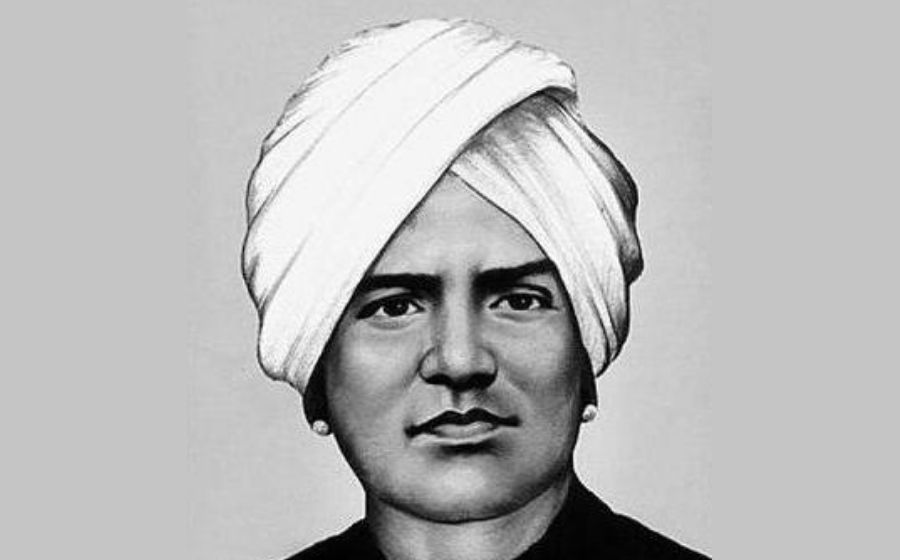
தலித் விடுதலைக்காகப் போராடுவதற்கு முதலில் பௌத்தத்தை ஆயுதமாகப் பயன்படுத்தியவர் தமிழ்நாட்டின் பண்டிட் சி. ஐயோதி தாஸ் (1845-1914). அவரைத் தொடர்ந்து உத்தரபிரதேசத்தைச் சேர்ந்த சுவாமி அச்சுதானந்த் ஹரிஹர் மற்றும் பஞ்சாபின் பாபு மங்கு ராம் ஆகியோர் இருந்தனர். இறுதியாக, Dr.BRAmbedkar அதை தலித் விடுதலையின் இறையியல் என்று வலுவாக சித்தரித்து இந்திய முன்னணிக்கு கொண்டு வந்தார்.
ஐயோதீ தாஸ்
"பறையர்" குடும்பத்தில் பிறந்த இயோதி தாஸ், சித்த மருத்துவ (தமிழ் ஆயுர்வேதம்) மருத்துவராக தனது வாழ்க்கையைத் தொடங்கினார். புகழ்பெற்ற சித்த மருத்துவராக அவர் சமஸ்கிருதம் மற்றும் பாலி மற்றும் ஆங்கிலத்திலும் நன்கு தேர்ச்சி பெற்றிருந்தார். தமிழ் இலக்கியவாதி என்ற பெருமையையும் பெற்றார். அவர் 1870 களில் மலைவாழ் பழங்குடியினருக்கும், 1890 களில் தீண்டத்தகாத இந்து சாதிகளுக்கும் வாதிடத் தொடங்கினார். 1891 ஆம் ஆண்டில், அவர் தீண்டத்தகாத சாதிகளின் அமைப்பான பஞ்சமர் மகாஜன சபையை நிறுவினார்.
அவர் 1885 இல் ரெவ் ஜான் ரத்தினத்துடன் இணைந்து "திராவிட பாண்டியன்" என்ற இதழைத் தொடங்கினார். 1886 ஆம் ஆண்டில், டாக்டர் பிரம்பேத்கருக்கு அரை நூற்றாண்டுக்கு முன்பே அவர் ஒரு அறிக்கையை வெளியிட்டார், தீண்டத்தகாதவர்கள் என்று அழைக்கப்படுபவர்கள் இந்துக்கள் அல்ல என்று கூறினார்.
தாஸ் 'திராவிட மகாஜன சபை'யை நிறுவி, இந்திய தேசிய காங்கிரஸிடம் நூற்றுக்கணக்கான தலித்துகளின் கையெழுத்துடன் மனு அளித்தார், 'பரியா' என்ற வார்த்தையை அவமதிப்பு என்று காங்கிரஸ் கட்சி அறிவிக்க வேண்டும் என்று கேட்டுக் கொண்டார். அதற்குள், "பரியா" என்ற சொல் ஒரு இழிவான நபருக்கு ஆங்கில மொழியின் ஒரு பகுதியாக மாறிவிட்டது.
இந்தியாவில் 1901 ஆம் ஆண்டு மக்கள்தொகை கணக்கெடுப்பு நடத்தப்பட்டபோது, தீண்டத்தகாதவர்கள் தங்களை இந்துக்களாக இல்லாமல் "சாதியற்ற திராவிடர்கள்" என்று பதிவு செய்யுமாறு தாஸ் வலியுறுத்தினார். 1911 மக்கள்தொகை கணக்கெடுப்பின் போது அவர் கோரிக்கையை மீண்டும் கூறினார்.
1898 இல் புத்த மதத்திற்கு மாற்றப்பட்ட தாஸ், தீண்டத்தகாதவர்களை 'ஒரிஜினல் பௌத்தர்கள்' என்று குறிப்பிடும்படி பிரிட்டிஷ் ஆட்சியாளர்களை வலியுறுத்தினார். இவ்வாறு, 1956 இல் ஆயிரக்கணக்கான தலித்துகளுடன் புத்த மதத்திற்கு மாறிய தற்போதைய பௌத்த சின்னமான டாக்டர் பிரம்பேத்கரின் முன்னோடியாக தாஸ் இருந்தார்.
மதம் மாறிய பிறகு, தாஸ் தியோசாபிகல் சொசைட்டியின் கர்னல் ஹென்றி ஓல்காட்டை சந்தித்து இந்திய தமிழர்களிடையே பௌத்த மதத்தை வளர்க்க உதவி கேட்டார். பிக்கு சுமங்கலவிடமிருந்து தீட்சை (தீட்சை) பெறுவதற்காக அவர் இலங்கைக்கு விஜயம் செய்தார். இந்தியாவுக்குத் திரும்பியதும், பர்மா, இலங்கை, மலேசியா, பிஜி மற்றும் தென்னாப்பிரிக்கா ஆகிய நாடுகளில் கிளைகளுடன் "சாக்கிய புத்த சங்கத்தை" அவர் நிறுவினார், அங்கு பல தமிழ் தலித்துகள் ஆங்கிலேயர்களால் நடத்தப்படும் தோட்டங்களில் ஒப்பந்தத் தொழிலாளர்களாக வேலை செய்தனர்.
பிற்காலத்தில் அம்பேத்கரைப் போலவே, தாழ்த்தப்பட்ட சாதிகள் மீது ஆதிக்கம் செலுத்த சாதி, மதம், கல்வி மற்றும் செல்வத்தைப் பயன்படுத்திய உயர்சாதி இந்துக்களின் விழுமியங்களை உள்ளடக்கியதாகக் கூறி இந்திய சுதந்திர இயக்கத்திற்கு எதிராக தாஸ் இருந்தார்.
தாஸ் தமிழ் செவ்வியல் இலக்கியங்களை பௌத்த கண்ணோட்டத்தில் விளக்கினார். இவருடைய புத்தகம் “இந்திரர் தேச சரித்திரம் ” (இந்தியாவின் வரலாறு), இந்தியாவின் முதல் சபால்டர்ன் வரலாறு அல்லது ஒடுக்கப்பட்டவர்களின் நிலைப்பாட்டில் இருந்து வரலாறாகக் கருதப்படுகிறது.
தாஸ் தனது பௌத்தத்தை 'தமிழ் பௌத்தம்' என்று அழைத்தார், இது உலகின் பிற இடங்களில் உள்ள பௌத்தத்திலிருந்து வேறுபட்டது, ஏனெனில் அது சாதிக்கு எதிரானது. பல்வேறு நிக்காயாக்கள் சாதியை அடிப்படையாகக் கொண்ட இலங்கை பௌத்தத்தை அவர் ஏற்றுக்கொள்ளவில்லை . ஜாதிப் பிரச்சினைகளில் அக்கறை இல்லாததால் அநாகரிக தர்மபாலவால் நிறுவப்பட்ட இந்தியாவில் மகா போதி சங்கத்துடன் அவருக்கு கருத்து வேறுபாடுகள் இருந்தன.
ஒரு பரந்த அரசியல் தளத்தின் கீழ் தலித்துகளை அமைப்பதில் துணை சாதி அடையாளங்கள் முக்கிய தடையாக இருப்பதாக அவர் உணர்ந்தார். அனைத்து தலித்துகளும் ஒரு பெரிய சாதிக் குழுவாக இருந்தனர், ஆனால் அவர்கள் துணை ஜாதிகளாக (பள்ளர், பறையர் போன்றவை) பிரிந்ததால் அவர்கள் ஒரு பொதுவான மேடையில் வருவதைத் தடுத்தனர். மொத்தத்தில் பௌத்த மதத்திற்கு மாறுவதே இதற்கு வழி என்று அவர் கருதினார் .
ஐயோதி தாஸின் கருத்துக்கள் தமிழ்நாட்டின் அனைத்துத் தமிழ் திராவிட இயக்கத்திற்கும் முற்பட்டவை. திராவிட இயக்கமும் தமிழர்கள் இந்துக்கள் இல்லை என்றும் பிராமண இந்து மதம் வருவதற்கு முன்பு சாதியற்ற சமுதாயம் இருந்தது என்றும் கூறியது. தாஸ் தலித்துகள் அல்லது தீண்டத்தகாதவர்களை "பூர்வ தமிழர்" (அசல் தமிழர்கள்) என்று அழைத்தார். இந்தியாவில் பௌத்தம் அழிந்ததற்கு பிராமணர்களே காரணம் என்று குற்றம் சாட்டினார். பிறப்பின் அடிப்படையிலான படிநிலை சாதி அமைப்புக்கு பிராமணர்களைக் குற்றம் சாட்டினார். தமிழகத்தில் பௌத்தம் ஆட்சி செய்த போது, ஜாதி அமைப்பு அதிகமாக இருக்கவில்லை என்பது அவர் கருத்து.
தாஸின் "சாக்கிய புத்த சங்கத்தின்" நடவடிக்கைகள் 1911 ஆம் ஆண்டு மக்கள்தொகை கணக்கெடுப்பை நடத்திய பிரிட்டிஷ் அதிகாரிகளின் கண்களைக் கவர்ந்தது. ஒரு அதிகாரி எழுதினார்: "சமீபத்திய சமய வளர்ச்சிகளில் மிக முக்கியமான ஒன்று, மக்களை பௌத்தத்திற்கு மாற்றும் நோக்கத்துடன் தென்னிந்திய சாக்கிய பௌத்த சங்கத்தின் உருவாக்கம் ஆகும்....மதத்தை நிறுவியவர் கூறிய உயர்ந்த கொள்கைகளும் அழகான எளிமையான வாழ்க்கையும் தெரிகிறது. மேற்குறிப்பிட்ட வட்டாரங்களில் உள்ள தமிழ் பேசும் கைவினைஞர்கள் மற்றும் நடுத்தர வர்க்கத்தினரிடம் தனித்தன்மையுடன் முறையிட வேண்டும்.
“மதம் விடுதலை அடையாளமாக – காலனித்துவத்தின் கீழ் தமிழர்களிடையே ஒரு பௌத்த இயக்கம் ” என்ற நூலில், தாஸுக்கு, பௌத்த அடையாளம் என்பது தமிழ் அடையாளத்திலிருந்து வேறுபட்டதல்ல என ஜி.அலோசியஸ் சுட்டிக்காட்டியுள்ளார்.
“The Buddha was not a ‘north Indian’ and therefore, not an “Aryan God”; but he was very much a Dravidian/Tamil Indian and the author of the Tamil script,” Thass said.
He said Buddhists were the protectors and promoters of Tamil literature and other arts such as music, painting and architecture. “The genuine way of being a Tamil is to be a Buddhist, that is, casteless, in every sense of the term.”
Shrinidhi Narasimhan of Brandies University, in her paper “Between the Global and Regional: Asia in the Tamil Buddhist Imagination” says in the late 19 th. and early 20 th.Centuries, Buddhist revival in every country had local, Asian and Western links. The paper highlights the links between Iyothee Thass, Col.Henry Olcott and Anagarika Dharmapala. Each of these Buddhist movements had a distinct local flavour but was interlinked too.
“Modern-day Buddhism is commonly understood to be a co-creation of Asians, Europeans, and Americans” and several scholars such as David McMahan have argued that nineteenth century Asian Buddhist revival movements were premised on Asian engagements with modernity and anticolonial contestations of European imperialism.”
“In Japan, for instance, the fall of the Tokugawa Shogunate and the establishment of Meiji rule in the mid-nineteenth century precipitated the most violent suppression of Buddhism in Japanese history, which compelled the Buddhist community to turn to America, Europe, and elsewhere in Asia and look for ways of reconstructing a Buddhism that would succeed under the new political regime,” Narasimhan points out.
“In Ceylon, on the other hand, British imperialism and Christian missionary activity were the main catalysts for a Buddhist revival. The absence of a Buddhist ruler in Ceylon since the removal of the last Kandyan king by the British in the early nineteenth century contributed to the sense that Buddhism had become weak on the island. In addition, the influence of Christian missionaries and the persistence of caste-based divisions within Buddhist Nikayas provided further impetus for a Sinhalese Buddhist revival.”
“Besides this, economic developments like the growth of new commercial networks and improvements in communication and transportation also influenced the nature of movement within the nineteenth century Asian Buddhist world,” Narasimhan says.
Of the movements, Iyothee Thass’ movement remained relatively understudied partly because it got too entangled in local movements which had relevance only for the Tamils of India. It got subsumed under the Dravidian movement of Periyar E.V.Ramaswamy Naicker and in India as a whole, it got subsumed under the Dalit movement led by Dr.Ambedkar. It was only in the 1990s, that scholars began to take notice of Iyothee Thass.
END

Big Media ignored story on Dalit family ‘tricked’ by Adani-linked firm to donate Rs 10 cr to BJP?
The family alleges a Welspun Enterprises official tricked them into buy electoral bonds.
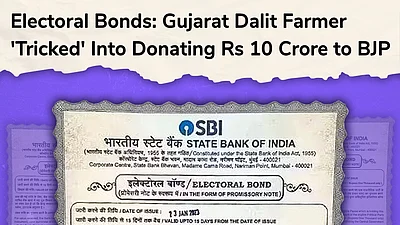
 On April 3, Gujarati web portal Web News Duniya reported on six members of a Dalit family in Gujarat who were “tricked” into donating Rs 10 crore through electoral bonds to the BJP.
The report said the family was approached byan official of Welspun Enterprises Ltd, a company linked to the Adani Group. They subsequently bought bonds worth over Rs 11 crore – Rs 10 crore was encashed by the BJP and a little over Rs 1 crore by the Shiv Sena.
Newslaundry previously reported on the Welspun Group’s links to Adani, and how three of its subsidiaries bought electoral bonds worth Rs 55 crore, of which Rs 42 crore went to the BJP.
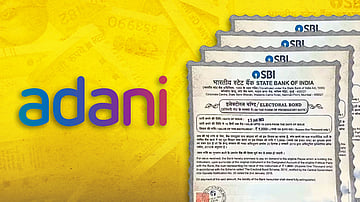 These firms linked to Adani Group bought electoral bonds worth Rs 55.4 cr, BJP encashed Rs 42.4 cr
By April 8, The Quint reported on the family too. One of the family members told the news portal that Welspun had acquired about 43,000 square metres of their agricultural land in Anjar for a “project”.
“This money was part of the compensation we were given as per law. But at the time of depositing this money, Mahendrasinh Sodha, a senior +general manager at the company, told us that such a huge amount can result in trouble with the income tax department...He then introduced us to the electoral bond scheme, which he said would ensure that we get 1.5 times the amount in a few years,” said Haresh Savakara, 41.
He added, “We are illiterate people. We had no clue what this scheme was but at that time it sounded very convincing.”
It’s a shocking story and, unsurprisingly, a number of digital news outlets published reports on the case, including HW News, Vibes of India and Satya Hindi. Others like Media One, Asianet News Tamil, and Dool News and also journalist Ravish Kumar’s YouTube channel picked up the story too.
But among mainstream news outlets, especially news channels, there’s a curious silence. Newslaundry could not find references to the case among major news organisations.
Importantly, the family filed a police complaint at Anjar police station on March 18. It names Welspun directors Viswanathan Kollengode, Sanjay Gupta, Chintan Thaker, and Praveen Bhansali, as well as Welspun senior general manager Mahendrasinh Sodha, Anjar land acquisition officer Vimal Kishore Joshi, and BJP Anjar city president Hemant alias Danny Rajinikanth Shah.
But perhaps we shouldn’t be too surprised at Big Media’s silence. After the Election Commission published data on the electoral bonds scheme, it found few takers, especially among news channels. But Newslaundry partnered with Scroll, The News Minute and independent journalists to sort through the data. Check out our work here.
Complaining about the media is easy. Why not do something to make it better? Support independent media and subscribe to Newslaundry today.

Power NL-TNM Election Fund
General elections are around the corner, and Newslaundry and The News Minute have ambitious plans together to focus on the issues that really matter to the voter. From political funding to battleground states, media coverage to 10 years of Modi, choose a project you would like to support and power our journalism.
Ground reportage is central to public interest journalism. Only readers like you can make it possible. Will you?
You may also like
Electoral bonds, pre-poll coverage from ground zero:


Report card for Ahmedabad West: BJP MP Kirit Solanki’s MPLAD funds lowdown, questions asked in Parliament
Even before the delimitation, a Congress leader was last elected in the 1984 Lok Sabha elections in Ahmedabad Lok Sabha constituency, which remained a BJP stronghold after 1989.

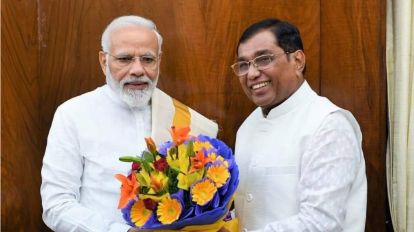 Dr. Kirit Solanki with Prime Minister Narendra Modi. (Source: Facebook/Dr Kirit Solanki)
The constituency came into existence in 2008 following the delimitation exercise in Ahmedabad. Since 2009, BJP’s Dr Kirit Solanki, a laparoscopic surgeon by qualification, is the only leader that the voters of the constituency have sent to the lower house of Parliament.
Even before the delimitation, a Congress leader was last elected in the 1984 Lok Sabha elections in Ahmedabad Lok Sabha constituency, which remained a BJP stronghold after 1989. In 1977, Ahmedabad elected Congress’s Ehsan Jafri, who was killed in the Gulbarg society massacre in the 2002 riots, as its MP.
The BJP has fielded Dinesh Kodar Makhwana from the seat this time.
Profile overview
Solanki has not been a minister. However, he has been the chairperson of the Parliamentary Committee on Welfare of SCs (scheduled castes) and STs (scheduled tribes) for the last five years. He has also been a member of other key panels, including the Standing Committee on Finance; Consultative Committee, Ministry of Environment, Forest & Climate Change; and Joint Committee on the Personal Data Protection Bill, 2019
MPLAD funds lowdown
Dr Solanki says that a major chunk of his MPLAD (Members of Parliament Local Area Development Division) funds were focused on education and health sectors. These included providing facilities for ‘smart schools’, providing equipment for games in schools, ceramic tiles with educative prompts (images of alphabets, numbers), providing water purifiers to schools. Among his works in health, Dr Solanki says he provided ‘ICU on Wheels’ to the Ahmedabad Civil Hospital.
“In multiple schools across my constituency where I funded sports and games equipment, teachers tell me that they now see an increased attendance of students and they come to school an hour earlier, just so that they can play. I took up initiatives in the education and health sector and not particularly infrastructure projects because firstly infrastructure is quite good in Ahmedabad and further for infrastructural demands, I could always pursue the Ahmedabad Municipal Corporation to get those done,” Dr Solanki says.
Questions asked in Parliament
The BJP leader has asked a total of 226 questions so far. He sought details on a range of matters from different ministries, including MEITY (Ministry of Electronics and Information Technology), MOHFW (Ministry of Health and Family Welfare), Panchayati Raj, Consumer Affairs and Food and Public Distribution, commerce and industry, communications, cooperation, culture, chemicals and fertilisers, heavy industries and public enterprises, environment, education, science and technology, law and justice, agriculture and farmers’ welfare.
Some key questions:
February 7, 2020: The BJP leader asked the Centre if the government was considering the implementation of blockchain technology in public healthcare system. To this, the Central government replied that NITI Aayog is studying the same and an appropriate decision will be taken on whether to use the technology after assessing the cost benefit analysis of the technology.
June 24, 2019: Solanki asked if the government introduced or was planning to introduce courses on Astrology as a part of the Pradhan Mantri Kaushal Vikas Yojana (PMKVY). There “are presently no job roles under PMKVY 2016-20 for Astrology” — this was the response he received.
Number of debates that saw participation: 102
During one of the discussions, he urged the government to enact a model framework law to regulate online games across the country, citing that legal provisions vary state to state, creating a “lopsided” legal regime. He also advocated that doctors from Pakistan, who are given Indian citizenship, be allowed to practise in India.
He was part of the Joint Parliamentary Committee on the Personal Data Protection Bill 2019. As a member, according to Solanki, he had advocated for restricting sharing of personal data with social media sites such as Facebook (Meta) and Twitter (now X).
He also introduced a private members’ bill in 2019 seeking to amend the Scheduled Castes and the Scheduled Tribes (Prevention of Atrocities) Act, 1989 “with a view to bring in ragging, segregation of students as per caste and labelling students as reserved category students unfavourable treatment in the category of offence under the parent Act and to put a check on such unlawful activities”.
He has repeatedly urged the government to provide medical care and subsidised medicines to economically weaker patients suffering from Lysosomal Storage Disorders (LSD) and rare disorders. He also requested the government to consider a proposal for reservation of SCs and STs in the private sector “to correct historical injustices”, citing the National Sample Survey Office(NSSO) data that shows that the share of SCs and STs in private enterprises is much less than their share in the population and that SC entrepreneurs and their businesses also face discrimination in accessing inputs and services.
In March 2020, he had also urged the government to take steps in training psychiatrists and counsellors to set up more institutes like the National Institute of Mental Health and Neurosciences (NIMHANS).

Mumbai News: 'No ST, OBC Faculty Hired By IITB In 2023', Reveals RTI
IITB, along with other IITs, has been facing flak for the lack of diversity among its teachers and student community for the past several years.
The Indian Institute of Technology Bombay (IITB) failed to hire any Scheduled Tribe (ST) or Other Backward Class (OBC) faculty member last year. This comes despite the low representation of marginalised groups in the academic positions at the premier institute, revealing the response to a query filed under the Right to Information (RTI).
Of the 21 teachers hired by IITB in 2023, only four belong to reserved categories - all of them Scheduled Castes (SC), the institute informed in an RTI request filed by the student group Ambedkar Periyar Phule Study Circle (APPSC). The lopsided recruitment is keeping up with the existing caste composition of the institute faculty, with only 44 out of 718, barely 6%, of the teachers hailing from backward communities. This, according to the students, is a violation of the reservation policy for central universities, where SCs, STs and OBCs have a 15%, 7.5% and 27% quota, respectively.
Challenges In Faculty Recruitment And PhD Admissions At IIT Bombay
IITs issue rolling advertisements for faculty recruitment, which are open throughout the year for all candidates, who fulfil the required qualifications and experience for faculty positions in IITs.

The RTI query also brought to the fore the relatively poor enrolment of marginalised students in PhD programmes at IITB. Almost half, 16 out of 29 departments of the institute didn't admit a single ST scholar for their doctorate programmes in 2023, while no SC and OBC scholars found an entry at seven and two departments, respectively. The overwhelming majority of PhD entrants - 369 out of 603 - belong to the general category.
Challenges In Achieving Diversity Goals At IITB
IITB, along with other IITs, has been facing flak for the lack of diversity among its teachers and student community for the past several years. Despite directions from the Supreme Court (SC) and the University Grants Commission (UGC) to fill vacant faculty posts through Mission Mode Recruitment (MMR) in accordance with the reservation policies, the institute has yet to lessen the disparity.
Supreme Court's Directive On Reservation Policy At IITs
The Supreme Court, in December 2022, directed the Centre to follow the reservation policy for admission in research degree programmes and recruitment of faculty members at IITs as provided under the Central Educational Institutions (Reservation in Teachers’ Cadre) Act, 2019. The verdict was in response to a plea seeking direction to the Centre and the IITs to follow the reservation policy, with regard to admissions in research programmes and recruitment of faculty members, claiming the guidelines have been violated.
Government's Efforts To Fill Faculty Vacancies In Reserved Categories
Earlier this year, UGC chairman M Jagadesh Kumar had also reiterated, “It is important for all HEIs [higher education institutes] to ensure that all backlog positions in the reserved category are filled up through concerted efforts.”
In February, the Minister of State for Education Subhas Sarkar, in a written reply to an unstarred question of the Lok Sabha said that as many as 4,440 faculty vacancies of SC, ST and OBCs have been filled under MMR drive at central varsities, including IITs.
IITB didn't respond to FPJ's request for a comment.


Comments
Post a Comment