02.09.24.Untouchables News.Today.India.hq.chennai.26.by Team Sivaji.


ஊதியம்: ரூ.22,000/-
https://bit.ly/4dJQXg9
2.ரெப்கோ ஹோம் பைனான்ஸ் வேலை
Degree தேர்ச்சி போதும்!!
https://bit.ly/4dXTXpi
ஊதியம்: ரூ.22,000/-
https://bit.ly/4dJQXg9
ரெப்கோ ஹோம் பைனான்ஸ் வேலை
Degree தேர்ச்சி போதும்!!
https://bit.ly/4dXTXpi
மீண்டும் பயன்பாட்டுக்கு வந்த பாஸ்போர்ட் இணையதளம்..!
நேர்காணல் குறித்த தகவல் வெளியீடு..!
https://bit.ly/4e2E3tw
Konkan Railway Recruitment 2024 Out
New Job Vacancies | Apply Now!!
https://bit.ly/4cNxeLy
சென்னை கார்ப்பரேஷனில் வேலை
8ம் வகுப்பு தேர்ச்சி போதும்!
https://bit.ly/3Z7s8q4.

Dalit leaders divided over VCK move to file review plea against order allowing States to sub-categorise Scheduled Caste communities
Updated - September 02, 2024 02:41 pm IST
Published - September 02, 2024 01:34 pm IST
Focus now on impact decision can have on forging potent political formation of SC communities in Tamil Nadu

D. Ravikumar. File image. | Photo Credit: T. Singaravelou
The Viduthalai Chiruthaigal Katchi’s decision to file a review petition in the Supreme Court against the recent order empowering States to sub-categorise Scheduled Caste (SC) communities, after welcoming the judgement initially, to provide reservations has again turned the focus on the impact it could have on forging a potent political formation of the SC communities in Tamil Nadu.
Speaking to The Hindu, D. Ravikumar, general secretary and Villupuram M.P., said the overall reservations for SC communities were not proportional to their population, while the sub-classified communities, such as the Arundhathiyar community, have been given internal reservations proportional to their population within the SC community.
Also read: Why did courts revisit bar on sub-quotas? | Explained
“Our prayer is that the judgment should be reviewed in the open court and by a larger Bench such as the nine-Bench judge that heard the Indira Sawhney case. Until then, the judgment should be stayed,” Mr. Ravikumar said.
Data sought
The M.P. said while the Supreme Court had given the States the right to provide internal reservations after sub-classifying the communities within the SC list, it had to provide quantifiable data to prove it.
“The State government has to prove that the community [being given internal reservations] is a deprived community and that the internal reservation that is being given doesn’t affect other communities by producing quantifiable data. With respect to internal reservations given to the Arundhathiyar community, the State government has to provide data that proves that the Arundhathiyar community is the most deprived community among 76 communities, of which 35 communities have less than 1,000 people, two communities don’t have any population, and 15 communities are specific to certain districts, within the Scheduled Caste list. The Janardhanan Commission has determined that Arundhathiyar community is the most deprived compared only to the numerically stronger Devendrakula Vellalar and Adi Dravidar/Paraiyar communities, and not to all communities, especially the numerically smaller communities within the SC list,” Mr. Ravikumar argued.
The review petition also challenges the fact that the internal reservations provided to a community/communities within the SC list cannot be proportional to its population when the total reservations for the SC communities are not proportional to their overall population.
“Either the overall percentage of reservations should be increased or the reservations cannot be proportional to population,” he said.
Similarly, Puthiya Tamilagam president K. Krishnasamy said he had demanded that the backlog vacancies be filled first before the 3% internal reservations for the Arundhathiyar community within the Scheduled Caste communities when it was announced, but instead the community was given preferential treatment.
“This has resulted in a situation in which...if there is just a single vacancy, it is being filled by an Arundhathiyar candidate. The Supreme Court order has said that reservations can be given, but nowhere has it said that preference should be given. It is unfortunate that unwanted events are happening, such as communities within the SC list criticising and attacking each other, instead of fighting for reservation rights as a whole,” he said.
Dr. Krishnasamy said the other communities within the SC list should not be put at a disadvantage in the name of uplifting one community and that Chief Minister M.K. Stalin must engage all stakeholders to find a solution.
However, R. Athiyamaan, founder and president, Aathi Thamizhar Peravai, said the review petition filed by VCK, demanding a stay on the judgement, belied Mr. Thirumavalavan’s public support to the reservations for Arundhathiyars within the SC quota.
“We fully support and demand sub-classification of the entire 18% within Scheduled Castes and provide them with reservations,” he said.
Mr. Athiyamaan said the State government should come out with a white paper on the representation of Arundhathiyars in jobs and education before and after the implementation of 3% reservations for the Arundhathiyars.
“Such a white paper would expose all these arguments against the internal reservations. We support filling up of backlog vacancies and increasing reservations proportional to the population,” he said.
Mr. Athiyamaan said his party was against the review petition being filed by the VCK. The party would expose the VCK by organising public meetings and rallies.

- Dalit voters emerge as key battleground in upcoming Haryana Assembly Elections
Dalit voters emerge as key battleground in upcoming Haryana Assembly Elections
With Haryana Assembly elections approaching, political parties are vying for the Dalit vote, recognizing its potential to sway the election outcome.
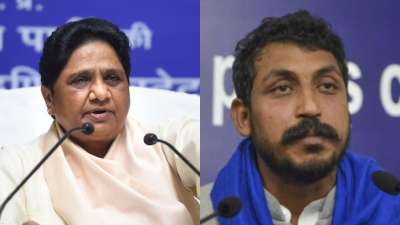 Image Source : PTI (FILE IMAGE)BSP supremo Mayawati and Bhim Army chief Chandrashekhar Azad
While, Abhay Chautala's Indian National Lok Dal (INLD) has teamed up with Mayawati's BSP, Dushyant Chautala's Jannayak Janta Party (JJP) has allied with Chandrasekhar Azad's ASP. Significantly, these moves are seen as attempts to consolidate the SC vote, which accounts for 20.2 per cent of Haryana's population according to the 2011 census, with 17 assembly seats reserved for SC candidates.
About the alliance
While, the INLD-BSP alliance will see INLD contesting 53 seats and BSP 37, including all SC reserved seats. The JJP-ASP coalition will have JJP contesting 70 seats and ASP 20. Significantly, these alliances and seat distributions underscore the importance of this demographic in a state where every vote counts. With the election landscape rapidly evolving, the role of Dalit voters and their impact on the final outcome remain pivotal and unprecedent.
Past trends
In the 2009 Vidhan Sabha elections, the Indian National Lok Dal (INLD) won nine reserved seats, securing 36 percent of the votes, while the Congress won seven seats with 40 percent of the vote share. Other parties managed to win just one seat. The Bahujan Samaj Party (BSP) and the Bharatiya Janata Party (BJP) received six percent and four percent of the votes in these reserved constituencies, respectively. In the 2014 elections, the BJP won nine reserved seats, while the INLD secured three seats and the Congress won four. The BJP captured 33 percent of the votes in these seats, the INLD 29 percent, the Congress 25 percent, and the BSP three percent. By the 2019 elections, the BJP's hold on reserved seats decreased to five, while the Congress increased its tally to seven, and the Jannayak Janta Party (JJP) won four. In this election, the BJP maintained 33 percent of the vote share in reserved seats, the Congress obtained 30 percent, the JJP 22 percent, the BSP three percent, and the INLD’s vote share dropped to just one percent.
What can be predicted for future
Looking ahead, the upcoming elections in Haryana again likely to see a fiercely contested battle for the reserved seats, with each party aiming to strengthen its position among Scheduled Caste (SC) voters. Given the evolving political landscape and recent shifts in voter allegiance, the Bharatiya Janata Party is likely aiming to regain its stronghold in reserved constituencies, especially as it faces increasing competition from both the Congress and the Jannayak Janta Party (JJP). The Congress on the other hand too will attempt to build on its gains from the 2019 elections by consolidating support among SC voters and forming strategic alliances.
Moreover, the JJP, which made a notable debut in the last elections, will look to expand its influence further. And, Bahujan Samaj Party (BSP) and the Indian National Lok Dal (INLD) could play a crucial role in potentially splitting the vote, thereby influencing the overall outcome in these reserved seats.


Read more at: https://www.deccanherald.com/india/manipur/disqualified-after-change-of-rules-supreme-court-directs-manipur-hc-to-appoint-dalit-candidate-as-district-judge-3173187





Morena, Sep 1 (PTI) A 31-year-old man, arrested in a murder case, was found hanging in the lock-up of a police station in Madhya Pradesh’s Morena district on Sunday morning, leading to the suspension of three police personnel, officials said.
Opposition Congress claimed the deceased was a Dalit and accused the police of targeting members of Scheduled Caste communities.
Support Our Journalism
India needs fair, non-hyphenated and questioning journalism, packed with on-ground reporting. ThePrint – with exceptional reporters, columnists and editors – is doing just that.
Sustaining this needs support from wonderful readers like you.

You are very important for our Society,how?
......
IF YOU ARE A SUCCESSFUL EMPLOYEE OR SUCCESSFUL BUSINESSMAN...PLEASE WRITE TO US YOUR SUCCESS STORY.
.......
It will motivate our younger SC.STs.
.......
What to write?
1.Your name, address,photo and present Employement.
2.How you have completed your Education.
3.How you got the job.
4.How is your present life.
5.Whether Dr Ambedkar is in your family.
6.Whether Dr Ambedkar,s Reservation is helpfull to you.
7.What do you want to inform to the youngsters.
8.Write about your special achievements for our Society.
......
Send it by whatsapp.9444917060 or by email.asivaji1962@gmail.com.
We will publish it in our UT NEWS.and 29000 readers and 400 whatsapp group members from all over India will get benefitted.ok.
Thank you,Sivaji.jaíbhim.


Bengaluru: Dalit sanitation workers protest against DRDO alleging unfair treatment

The All India Central Council of Trade Unions (AICCTU), which is supporting the workers, alleged that the safai karamcharis belonging to the Dalit community were terminated for raising their voice against injustice and extortion by their contractor. The women alleged that the contractor was demanding a cut of Rs 3,000 to Rs 4,200 per month to pay the agency and CABS. The issue dates back to 2019, when the contractor began depositing the workers' wages in their bank accounts but demanded that they return a portion in cash to their supervisors.
“From 2019 onwards, the sham contractors used to deposit the wages of the workers to their account and demanded the workers pay over Rs 3000 monthly cash to the supervisors, who said that the amount would be paid to both the Agency and CABS. When they spoke up, they were victimised and harassed. The amount being extorted by the agency increased from Rs. 3,000 to Rs. 4200 from each worker per month,” AICCTU had said.
Despite multiple complaints to CABS officials, no action was allegedly taken to stop the extortion. In October 2023, the women approached the Regional Labour Commissioner (Central), who intervened and halted the illegal collections. However, on March 23, 2024, when the workers reported for duty, they were informed that they had been terminated. They were told that a new contractor, Indian Security Agency, had taken over and that their services were no longer required.
The AICCTU then filed a complaint with the Karnataka State Commission for Safai Karamcharis (KSCSK), which ruled in favour of the workers. On May 9, the Commission ordered that the workers be reinstated. However, when the women reported for work on the designated day, they were not allowed to resume their duties.
The KSCSK escalated the matter to the state’s social welfare department, and said that its reinstatement order was breached. On July 2, the Minister for Social Welfare and Chairperson of the Karnataka Safai Karamchari Commission issued an order directing DRDO to reinstate the workers by July 8. Despite these directives, CABS has refused to comply.
The protesting workers are demanding immediate reinstatement, arguing that their termination was a retaliatory action for standing up against exploitation. Some of these women have been employed at CABS for over a decade.

'Brahmin Genes' | The Superiority-Victimhood Complex
Brahmin victimhood now comes in a new socio-political context where the Constitution and electoral politics matter.
On the other hand, many have strongly opposed this trend as casteist, pointing to the history of Brahmins in India with respect to their role in sanctioning caste practices and disenfranchising Dalits and those belonging to lower castes.
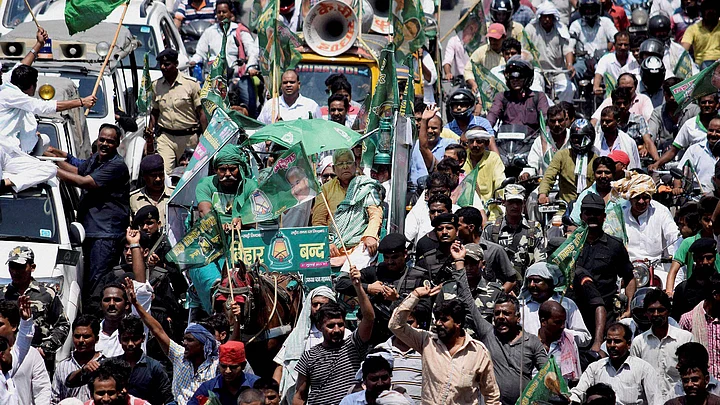
A Brief History of Brahmin Superiority
Brahmin superiority claims are not new.
Historian Anirudh Kanisetti, analysing the inscriptions in Tamil Nadu between the 10th to 12th centuries, writes that the Brahmins considered themselves to be, ritually, the purest caste and appropriated a substantial amount of land and labour. Historian Rosalind O’Hanlon mentions that in the 15th century, Brahmins in Western India occupied powerful positions as administrative and scribal elites, and wealth flowed from the courts to the temples in South India. Over the centuries, they decided the social status of different groups.
What made them acquire this position of authority and reverence was their twice-born status and claims to being the highest caste in the social order based on which they regulated the socio-economic life of lower castes and Dalits through punishments and prohibitions.
By the mid-18th century, Brahmins had started expanding their concepts of purity and impurity on a large scale. Historian Susan Bayly writes that they achieved this through the sponsorship of Brahmin-centred royal rituals, and the support of pan-Indian holy places and devotional traditions.
By the late 19th century, their claims to be Aryan, possessing pure blood as compared to others, featured regularly in public discourse and they came to occupy key positions in the colonial bureaucracy during the various presidencies. Quite frequently, the knowledge of Indian society acquired by the British colonial administrators was provided by Brahmins who, in the process, legitimised their superiority.
During the second half of the 19th century, anti-caste leaders like the Phules in Western India, and in the first half of the twentieth century, the non-Brahmin movement in Madras, challenged not only the Brahmin superiority claims but also demanded their share in the administration, as opposed to the disproportionate share of Brahmins.
In the Madras Presidency and Travancore, the distance pollution practice by Brahmins against the lower castes and Dalits was reported to be the strongest, so much so that leaders like Ayyankali from the Dalit community had to lead struggles for access to public roads, water sources, and schools, and let's not forget the landmark Mahad Satyagraha in Maharashtra (1927) led by Dr BR Ambedkar, when Brahmins poured cow dung to purify the tank from which Dalits drank water.
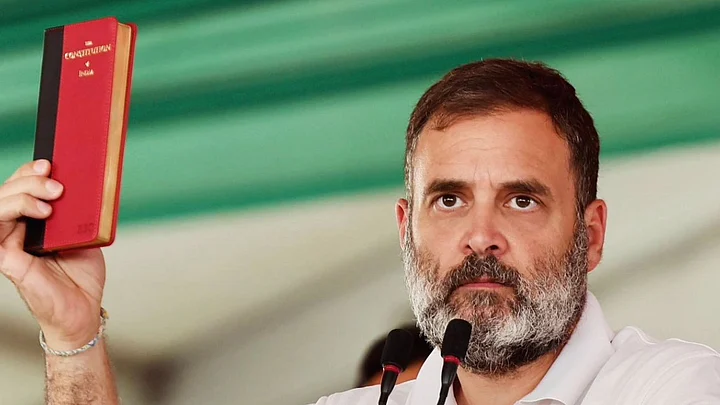
Challenges to Brahmin Superiority in Post-Colonial India
Throughout the first three decades after independence, Brahmins dominated the Nehruvian bureaucracy, the new industries, and also electoral politics through the Congress party. However, around the mid-1980s, political mobilisation by lower castes and Dalits started gaining ground, leading to the famous Mandal Commission agitation.
The dent in the Brahmin domination in electoral politics and the simultaneous growth of Dalit and OBC parties also meant that political narratives articulated by the latter had to be taken into account since their numbers are higher.
Some of these narratives include the caste census, the proper implementation of reservations and the Scheduled Castes and the Scheduled Tribes (Prevention of Atrocities) Act, 1989. These have been an eyesore mainly to a section of Brahmins whose dominance in public sector institutions, caste practices and their numerical minority position has been brought into question.
The challenge to their monopoly is then responded to through a victimhood narrative in order to galvanise upper caste opinion to undo processes of democratisation initiated through representational politics and access to public sector jobs for the Dalits, Adivasis, and OBCs in the last two decades.
The Many Meanings and Contexts of Brahmin Superiority and Victimhood
While claims of being pure and innately meritorious, divinely ordained, and entitled to the highest social prestige and privileges have been a regular feature constituting the Brahmin figure over the centuries, victimhood has now come to strongly define this figure.
Not that Brahmins have not claimed victimhood earlier, especially in opposition to the non-Brahmin movement in Tamil Nadu in the first half of the 20th century. But this new victimhood is layered with different meanings and comes in a new socio-political context where the Constitution, judiciary, and electoral politics have to be kept in mind. Earlier, only a claim to superior status would work as a pressure point for the colonial administration in matters of contention.
If one looks at the last few decades, Brahmin exclusivity has come under many challenges, especially the symbolic figures it has encompassed starting from the bureaucrat and the IT professional to the IIT-clearing student.
Caste mythography of Dalits and lower castes has proliferated over the last three decades. The social media boom, access to a variety of cultural production, large-scale migration, and the shrinking public sector have provided alternative reference points to choose from, thereby reducing the symbolic appeal of being a Brahmin.
At the same time, the rise of alternative religiosities has impacted the significance of the Brahmin as the sole religious authority, and for political exigencies, the Hindutva project has been trying to articulate a broad Hindu identity. All these factors have brought in multiple claim makings, reference points, aspirations, and political narratives by a range of subaltern caste groups, leading to a crisis of the many symbolic Brahmin figures in social media, civil society, workplaces and higher educational institutions.
The undermining of Brahmin exclusivity in popular cultural representation and political narrative-making, combined with the increasing demands of Dalit and OBC sections for social justice, has produced a moment of crisis where the revered past becomes a refuge for sections of Brahmins in which they can uninhibitedly live with their "superior" status.
At the same time, the anxiety about greater representation of Dalits and OBCs in institutions produces a sense of victimhood. Anuradha Tiwari’s tweet about the fear of private sector reservations for SC/ST and OBCs reveals this anxiety about their future, where the latter too could equally participate in the same space alongside Brahmins.
However, none of the depictions of Brahmin victimhood stand the test of any numbers or reality. Their presence both in white-collar employment and in reputed higher educational institutions continues to be extremely high.
Their comparison to being persecuted like the Jews is fallacious. In fact, it is the Dalits and Adivasis of the country who continue to be victims of caste-based atrocities and Brahmins are the perpetrators on many of these occasions (for example, the infamous Ranveer Sena in Bihar, a caste militia led by Brahmins in the 1990s).
The overwhelming presence and decision-making positions in the media, judiciary, police, corporate boards, IT companies, state machinery, various civil society, cultural organisations etc, endow them with authority and control rather than making them vulnerable because of their caste identity. Brahmins are also a substantial number in the diaspora including the Silicon Valley in the US and Western academic spaces which makes them a powerful global class.

Brahmin Pride is not Harmless
Brahmin identity is not a harmless cultural symbol or heritage, it has been constituted through centuries of exclusion, disenfranchisement and deprivation of the Dalits and lower castes in social and economic domains. To take pride in such a history or claim it as part of one's genes is a mockery of the struggles of those great anti-caste leaders and people who laboured to mitigate the implications of Brahmin supremacy on marginalised caste groups.
The pure Brahmin as a figure and idea has historically been laden with contempt, distancing, and dehumanisation of the impure Dalit figure. Furthermore, members of stigmatised caste groups when they encounter dominant caste pride like that of the Brahmins in any workspace or educational institution, are made to feel isolated, ashamed, and inferior for their caste position.
Brahmin pride leads to the denial of houses in urban spaces, restrictions of food choices in higher educational institutions for members from subaltern caste groups, and discrimination in interview processes for job recruitment. In spaces of knowledge production, policy-making, and cultural representation, Brahmin pride has been quite detrimental to the diversity of needs and perspectives of the Dalit-Bahujan sections.
The imposition of vegetarian food preferences in primary schools and religious myths believed by Brahmins as the representation of everyone’s beliefs are just a few examples of how this takes place. Such processes lead to an erasure of people’s culture and practices as well as subsume and distort their histories. Many classical art forms touted to be Brahmin heritage have been appropriated and distorted from the practices of marginalised caste hereditary performing communities like the Isai Vellalars.
Conclusion
Overall, the Brahmin gene paranoia is a contradictory complex of superiority victimhood where misrepresentation of history, glorification of an oppressive social order, and contemporary political upheavals interplay in a complex manner.
This paranoia brings out resentment against people from marginalised caste groups who attempt to progress in life through their constitutionally given rights, and in the process, it dehumanises them as inherently incapable and meant to do harsh menial labor. These outbursts play out in workplaces, educational institutions and in popular TV debates from time to time leading to isolation and hostility against many.
And in a country where a vast section of people do harsh, low paying jobs and toil everyday to make their livelihood, to take pride in studying and scoring marks and claim superiority over them as Brahmins is a cruel joke.
(Sumeet Samos hails from south Odisha. He recently completed MSc in Modern South Asian Studies from the University of Oxford. He is a young researcher and anti-caste activist and his research interests are Dalit Christians, cosmopolitan elites, student politics, and society and culture in Odisha.)

Jaipur, Jul 29 (PTI) Crimes against Scheduled Castes and Scheduled Tribes increased rapidly after the BJP assumed power in Rajasthan, former chief minister Ashok Gehlot said on Monday.
He also demanded that Chief Minister Bhajanlal Sharma himself take cognisance and ensure the safety of Dalits and tribals.
Sharing a news report of a crime in Jodhpur's Shergarh, Gehlot said in a post on X, "During our government in Rajasthan, prompt action was taken on crimes against Scheduled Castes and Scheduled Tribes and the police always stood firmly with the victim. Crimes against Scheduled Castes and Scheduled Tribes increased rapidly in the state since the change of government."
"Crimes against Dalits and tribals have increased. The crime percentage, which was 32.7 per cent in January 2024, rose to 33.7 per cent in February, 34.1 per cent in March, 19.5 per cent in April, 62.5 per cent in May and 53.37 per cent in June," he said in Hindi.
A 40-year-old man was allegedly thrashed by a group of people in Shergarh in an attempt to get him to withdraw a police case he had lodged against them under the Scheduled Caste and Scheduled Tribe (Prevention of Atrocities) Act.
Gehlot said the incident showed the government and the police were not paying attention to atrocities against Dalits.
"Such incidents are a blot on the Rajasthan government. It cannot escape responsibility. The chief minister himself should take cognisance and ensure the safety of Dalits and tribals," the Congress leader added.

Dalit group demands quota in private sector, enactment of Equal Employment Opportunity Act, criticises creamy layer in reservations

During a discussion held at Delhi’s Constitution Club of India on 27 August under the banner of the All India Institute of Scheduled Castes Activists (AIISCA), speakers criticised the creamy layer in SC/ST reservations, demanded reservations in the private sector, and called for the enactment of an Equal Employment Opportunity Act.
Khushi Goswami
“If one seriously goes beyond the popular political narrative around reservations constructed by the Hindu upper caste, then the illustration by Babasaheb Ambedkar takes us back to the origin of reservations in India, not as mere welfare measures but as core negotiations between the modern Indian state and Scheduled Castes as minorities,” said Dr. Rahul Sonpimple, President of the All India Institute of Scheduled Castes Activists (AIISCA).
He read a part from Ambedkar’s Annihilation of Caste and it read: “What does the history of Irish Home Rule show? It is well-known that in the course of the negotiations between the representatives of Ulster and Southern Ireland, Mr. Redmond, the representative of Southern Ireland, in order to bring Ulster into a Home Rule Constitution common to the whole of Ireland, said to the representatives of Ulster: ‘Ask any political safeguards you like and you shall have them.’ What was the reply that Ulstermen gave? Their reply was, ‘Damn your safeguards, we don’t want to be ruled by you on any terms.’ People who blame the minorities in India ought to consider what would have happened to the political aspirations of the majority, if the minorities had taken the attitude which Ulster took.”
Dr. Sonpimple criticised the Supreme Court’s verdict, arguing that it should be rejected due to a lack of empirical evidence and the overriding of constitutional arrangements.
He questioned the authority of the judiciary to make changes to SC/ST reservations, emphasising that such decisions should rest with Parliament.
“Has the Indian state fulfilled this negotiation? No supporter of justice, observing the miserable condition of SCs and STs, would take the stand of the Indian state. Rightfully, one should question both the government and the judiciary: Has the Indian state failed to keep its democratic promise to its marginalized?,” he asked.
Former Delhi minister and senior Dalit politician Rajendra Pal Gautam, echoed this sentiment, expressing his views on the Supreme Court’s judgment.
Gautam argued that sub-classifying SCs within a heterogeneous society is unjust and divisive. He questioned whether the concerns of the affected communities were adequately considered during the hearings, emphasising the principle of natural justice.
Gautam challenged the data used by the Union government to justify the judgment and warned of potential conflicts among SC/ST communities due to the unequal distribution of government job quotas.
“Na jhukenge, Na rukenge, Na pitenge, hum ladenge,” he declared, signaling a commitment to fight for equal distribution of resources and reservations in the private sector.
Writer Anita Bharti, the next panelist, shared her experiences as a first-generation student benefiting from reservations.
She reflected on her 40-year involvement in the movement and the pain of witnessing attempts to divide the community.
Bharti highlighted the suppression of marginalised voices in films and literature and recounted the Mirchpur incident, where an irate mob burned the homes of Dalit families, leading to the death of a physically disabled girl. She urged society to take responsibility and work towards equality, rather than perpetuating oppression.
Jawaharlal Nehru University professor and noted academic Harish Wankhede emphasised the importance of the AIISCA discussion in advancing equality for Scheduled Castes and Tribes.
He criticised the lack of progress in ensuring equal representation in government jobs and political power and expressed concern over the depression and despair experienced by Scheduled Castes due to inadequate housing, land, and reservation policies. In his view, the Supreme Court’s judgment represents a significant setback for these communities.
Dr. Ritu Singh joined Wankhede in condemning the judgment, highlighting the strong voice of dissent that has emerged in response. She argued that equality for Scheduled Castes and Tribes is crucial for breaking the cycle of historical discrimination, particularly in education. Singh criticised the political motivations behind the judgment and called for equal opportunities for these communities.
Khushi is a literature student with a keen interest in media and research and an editorial intern with Maktoob.

Bareilly News: Dalit brothers beaten up, Bhim Army protests

Aliganj. Bhim Army workers have protested in Gaini after no action was taken even after a report was filed in the case of Dalit brothers being beaten up.
The police stopped the protest by assuring the arrest of the accused within three days. A few days ago, real brothers who ran a coaching center were beaten up in Gaini. On the complaint of the mother of the victims, the police had registered a case against the accused.
Courtesy : Hindi Nenws

Murder accused’s body found hanging in Morena jail, Congress says ‘Police is targeting Dalits’

MP News: The body of a murder accused was found hanging in custody in Morena jail. Three policemen have been suspended in the investigation. Congress has accused of targeting Dalits.
Morena News: A 31-year-old man was taken into custody in a murder case in Morena district of Madhya Pradesh. On Sunday (September 1) morning, the body of the accused was found hanging in the jail. Taking action in this case, three policemen including the TI have been suspended. It is suspected that the murder accused has committed suicide in the lock-up.
Now in this case, Madhya Pradesh Congress has attacked BJP’s Mohan Yadav government and the police administration. Congress leaders allege that the deceased belonged to the Dalit community and Morena police is targeting Dalits.
Sensation due to suicide of youth in jail
It is worth noting that the accused found dead in the jail has been identified as Balkrishna Jatav. The accused was brought to the police station a few days ago on the charge of murder. There has been a state of panic in the police department since the information of the youth’s suicide was received. At the same time, the family of the deceased is holding the police responsible and demanding justice.
The family of the deceased demanded financial help
The family of the deceased youth alleges that the police had picked him up four days ago and were constantly torturing him since then. Tired of this torture, the youth committed suicide. Along with this, the family of the deceased demands that strict action should be taken against the culprits and financial help should be given to the family.
Hanged himself by making a noose from a towel
According to the information received by the police, the deceased was locked in a lock-up, in which there was no other prisoner. After about 10 o’clock in the night, he made a noose from his towel and committed suicide. Along with forensic investigation, magisterial investigation is also going on in the case. Action will be taken according to whatever is found in the investigation.
..


Comments
Post a Comment