01.12.2025.Sivaji's..Untouchables News of India.by UTN.Team Sivaji.9444917060.follow us in all Social Media.


Hathras News: Kidnappers of a Dalit girl dragged her father off his scooter and shot him; his condition is critical.
Hathras News: A shocking incident has occurred in Hathras district, Uttar Pradesh. The accused of kidnapping a Dalit girl shot her father in broad daylight. The attackers pulled the victim off his scooter and carried out the crime. The injured father has been referred to Aligarh Medical College in critical condition. Tension has gripped the entire area since the incident.
Father had gone to the police station to locate his daughter.
The family of the injured Rajpal has accused the police of negligence. Rajpal had gone to the police station to inquire about his daughter’s kidnapping. When he was unable to find the station in-charge, he was returning. On the way, five men on two bikes surrounded him. The accused forced Rajpal off his scooter and opened fire, hitting him in his right hand.
The girl was kidnapped 18 days ago.
According to the family, on the 11th, a young man named Deepak from the same village lured and abducted Rajpal’s daughter. Eighteen days have passed since the incident, but the police have not been able to recover the girl. The victim’s family has been pleading for help. It is alleged that this police laxity led the emboldened accused to attack the father with intent to kill.
Police claim: Action will be taken upon receiving a written complaint.
The news of the shooting created a stir within the police department. The Dial 112 team rushed the injured to the district hospital. Given the seriousness of the matter, senior police officers also arrived at the hospital. The police say that some people from the village are accused of the shooting. Upon receiving a written complaint from the family, a case will be registered and strict action will be taken.
Courtesy: Hindi News

Dalit man dies after police custody in Bengaluru; family cries foul
Darshan was brutally assaulted to the extent that he was unable to walk, said his mother.
A 24-year-old Dalit man died in a rehabilitation center after being allegedly beaten to death during police custody in Bengaluru.
Darshan, who died on November 26, was an alcoholic and often picked fights.
According to his mother, Adilakshmi, police officers from the Viveknagar station took him into custody on November 12 after a brawl with his neighbour.
The mother alleged that she was not allowed to see or meet her son. In her police complaint, she has named assistant sub-inspector Pawan and two other policemen for brutally assaulting her son to the extent that he was unable to walk. There was no medical care provided despite his deteriorating condition.
Three days later, on November 15, police informed the Dalit family that Darshan was being shifted to the Unity Foundation Rehab Centre near Madanayakanahalli. “The police pressured me to admit my son there and demanded Rs 2,500 as admission fees. After admitting, we were told by the staff present that Darshan’s health was improving, but we never saw him,” she said in her complaint.
Then, on November 26, Adilakshmi’s world came crashing down after she received the news of her son’s passing, due to “breathing difficulties.”
When the family arrived at the rehab centre, they found that his body was missing. They were later directed to the Nelamangala government hospital, where doctors informed them that Darshan had been brought dead.
The family noticed injury marks on his chest, back, arms and legs, raising suspicions that he had been assaulted. His body was subsequently shifted to Victoria Hospital for a post-mortem, where doctors reportedly found several older injuries as well.
The Madanayakanahalli police registered a case under the SC/ST (Prevention of Atrocities) Act and various IPC sections related to assault, wrongful confinement, custodial torture and negligence.
Adilakshmi has also alleged that her son was targeted because he belonged to a Scheduled Caste and that upper-caste police personnel mistreated him. Dalit organisations have called for an impartial and transparent investigation, saying the timeline strongly suggests custodial torture disguised as rehabilitation.
Courtesy : TSD

Delhi Dalit OBC minorities body members wear Ambedkar masks pledge to save Constitution
New Delhi, A large number of members of the Confederation of Dalit, OBC, Minorities and Adivasi Organisations (DOMA Parisangh) gathered at the Ambedkar Bhawan here, taking a pledge to save the Constitution of India in front of Ambedkar's statue by wearing masks with his face on them.
Earlier, the DOMS Parisangh was scheduled to hold a rally at Ramlila Maidan, but following a BJP leader’s complaint, the NOC by the police was denied.
DOMS Parisangh chairman and Congress leader Udit Raj said that, being disciplined and law-abiding citizens, they changed the original program from Ramlila ground to Ambedkar Bhawan, as thousands of people attended.
Campaigning and mobilising the team members had been underway since July, and the cancellation was announced, yet some people still reached the Ramlila Maidan and were mistreated by the police, Udit Raj alleged.
He said people arrived peacefully at the Ambedkar Bhawan to take the pledge amid heavy police deployments, which prevented them from marching.
Addressing the gathering, Udit Raj said that saving the Constitution and democracy is no longer within the power of political parties alone, as all constitutional institutions have become weak, and a few individuals cannot protect them through struggle. A mass movement is the only option to save the Constitution, he said.
(This story has not been edited by THE WEEK and is auto-generated from PTI)
Courtesy : The Week


Omar Cabinet panel clears changes to get around J&K quota quagmire
The NC govt has been facing protests over increase in quotas to 70% of total seats after more groups were included in ST and OBC category by Centre
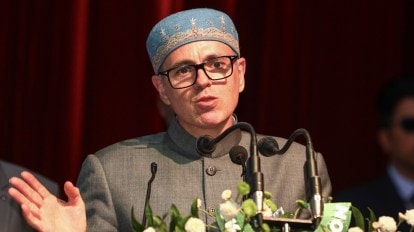 Though the NC has been promising to align reservations with population figures, the Abdullah government has been wary about any rushed move which could trigger a reverse backlash from the groups whose quotas were shrunk. (File Photo)

As Chief Minister Omar Abdullah faces protests from youths and attacks from the Opposition and within his own ranks over the issue of reservations, a Cabinet Sub Committee has cleared a report that suggests changes to ensure that 50% of the seats/jobs remain available for open merit or general category students.
The report prepared by a Cabinet Sub Committee, which has been accepted by the Abdullah Cabinet, leaves the Scheduled Tribe (ST) and Scheduled Caste (SC) quotas untouched but recommends carving out additional open merit seats/jobs from the Residents of Backward Areas (RBA) and Economically Weaker Section (EWS) categories.
In March 2024, soon after Parliament brought in more groups under STs in J&K, Lt Governor Manoj Sinha amended the J&K Reservation Rules, 2005, enhancing the ST-reserved seats/jobs from 10% of the total to 20%. Alongside, reservation for Other Backward Classes (OBC) was also increased, with 15 new groups added to the OBC list.
This meant that total reservations increased from 43% to 70% of the total in government jobs/seats, leaving only 30% in the general category, though a majority of the J&K population falls in this category.
Youths hit the streets against the increase in quotas, with National Conference MP Aga Ruhulla Mehdi joining them against his own party’s government. Recently, he warned that he would join the protests again after Parliament’s Winter Session if there was no review of the quota policy.
A senior government official said: “The ST quotas (for ST-I and ST-II) can’t be altered as they came from Parliament. That left us few options to work with.” The Bill passed by Parliament in February 2024 created sub-classifications within STs in J&K, while including more groups to the list, as ST-I and ST-II.
The Cabinet Sub Committee has hence proposed reallocating seats from the RBA and EWS categories, to open up more seats for the general category. The official said: “The bulk of the RBA population that came under J&K is now in Ladakh and no longer part of the Union Territory. So shifting some of these seats to open merit makes sense.”


Cyclone Ditwah: Scheduled Caste hamlet marooned for three days without power in Vedaranyam
Updated - December 01, 2025 06:54 pm IST - NAGAPATTINAM


Streets and houses in Gandhi Nagar in Vedaranyam have been flooded for three days since rains lashed the area under the impact of Cyclone Ditwah. | Photo Credit: R. Vengadesh
A Scheduled Caste hamlet of about 120 families in Vedaranyam of Nagapattinam district has been marooned in knee-deep stagnant water for three days, with power supply cut and a government school and hostel under water, following heavy rain triggered by Cyclone Ditwah.

What ‘These People’ Teach Us About Ambedkar
Every December 6, crowds gather to honour Dr B.R. Ambedkar — yet his revolutionary ideas on equality, workers’ rights, women’s empowerment, and social reform remain widely misunderstood
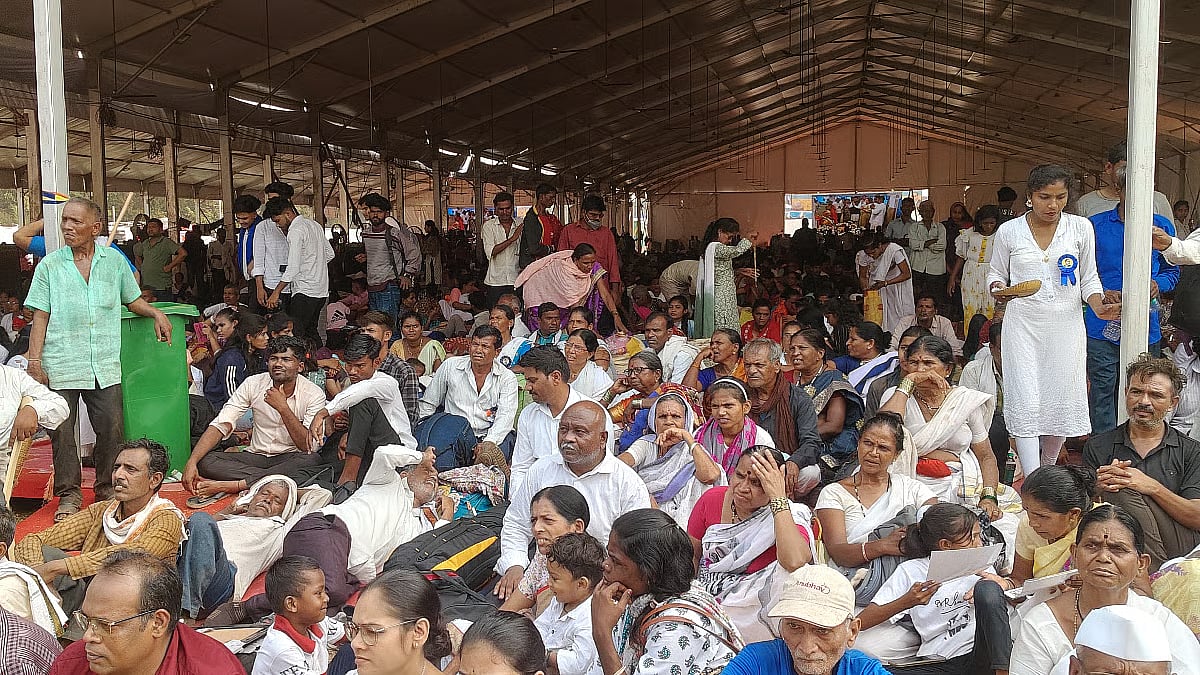
When crowds head to Dadar’s Chaityabhoomi for the December 6 rally on Dr BR Ambedkar’s death anniversary every year, the common complaint is how “these people” take over practically every available space. Public transport, common areas, every nook and corner is occupied by the “Jai Bhim waale”. It is a cause for complaint among Mumbai residents as well as commuters, who are resigned to grit their teeth for these few days.
People pour in a day or two earlier from all over the state, to honour the memory of one of the greatest reformers of society. More than the acknowledged architect of the Constitution, Dr Ambedkar was a revolutionary thinker who paved the way for modern life as we know it.
Sociology lecturer Kiran Vengurlekar explains: “People love to box Ambedkar into ‘oh, he only gave reservations’ or ‘only helped SC/ST’ but that’s a lazy half truth. The reality? His impact is everywhere around us, even if people don’t connect the dots. Our Fundamental Rights like freedom of speech, equality before law and protection from exploitation? That’s Ambedkar’s Constitution at work. The reason you can even criticise him openly on social media without fearing jail is because he made sure those rights were enshrined.”

What ‘These People’ Teach Us About Ambedkar
Every December 6, crowds gather to honour Dr B.R. Ambedkar — yet his revolutionary ideas on equality, workers’ rights, women’s empowerment, and social reform remain widely misunderstood RavalUpdated: Saturday, November 29, 2025, 03:48 PM IST
When crowds head to Dadar’s Chaityabhoomi for the December 6 rally on Dr BR Ambedkar’s death anniversary every year, the common complaint is how “these people” take over practically every available space. Public transport, common areas, every nook and corner is occupied by the “Jai Bhim waale”. It is a cause for complaint among Mumbai residents as well as commuters, who are resigned to grit their teeth for these few days.
People pour in a day or two earlier from all over the state, to honour the memory of one of the greatest reformers of society. More than the acknowledged architect of the Constitution, Dr Ambedkar was a revolutionary thinker who paved the way for modern life as we know it.
Sociology lecturer Kiran Vengurlekar explains: “People love to box Ambedkar into ‘oh, he only gave reservations’ or ‘only helped SC/ST’ but that’s a lazy half truth. The reality? His impact is everywhere around us, even if people don’t connect the dots. Our Fundamental Rights like freedom of speech, equality before law and protection from exploitation? That’s Ambedkar’s Constitution at work. The reason you can even criticise him openly on social media without fearing jail is because he made sure those rights were enshrined.”
 The eight-hour workday, Vengurlekar says, came about because of Dr Ambedkar’s fight through the Factories Act of 1948, where he pushed for humane working conditions, rest periods and fair hours. “He was one of the earliest voices for workers’ dignity,” he says.
But these facts are almost obscured by the noise around the question of caste, chiefly because of Dr Ambedkar’s seminal work, The Annihilation of Caste. The first thing that most youngsters say on hearing his name is “reservations”.
Rashmi Vora, a political science post-graduate student, says, “I understand why it exists, and I know it’s still needed to address the systemic barriers and generational exclusion that Dalits, Adivasis, and OBCs have faced. But I also believe that reservation by itself is not enough. What’s missing is a simultaneous push for social reform, mass awareness, and education that questions caste. We have reservation policies on paper, but we’ve failed to build the cultural shift needed to dismantle caste consciousness. We don’t teach caste history properly. We don’t run campaigns to reduce caste-based prejudices.”
And these prejudices then translates into the “us vs them” that always surfaces around December 6 and April 14.
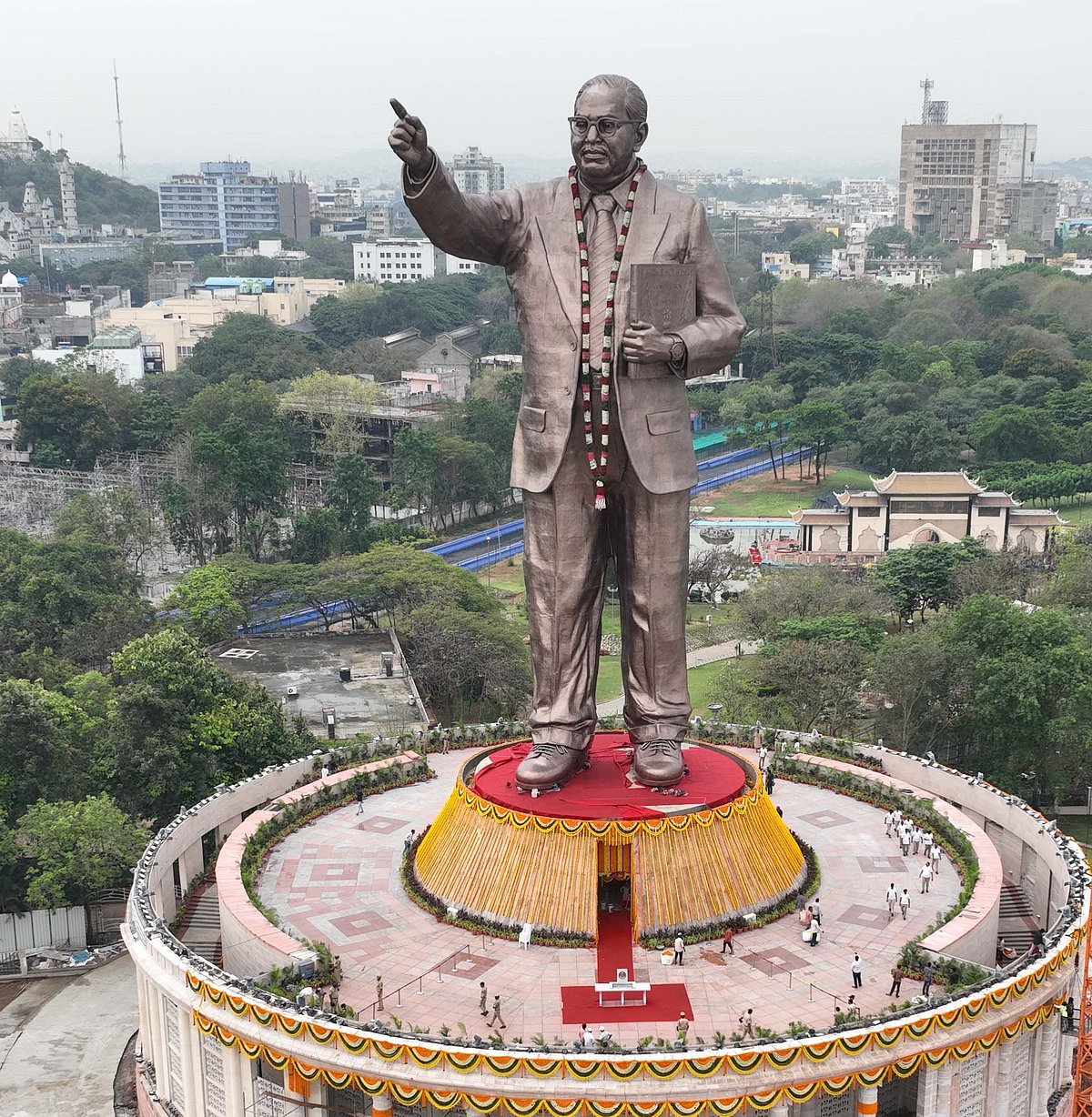
This reaction only underlines the social divide which ironically Dr Ambedkar sought to eradicate. To many young Indians, especially those from marginalised communities, Dr Ambedkar represents the possibility of self-making through education, law, and intellectual rebellion. Ambedkar statues dominate the landscapes of Dalit neighbourhoods, not as decorations but as public declarations of dignity in places where dignity is constantly contested.
Ninad Naik, who studied Economics but plans to pursue a doctorate on Dr Ambedkar, says this trend is disturbing. “I’ve noticed a growing trend among his followers where they’re elevating him to a divine status, almost like a god. Ambedkar himself fought against the very concept of blind worship and idolisation, yet his followers are replacing one form of fanaticism with another. I deeply respect him for his fight for justice, equality, and human rights. But it’s disheartening to see his legacy being turned into a cult of worship. Let’s honour his teachings and stay true to the principles he stood for — equality, justice and freedom, not the worship of a human being.

“Reservation without reform becomes a Band-aid over a festering wound,” says Vora. “It gives access, but not always support. It creates seats, but not always respect.”
Women hating on him shows a lack of understanding, she adds. “Without Ambedkar, the fight for women’s equality in India would have been much longer and harder. His work on the Hindu Code Bill and women’s education made him one of the strongest feminist voices of his time.”
To understand India today — its aspirations, its unfinished struggles, and its ideological fracturing — one must revisit Ambedkar not as a statue or icon, but as a restless, insurgent mind who refused to bow to the status quo.
Vora quotes from an essay she submitted at her institute: “A democracy cannot survive on rituals, elections, and patriotic slogans alone. It must confront the inequalities buried within its own culture.”
Coming from a Gen Zian, perhaps this holds out hope for the generation to come.


Comments
Post a Comment