12.12.2025.UT Daily News.A collection of SC.ST.Buddhist,Adivasi,reservation, atrocity news.. of India.by Team Sivaji.9444917060.asivaji1962@gmail.com


India's Supreme Court upholds rights of poorest - but language reveals 'bias', study says
 AFP via Getty Images
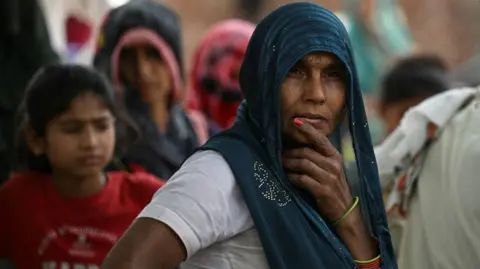
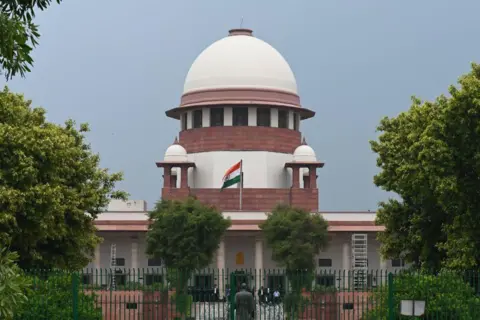
India's Supreme Court prides itself on defending the rights of Dalits - historically the country's most oppressed citizens.
But a new study argues that the court's own language has frequently reflected the caste hierarchies it aims to erase. About 160 million Indians are Dalits, once called "untouchables", yet many remain trapped in menial jobs and shut out of social and economic opportunity.
For much of independent India's history, the country's top judges have struggled to speak about Dalits in ways that recognise dignity rather than reinforce stigma, the study found. That tension - between progressive legal outcomes and regressive language - is the central paradox documented in a sweeping review of 75 years of judgments of the top court.
The University of Melbourne-funded research, conducted in partnership with the Supreme Court, offers a rare internal reckoning for one of the world's most powerful judiciaries.
The study examines "constitution bench" rulings - decided by five or more judges - from 1950 to 2025. These rulings are especially important because they set legal precedents, are taught in law schools, invoked in courtrooms and cited by later benches.
It found that while these landmark decisions often upheld Dalit rights, their language could be "demeaning or insensitive", notes Professor Farrah Ahmed of Melbourne Law School, a co-author of the study.
Some judgments liken caste oppression to disability, implying that the oppressed or disabled are inherently inferior.
Others assume - contrary to evidence - that education alone can erase caste, shifting the burden from society to individual Dalits who must study their way to equality. Still others overlook the caste barriers that block access to jobs, credit and markets, deepening poverty.
Some judges likened Dalits to "ordinary horses'' in contrast to upper classes who were like "first class race horses". Others described affirmative-action measures as "crutches" that Dalits should not depend on for too long.
Some judges even described the origins of caste as "benign" - merely a system of division of labour. This, researchers say, "supported a bitterly unfair status quo that confines oppressed castes to reviled and poorly paid work".
A 2020 judgement cited by the study talked about "primitive way of life [of Scheduled Tribes or other marginalised tribespeople] makes them unfit to put up with the mainstream and to be governed by the ordinary laws" - and describes them as needing a "helping hand to uplift them and to make them contribute to the national development and not to remain part of the primitive culture".
Such language, the study suggests, went beyond poor phrasing to reinforce harmful stereotypes.
"These comparisons - whether to animals or to people with disabilities - were offensive to both groups," says Prof Ahmed. "The real problem is not any supposed inherent limitation, but the society around them, which fails to support them to thrive."
 Hindustan Times via Getty Images
The study found that such "stigmatising views" appeared in rulings that upheld Dalit rights.
"I think the judges were genuinely unaware of the implications of the language they were using, and what it revealed about their deeply held attitudes. I don't think, in any of these cases, that there was an intention to insult or demean Dalit people," says Prof Ahmed.
Does this linguistic bias influence the court's reasoning or outcomes, or was it a blind spot that coexists with progressive decisions?
"I would find it surprising if the judicial language we discuss, including language that is demeaning or that downplays the perniciousness of the caste system, had no effect on judges' decisions," Prof Ahmed told the BBC.
Beyond individual rulings, Supreme Court judges influence Indian society and politics more broadly; their language matters because it is widely reported, debated and shapes public discourse.
Yet, the court has actively addressed caste bias. In October last year, responding to an investigative report, it directed the federal government and states to revise prison manuals to address caste-based discrimination. This bias had been evident in the division of manual labour, segregation of barracks and rules that unfairly targeted historically marginalised communities.
Also, many judges stress that any outdated or problematic language is not intentional.
"Courts may not always be fully up to speed with how language evolves - that's possible. But there's no motive at play here," Madan Lokur, a former Supreme Court judge, told the BBC.
Recognising this, in August 2023, the Supreme Court released a 'Handbook on Combating Gender Stereotypes', featuring a glossary of "gender-unjust" words that judges and lawyers are advised to avoid in legal writing. This aims to eliminate demeaning, discriminatory or stereotyped language, particularly against women, children, people with disabilities and in cases involving sexual crimes.
Could similar efforts realistically influence how Supreme Court judges write about caste?
 AFP via Getty Images
"This report is just a first step in shifting how judges write about caste. We are starting from a place where there was formerly little appreciation for the problem," says Prof Ahmed.
More internal reviews like this report are essential, she adds. Most importantly, "lawyers, legal academia and the judiciary need the insights that can only come from full inclusion of members of oppressed castes", says Prof Ahmed.
India's Supreme Court has had strikingly little Dalit representation. "On our estimate, there have only ever been eight Dalit judges on the Supreme Court," the researchers note.
For the past six months, Chief Justice BR Gavai - the second Dalit to lead the court - headed it until his retirement last week.
Justice KG Balakrishnan - the court's first Dalit chief justice - served on the bench for two of the cases examined in the study, and his views are cited repeatedly in the report.
Justice Balakrishnan's writing, they point out, describes caste as an "unbreakable bondage" that consigns people to "impure" occupations, a condition from which "even death does not provide escape", given continued segregation in graveyards and crematoriums.
This, the researchers argue, contrasts sharply with rulings that downplay caste injustices - evidence, they say, that India's top court "desperately needs more diverse insights and perspectives, especially from oppressed castes".
For a court treated as an institution above politics, the report marks an unusual moment of introspection. It suggests that the struggle for caste equality is not only waged in judgments and statutes, but in metaphors, analogies and everyday linguistic choices.

Reservation in Private colleges.
...
A parliamentary panel recently recommended legislation for 27% OBC, 15% SC, and 7.5% ST reservations in private higher education institutions, citing low enrollment from these groups in places like BITS Pilani and OP Jindal University
��. Congress leaders have pushed this demand, accusing delays under current policies and invoking Article 15(5) of the Constitution, which allows states to extend quotas to private unaided colleges
��.Current StatusNo nationwide law has been enacted yet; implementation remains a state responsibility, with the central government suggesting dedicated funding to cover costs without reducing general seats
��. Supreme Court rulings, including from 2008 and 2014, affirm the constitutionality of such quotas in private institutions, excluding minority ones
�.Key ChallengesHigh fees in private colleges pose barriers, prompting calls for full government reimbursement similar to school-level RTE provisions
��. Political debates continue, with the panel's August 2025 report urging Parliament to act uniformly, but no updates post-October 2025 indicate passage �
Univercities where low admission of SC.ST.OBCs.
Parliamentary reports highlight several private universities with notably low SC, ST, and OBC enrollment rates, based on AISHE 2022-23 data and 2024-25 figures
��.Specific InstitutionsBITS Pilani: SC students at 0.5% (29 out of 5,137), ST at 0.08% (4 students), OBC around 10%
��.OP Jindal Global University: SC and ST each under 1% (28 SC, 29 ST out of 3,181 students)
�.Shiv Nadar University: SC at 1.5% (48 out of 3,359), ST around 0.5% (29 students)
��.Manipal Academy of Higher Education: SC at 0.46%, ST at 0.36%, OBC at 18%
�.Others: SASTRA University, Amrita Vishwa Vidyapeetham, VIT, UPES Dehradun (14 SC students), and Amity University Noida (11% combined SC/ST/OBC of 49,000 students) also show single-digit or lower rates for these categories
��.Broader TrendsTop 30 private universities average 5% SC, under 1% ST, and 24% OBC enrollment, far below national shares and public institution levels
��. Faculty diversity is even lower, averaging 4% SC and 0.5% ST �.

Dalits lobby for greater role as BJP set to elect UP chief
Lucknow: A section of Dalit ranks in the BJP is lobbying hard with the party leadership in Delhi ahead of the much-anticipated appointment of the state unit chief in UP, it is learnt.
BJP’s Dalit functionaries are reportedly pressing for “adequate” representation in “responsible positions” in UP, where assembly elections are due in 2027. This, sources said, is being highlighted as a potential tool to mobilise the Dalit communities, which account for a sizable proportion of the voting bloc in UP.
In fact, the names of two former Dalit MPs, Ram Shankar Katheria and Vidya Sagar Sonkar, are being considered for the appointment of the state president.
A senior BJP functionary pointed out that only two Dalit MPs, Mithilesh Katheria (Dhanuk) and Brij Lal (Kori), represent the BJP in the Rajya Sabha from UP. Also, the BJP has just one Dalit legislator, Surendra Chaudhary, in the UP legislative council.
Organisationally, the party has just one Dalit state general secretary, Priyanak Rawat, and three vice-presidents: Kanta Kardam, Neelam Sonkar and Devesh Kumar.
The overdrive of the Dalit community comes even as speculations are rife about an OBC functionary being appointed as the next state president. A senior SC functionary in the state BJP said that the non-Jatav SCs have been consolidating behind the BJP since 2017, when the party formed the govt with an overwhelming majority for the first time.
“This needs to be augmented further. The party needs to give SCs more space while accommodating them in key positions,” said a senior SC functionary from the UP BJP unit.
Courtesy : TOI

“Dying Is Easier Than Learning English”: 17-Year-Old Dalit Student Dies by Suicide in AP’s Kurnool After Struggling With English Lessons
A 17-year-old Dalit girl in Kurnool died by suicide on Thursday, and police say she had been struggling for months with the pressure of learning English.
The incident happened at the District Institute of Education and Training in B Thandrapadu. According to police, the girl went into the college sick room and locked the door after her friends briefly stepped outside. When they returned, she did not respond, and staff later found her dead.
“She was a 17 year old Dalit student at the training institute and has allegedly died by suicide,” a police official told PTI.
Police said the girl had repeatedly told her father that she could not cope with English lessons. She had even written that “dying was easier than learning it,” according to officials. Despite her fear, her parents insisted she continue attending classes.
Her friends also told police that she had been dealing with menstrual problems, which may have increased her emotional distress.
A case has been registered under Section 194 of the Bharatiya Nyaya Sanhita, and the investigation is ongoing.
Courtesy : TOP

Madhya Pradesh: Is eating at a Dalit’s house a greater sin than cow slaughter? A Panchayat decreed bathing in the Ganges and performing the Pind Daan (worship ceremony) for a living father, causing a stir in the administration.
The Panchayat decreed that eating at a Dalit's house cut off all supplies to the family; pressure was put on them to perform the Pind Daan (worship ceremony) for a living father.
Raisen: A shocking incident has emerged from Raisen district, Madhya Pradesh, exposing the harsh reality of caste discrimination still prevalent in society. A man was socially ostracized simply because he ate at a funeral feast hosted by a Dalit family. The victim alleges that the Panchayat not only expelled him from society but also imposed shocking conditions for his reintegration. Given the gravity of the matter, the administration has launched an investigation.
What is the whole matter?
This incident occurred in Piparia Puaria village, Udaypura tehsil, about 100 kilometers from the Raisen district headquarters. This area is also the constituency of Narendra Shivaji Patel, Minister of State for Health in the Madhya Pradesh government. The case is about a month old, but it came to light during a public hearing on Tuesday.
According to media reports, the victim, Bharat Singh Dhakad, told officials that about a month ago, a ‘Shraddha’ ceremony was held at the home of Santosh Mehtar, a Dalit man in the village. Bharat Singh Dhakad, the village panchayat’s assistant secretary, Manoj Patel, and a teacher, Satyendra Singh Raghuvanshi, had eaten at the ceremony.
The Panchayat’s Bizarre Decree: “This is a Sin Bigger than Cow Slaughter”
Bharat Singh alleges that the Panchayat took offense to his eating at a Dalit man’s home. The Panchayat called a meeting and passed a resolution declaring that eating at a Dalit’s home was “a sin bigger than cow slaughter.” The decree stated that whoever committed this ‘act’ would have to purify themselves by bathing in the Ganges and hosting a feast in the village before they would be accepted back into society.
Two accepted the condition, one opposed.
Under pressure from the Panchayat, Assistant Secretary Manoj Patel and teacher Satyendra Singh Raghuvanshi agreed to their conditions. They bathed in the Ganga and hosted a feast in the village. However, Bharat Singh Dhakad refused to obey this discriminatory order. Following this, the Panchayat allegedly declared a social boycott against him and his family.
Pressure to perform ‘Pind Daan’ for his living father
In an application submitted to Udaypura Tehsildar Dinesh Bargale at the public hearing, Bharat Singh made very serious allegations. He stated that he was pressured by the Panchayat that if he wanted to be absolved of sins, he would have to shave his head and perform ‘Pind Daan’ (a post-death ritual) for his living father.
Dhakad said, “I and my family are being treated like untouchables. We are barred from entering the temple and are prohibited from participating in any social events in the village.” He named the Sarpanch, Deputy Sarpanch, and Panchs in his complaint.
Administration and Police Stance
As soon as the matter came to light, the administration swung into action. Tehsildar Dinesh Bargale said, “The matter is being investigated. If the allegations are found to be true, strict legal action will be taken against the culprits.”
Meanwhile, SDOP Kunwar Singh Mukati clarified that insulting anyone based on caste or withholding food and water is a crime. He said, “Preventing someone from attending social events, considering them untouchable, or imposing punishments like bathing in the Ganges and serving them a feast is a punishable offense under the Indian Penal Code (IPC). Every citizen has the right to live with dignity. Those who spread social hatred will not be spared.”
Sarpanch Denies Allegations
On the other hand, when contacted, the village sarpanch, Bhagwan Singh Patel, categorically denied the allegations. He said, “Allegations like untouchability are false. If someone is not inviting them to their events due to personal reasons, it is their personal matter.” The Sarpanch also stated that the regional MLA and State Minister Narendra Shivaji Patel had also visited the village and tried to convince the people.
Teacher confesses to ‘purification’
Interestingly, Satyendra Singh Raghuvanshi, the teacher who ate at the Dalit’s house, admitted that after the dispute, he had gone to his guru’s ashram in Allahabad and returned after bathing in the Sangam. He said, “I don’t believe in casteism, so I went to my friend Santosh’s house to eat. Someone made a video and made it viral, which escalated the controversy. I bathed in the Ganga on the orders of the Panchayat and now I have no complaints, nor am I being ostracized.” The teacher has been posted at the village secondary school for the past 16 years.
Currently, the police and administration are trying to get to the bottom of this matter to uncover the truth.
Rajan Chaudhary
Courtesy: Hindi News

Why villagers in this Rajasthan village were agitated over the suspicious death of a Dalit youth, protesting for two days.
The family and the administration reached an agreement on a post-mortem. The administration assured an impartial investigation within two days, and Bhim Army leaders Rajendra Singh Dhandhal and Mangilal Meghvanshi ended the protest on Thursday.
Jalore – The suspicious death of Chetan Kumar, a 23-year-old Dalit youth, in Kaleti village of Bagoda tehsil in Jalore district, Rajasthan, has shaken the entire area. Chetan’s body, who had gone to guard his fields, was found hanging from a tree, but the family claims it is a case of murder, not suicide. Signs such as his feet touching the ground, the position of the rope, and nearby wires have made the death mysterious.
The family flatly refused to have a post-mortem conducted by a local medical board and insisted on calling a district-level team. The protest, villagers gathering, and administrative activity outside the Bagoda Community Health Center (CSC) mortuary continued until Thursday afternoon, but now there are reports of a compromise. Why did this incident spark a stir?
Went out to guard the field at night, body found in the morning
Everything seemed normal on Tuesday night. Chetan Kumar (23), son of Sanwalaram, was a resident of Kaleti village. He worked as a laborer on the farm of local farmer Lala Ram Chaudhary, where he was tending to the pomegranate crop. After dinner, Chetan left to guard the field. But around 7 a.m. on Wednesday, the farm owner, Lala Ram, informed the family that Chetan had committed suicide. Upon hearing this news, the family was devastated.
Family members Madanram (30), Tikaram, Tekaram, Bijlaram, Tolaram, and mother Manjudevi immediately rushed to the scene. The scene left everyone stunned. Chetan’s body was hanging from a tree. A rope was tied around his neck, but his feet were touching the ground. According to the family, only the neck was visible, suggesting murder rather than suicide. Madanram immediately took photographs and videotaped the scene, which clearly showed three wires lying nearby, touching the body. A heavy weight (bot) had also fallen to the ground, where the body had previously been empty. The family says, “He seemed to be breathing, so we cut the rope and brought him down. But this isn’t suicide; someone has tried to disguise it as a murder.”
Social activist Bhanwar Meghvanshi told The Mooknayak that the Bagoda police arrived at the scene and prepared a panchnama. The body was kept in the mortuary, but the postmortem process was halted. The family demanded a district-level medical team because they lacked trust in the local authorities. Madanram said, “Prima facie, it doesn’t appear to be a suicide. A thorough investigation should be conducted.” He belongs to the Meghwal community, and the incident sparked outrage among the Dalit community.
Hundreds of villagers gathered outside the CSC mortuary. Women, children, and the elderly were all shouting, and a sit-in began, which lasted two days. Bhim Army leaders Rajendra Singh Dhandal and Mangilal Meghvanshi also arrived at the scene. They said, “This isn’t just a death, it’s a symbol of the community’s suffering. The administration should conduct an impartial investigation, otherwise there will be a protest.”
According to the family, Chetan had no financial difficulties or mental problems. “He was the support of the family, why would he commit suicide?” They suspect someone else may have been involved in the murder. The wires and weights seen in the video further strengthened this suspicion.
Bagoda Police Station Officer Baldev Ram stated that a postmortem report has been filed under Section 194 BNSS (investigation into the cause of death) based on the family’s complaint. An investigation has begun into all aspects, including the possibility of murder. The police formed a three-member medical board, consisting of district-level doctors. Assistant Sub-Inspector Narsiram and other teams were constantly counseling the family.
Tensions were at their peak until Thursday afternoon. After several hours of persuasion, a consensus was reached between the family and the administration. The district medical board approved a postmortem. The administration assured a fair investigation within two days, after which Bhim Army leaders Rajendra Singh Dhandal and Mangilal Meghvanshi ended their protest. The body will be handed over to the family for last rites.
Geetha Sunil Pillai
Courtesy: Hindi News

Why villagers in this Rajasthan village were agitated over the suspicious death of a Dalit youth, protesting for two days.
The family and the administration reached an agreement on a post-mortem. The administration assured an impartial investigation within two days, and Bhim Army leaders Rajendra Singh Dhandhal and Mangilal Meghvanshi ended the protest on Thursday.
Jalore – The suspicious death of Chetan Kumar, a 23-year-old Dalit youth, in Kaleti village of Bagoda tehsil in Jalore district, Rajasthan, has shaken the entire area. Chetan’s body, who had gone to guard his fields, was found hanging from a tree, but the family claims it is a case of murder, not suicide. Signs such as his feet touching the ground, the position of the rope, and nearby wires have made the death mysterious.
The family flatly refused to have a post-mortem conducted by a local medical board and insisted on calling a district-level team. The protest, villagers gathering, and administrative activity outside the Bagoda Community Health Center (CSC) mortuary continued until Thursday afternoon, but now there are reports of a compromise. Why did this incident spark a stir?
Went out to guard the field at night, body found in the morning
Everything seemed normal on Tuesday night. Chetan Kumar (23), son of Sanwalaram, was a resident of Kaleti village. He worked as a laborer on the farm of local farmer Lala Ram Chaudhary, where he was tending to the pomegranate crop. After dinner, Chetan left to guard the field. But around 7 a.m. on Wednesday, the farm owner, Lala Ram, informed the family that Chetan had committed suicide. Upon hearing this news, the family was devastated.
Family members Madanram (30), Tikaram, Tekaram, Bijlaram, Tolaram, and mother Manjudevi immediately rushed to the scene. The scene left everyone stunned. Chetan’s body was hanging from a tree. A rope was tied around his neck, but his feet were touching the ground. According to the family, only the neck was visible, suggesting murder rather than suicide. Madanram immediately took photographs and videotaped the scene, which clearly showed three wires lying nearby, touching the body. A heavy weight (bot) had also fallen to the ground, where the body had previously been empty. The family says, “He seemed to be breathing, so we cut the rope and brought him down. But this isn’t suicide; someone has tried to disguise it as a murder.”
Social activist Bhanwar Meghvanshi told The Mooknayak that the Bagoda police arrived at the scene and prepared a panchnama. The body was kept in the mortuary, but the postmortem process was halted. The family demanded a district-level medical team because they lacked trust in the local authorities. Madanram said, “Prima facie, it doesn’t appear to be a suicide. A thorough investigation should be conducted.” He belongs to the Meghwal community, and the incident sparked outrage among the Dalit community.
Hundreds of villagers gathered outside the CSC mortuary. Women, children, and the elderly were all shouting, and a sit-in began, which lasted two days. Bhim Army leaders Rajendra Singh Dhandal and Mangilal Meghvanshi also arrived at the scene. They said, “This isn’t just a death, it’s a symbol of the community’s suffering. The administration should conduct an impartial investigation, otherwise there will be a protest.”
According to the family, Chetan had no financial difficulties or mental problems. “He was the support of the family, why would he commit suicide?” They suspect someone else may have been involved in the murder. The wires and weights seen in the video further strengthened this suspicion.
Bagoda Police Station Officer Baldev Ram stated that a postmortem report has been filed under Section 194 BNSS (investigation into the cause of death) based on the family’s complaint. An investigation has begun into all aspects, including the possibility of murder. The police formed a three-member medical board, consisting of district-level doctors. Assistant Sub-Inspector Narsiram and other teams were constantly counseling the family.
Tensions were at their peak until Thursday afternoon. After several hours of persuasion, a consensus was reached between the family and the administration. The district medical board approved a postmortem. The administration assured a fair investigation within two days, after which Bhim Army leaders Rajendra Singh Dhandal and Mangilal Meghvanshi ended their protest. The body will be handed over to the family for last rites.
Geetha Sunil Pillai
Courtesy: Hindi News

Caste-based oppression against a Dalit music student in Tamil Nadu: “If you want a government job, forget music and do what your caste requires…”
FIR No. 407/2025 was registered at the Thirupparankundram police station on August 2nd, following the student's complaint, but was closed just a month and a half later, on September 30th, citing a "factual error."
Madurai – Caste discrimination has become so deeply ingrained in Tamil Nadu that its dark shadow looms even over the temples of learning. A sensational case has emerged from the Tamil Nadu Government Music College in Pasumalai, Madurai, where a Dalit female student not only endured severe caste-based insults, but also had her education and employment threatened through institutional conspiracies. The student filed a complaint with the police alleging caste discrimination, but the police, acting unilaterally, closed the case and, on the other hand, filed a charge sheet against the woman based on the college administration’s complaint.
The student has now appealed to the National Commission for Scheduled Castes (NCSC) for justice. Challenging the police’s biased investigation, she has demanded a fresh investigation.
The victim, a Bharatanatyam alumnus, was also working as a part-time evening class teacher at the college. Living with her husband and mother, she explained that she was pursuing a Bachelor of Arts (Bharatanatyam) degree while also working as a temporary teacher, but caste prejudices made her life hell. In her petition, the student has leveled serious allegations against Principal Sampoornam and Chitra, a Bharatanatyam teacher. She claims that these two officials orchestrated a long-standing system of caste-based violence, abusive behavior, and institutionalized harassment.
The harassment began in small ways and gradually escalated into a deadly one. The principal and teacher prevented her from using common toilets, made her sit in a separate room during exams, and denied her basic freedoms, such as standing with other teachers or wearing an ID card. Chitra allegedly made an openly casteist remark, “If you want a government job, do the traditional work of your caste—cleaning.” This remark was not only derogatory but also demeaning to the entire community.
The harassment reached its peak when the victim was awarded the prestigious Kalaichudar Mani Award. Principal Sampoornam allegedly questioned, “How did a Dalit woman achieve such heights?” Following this award, the two accused staff members hatched a conspiracy. They collected the examination fees but prevented her from taking the second-year exams. Furthermore, her part-time teaching job was abruptly terminated without prior notice, further crippling her financial situation and causing her to suffer a mental breakdown.
In January 2025, after an investigation by the State Scheduled Castes/Scheduled Tribes Commission, the victim was reinstated for her third-year studies, but the accused, using police pressure, threatened her and forced her to apologize. July 23rd was the most humiliating day of her life, when the principal made her stand outside the classroom for over four hours and incited other students to socially boycott her. This incident not only violated her dignity but also poisoned the college environment.
FIR No. 407/2025 was registered at the Thirupparankundram police station on August 2nd, based on the student’s complaint, under the Scheduled Castes/Tribes (Prevention of Atrocities) Act, but was closed just a month and a half later, on September 30th, citing “factual error.” According to the victim, the Deputy Superintendent of Police (DSP) adopted a biased attitude, relying on the accused’s false and one-sided statements. Moreover, she was not informed of the closure of the case, causing her severe mental trauma.
Furthermore, immediately after her original complaint was closed, action was taken on Principal Sampoornam’s complaint, in which the victim was immediately arrested, remanded, and later released on bail. She alleged that the police, under the influence of the accused party, did not take any concrete action on her complaint, instead expediting action against her.
In her petition to the NCSC, the victim has clearly requested that a new and impartial DSP be appointed to investigate her FIR, who will conduct the investigation with complete honesty and in accordance with the provisions of the Act. She has demanded strict legal action against the accused staff members, Principal Sampoornam and teacher Chitra. Furthermore, she has appealed for a guarantee of her personal safety, the right to continue her studies without any hindrance, and reinstatement in her part-time government job.
Geetha Sunil Pillai
Courtesy: Hindi News

Caste-based oppression against a Dalit music student in Tamil Nadu: “If you want a government job, forget music and do what your caste requires…”
FIR No. 407/2025 was registered at the Thirupparankundram police station on August 2nd, following the student's complaint, but was closed just a month and a half later, on September 30th, citing a "factual error."
Madurai – Caste discrimination has become so deeply ingrained in Tamil Nadu that its dark shadow looms even over the temples of learning. A sensational case has emerged from the Tamil Nadu Government Music College in Pasumalai, Madurai, where a Dalit female student not only endured severe caste-based insults, but also had her education and employment threatened through institutional conspiracies. The student filed a complaint with the police alleging caste discrimination, but the police, acting unilaterally, closed the case and, on the other hand, filed a charge sheet against the woman based on the college administration’s complaint.
The student has now appealed to the National Commission for Scheduled Castes (NCSC) for justice. Challenging the police’s biased investigation, she has demanded a fresh investigation.
The victim, a Bharatanatyam alumnus, was also working as a part-time evening class teacher at the college. Living with her husband and mother, she explained that she was pursuing a Bachelor of Arts (Bharatanatyam) degree while also working as a temporary teacher, but caste prejudices made her life hell. In her petition, the student has leveled serious allegations against Principal Sampoornam and Chitra, a Bharatanatyam teacher. She claims that these two officials orchestrated a long-standing system of caste-based violence, abusive behavior, and institutionalized harassment.
The harassment began in small ways and gradually escalated into a deadly one. The principal and teacher prevented her from using common toilets, made her sit in a separate room during exams, and denied her basic freedoms, such as standing with other teachers or wearing an ID card. Chitra allegedly made an openly casteist remark, “If you want a government job, do the traditional work of your caste—cleaning.” This remark was not only derogatory but also demeaning to the entire community.
The harassment reached its peak when the victim was awarded the prestigious Kalaichudar Mani Award. Principal Sampoornam allegedly questioned, “How did a Dalit woman achieve such heights?” Following this award, the two accused staff members hatched a conspiracy. They collected the examination fees but prevented her from taking the second-year exams. Furthermore, her part-time teaching job was abruptly terminated without prior notice, further crippling her financial situation and causing her to suffer a mental breakdown.
In January 2025, after an investigation by the State Scheduled Castes/Scheduled Tribes Commission, the victim was reinstated for her third-year studies, but the accused, using police pressure, threatened her and forced her to apologize. July 23rd was the most humiliating day of her life, when the principal made her stand outside the classroom for over four hours and incited other students to socially boycott her. This incident not only violated her dignity but also poisoned the college environment.
FIR No. 407/2025 was registered at the Thirupparankundram police station on August 2nd, based on the student’s complaint, under the Scheduled Castes/Tribes (Prevention of Atrocities) Act, but was closed just a month and a half later, on September 30th, citing “factual error.” According to the victim, the Deputy Superintendent of Police (DSP) adopted a biased attitude, relying on the accused’s false and one-sided statements. Moreover, she was not informed of the closure of the case, causing her severe mental trauma.
Furthermore, immediately after her original complaint was closed, action was taken on Principal Sampoornam’s complaint, in which the victim was immediately arrested, remanded, and later released on bail. She alleged that the police, under the influence of the accused party, did not take any concrete action on her complaint, instead expediting action against her.
In her petition to the NCSC, the victim has clearly requested that a new and impartial DSP be appointed to investigate her FIR, who will conduct the investigation with complete honesty and in accordance with the provisions of the Act. She has demanded strict legal action against the accused staff members, Principal Sampoornam and teacher Chitra. Furthermore, she has appealed for a guarantee of her personal safety, the right to continue her studies without any hindrance, and reinstatement in her part-time government job.
Geetha Sunil Pillai
Courtesy: Hindi News


Comments
Post a Comment