14.12.2025.UT Daily News.(A collection of SC.ST.Buddhist,Adivasi,reservation, atrocity news of India)by Team Sivaji.9444917060.asivaji1962@gmail.com.Follow us in WhatsApp channel.


Supreme Court’s latest report reveals why we need a caste-aware judiciary
If the judiciary, the final sentinel, will not exorcise caste from its reasoning, ‘Mother of Democracy’ becomes a slogan, not a destiny
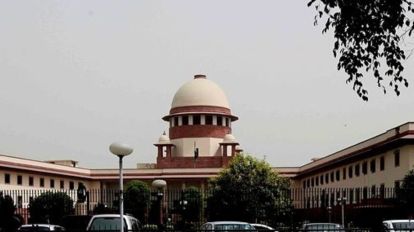 The Supreme Court’s latest ‘Report on Judicial Conceptions of Caste’ looks into Constitution Bench verdicts and exposes a court entangled in its own prejudices (File photo)
By Rejimon Kuttappan
On December 14, 2024, in the Lok Sabha, Prime Minister Narendra Modi celebrated the Constitution’s 75th anniversary as a “festival of Democracy”, crediting the framers’ “foresight, vision, and efforts” for defying post-Independence sceptics and forging India’s “extraordinary feat”. Quoting B R Ambedkar, S Radhakrishnan, and Purushottam Das Tandon from the Constituent Assembly debates, he termed India the “Mother of Democracy” — a cradle of ancient republics where republicanism was no novelty. Hailing the “great coincidence” of President Droupadi Murmu, a tribal woman, embodying this moment’s spirit, Modi said that the framers’ “unity in hearts and minds” transformed diversity into strength, the bedrock for Viksit Bharat by 2047.
Cut to December 2025: This paean seems to ring hollow.
The Supreme Court’s latest ‘Report on Judicial Conceptions of Caste’, published by the Centre for Research and Planning, authored by Anurag Bhaskar of the National Law University, Delhi, alongside Farrah Ahmed of Melbourne and peers, looks into Constitution Bench verdicts and exposes a court entangled in its own prejudices.
It identifies several striking patterns where judicial reasoning has reflected casteist assumptions. These examples do not indict individual judges but reveal how deeply caste ideology is woven into institutional thinking. Five such patterns stand out.
Such metaphors imply that oppressed castes are inherently weaker or less capable, thereby naturalising centuries of exclusion instead of recognising them as the result of structural violence. These analogies reduce caste oppression to biological limitation, despite the fact that the state’s role is to dismantle barriers, not to label citizens as permanently handicapped.
A persistent anxiety in judicial discourse is the fear that reservation will erode administrative efficiency. In Devadasan, the Court asserts that “lowering of standards” is inevitable when reservation is implemented, a claim echoed by Justice H R Khanna in N M Thomas (1976). He warns that merit and efficiency would be the “obvious casualties” of caste-based affirmative action.
 Share this article
These statements reflect an assumption: That Dalits and other oppressed communities dilute excellence. This framing reinforces caste hierarchy by portraying historically privileged groups as the natural bearers of merit and those from oppressed castes as threats to institutional quality. It also ignores empirical research, which shows that reservations do not reduce institutional performance and often improve it.

What Assam’s new Scheduled Tribe reservation proposal could mean for its marginalised groups
A ministerial report has proposed a complex arrangement to grant six ‘indigenous’ groups ST status. Existing tribes say it threatens their political rights.
On November 29, a report drafted by a group of ministers of the Assam cabinet was tabled in the state Assembly. It proposed Scheduled Tribe status for six “indigenous” groups of the state through the creation of a complex system of internal reservation.
For months now, the communities, who form a critical voter base of the ruling Bharatiya Janata Party government, have held massive protests in Upper Assam to step up pressure on the Himanta Biswa Sarma government to concede to their long-pending demand for tribal status.
Hundreds of Bodo students stormed the Bodoland Territorial Council Assembly, overpowered security personnel and vandalised chairs and desks.
The protesting tribal students claimed that the decision to grant Scheduled Tribe status to other groups will dilute their constitutional rights. “We reject the recommendation to grant them tribal status,” Dipen Boro, who heads the All Bodo Students Union, the most influential Bodo group, told Scroll. “It threatens the political rights, reservation, education and jobs of existing tribal groups.”
The Coordinating Committee of Tribal Organisations of Assam, an umbrella group of tribals in the state, burnt the group of ministers’ report in Guwahati on November 30 and threatened to launch a mass movement against it.
The recommendation evoked a similar response in the state’s three hill districts of Dima Hasao, West Karbi Anglong and Karbi Anglong. Thousands hit the streets in Haflong and Dokmoka in the first week of December. Bodoland and the hill districts in the state are governed under the Sixth Schedule of the Constitution, which gives greater autonomy to tribal communities.
“For the BJP, the report is a double-edged sword,” political scientist Dibyajyoti Dutta, who teaches at Dibrugarh University, told Scroll. “Through it, the party aims to consolidate votes from the six communities, which collectively hold significant influence. But this risks alienating existing tribes, who fear long-term dilution of their constitutional benefits.”
Observers also told Scroll that the proposal sets in motion a constitutionally complex arrangement, one not attempted by other states, with long-term implications for the state’s marginalised groups.
What the report proposes
Assam has 3.1 crore people, according to the 2011 Census, with recognised Scheduled Tribes accounting for 40 lakh or 13% of the population.
The six communities demanding Scheduled Tribe status – Tai Ahoms, Koch Rajbongshis, Moran, Muttock, Sutia and Adivasi tea tribes – are currently included in the state’s Other Backward Classes list. Together, they add up to one crore people, according to the ministers’ report.
The Scheduled Tribes are in turn divided into two groups: ST (plains) with 10% reservation and ST (hills) with 5% reservation. The largest tribal group in the state, Bodos, are included in the former category, along with the Mising, Rabha and Lalung tribes, among others. Such categories do not exist in other states of the Northeast.
The group of ministers, headed by Ranoj Pegu, has proposed the creation of a new category of ST (valley) and recommended that the Tai Ahoms, Sutia and Adivasi tea tribes be included in it. The Moran and Muttock, which are relatively smaller communities, would be included in the ST (plains) list, the report said.
For the Koch Rajbongshis, inclusion would depend on geography. So, the Koch Rajbonghis of undivided Goalpara region will be included in the ST (plains) list, while those living in the the rest of the state, such as Upper Assam, will be included in the ST (valley) list with Ahom, Sutia, tea tribes and Adivasis.
However, in Bodoland areas of Goalpara, their inclusion in the ST (plains) list would require a no-objection certificate from the Bodoland Territorial Council.
The ministerial report, walking a thin line between competing interest groups, said it would slice the pie such that the reservation of existing tribal groups in state government jobs and seats in educational institutions is untouched. Instead, that share would come from the OBC quota.
“Presently, 27% reservation is available for OBCs,” the report said. “Once these six communities are declared as ST, a proportionate share can be deducted and made available to the new six communities with a separate nomenclature, such as ST (valley), to avoid any conflict with the existing tribal communities.”
However, no such divisions in the Scheduled Tribe quota are possible at the national level. So, all communities would have to compete with each other for central government jobs and seats in central government educational institutions.
Independent MLA and Raijor Dal president Akhil Gogoi, who is from the Tai Ahom community, questioned if the proposal would withstand constitutional scrutiny. “The ST (valley) does not exist anywhere in the Constitution of India or in the central list of Scheduled Tribes,” Gogoi told reporters outside the Assembly after it was tabled. “It is an imaginary category. This is nothing but cheating the people.”
A senior government official in Dispur told Scroll that the three-tier division of the Scheduled Tribe quota will be unique to Assam. “It will depend on the Union government whether they will accept the third layer,” he said. “No other state has such different categories, nor is there a precedent for it. The Centre may approve this as a special case, grant the six groups ST status and let the state government declare them ST (valley) or ST (plains).”
Social scientist Pradeep Ramavath J, who teaches at Tata Institute of Social Sciences, Guwahati, explained that the “rationality” of the Assam government proposal comes from the Supreme Court’s 2024 judgement permitting sub-classification within the Scheduled Castes and Scheduled Tribes.
“In the judgement, a seven-judge bench clarified that states can sub-classify SCs and STs to ensure a more equitable distribution of reservation benefits,” said Ramavath, who has extensively worked on Scheduled Castes internal reservation issues in Karnataka. “Before this judgment, internal reservation lacked firm constitutional validation. Now, it is both legally permissible and administratively feasible, which is why the group of ministers has recommended exploring it for Assam.”
The pushback
The strongest opposition to the proposal has come from existing tribal groups.
Several tribal leaders said the state government’s claim that their share of jobs and educational seats would not be affected was misleading.
“How will we not be affected?” said Daniel Langthasa, an activist-turned-politician from Dima Hasao, a hilly region under the Sixth Schedule.
Langthasa, who belongs to the Dimasa tribe, said the proposed reservation matrix was loaded against smaller groups such as his. “We have to compete for central government jobs with those who have been living in the plains, who have access to proper roads, schools and colleges, who have been assimilated into the mainstream and have a higher social status.”
Aditya Khaklari, a Bodo leader and head of the Coordinating Committee of Tribal Organisations of Assam, agreed. “We will lose out to Tai Ahoms, Sutias and Koch-Rajbongshis in central jobs and education institutions as they are the advanced communities,” he told Scroll.
Other tribal residents contested the legitimacy of the demand for ST status for the six groups. “These were the communities who once treated the aboriginal tribal people as ‘untouchable’, who purified their homes if a tribal person walked in,” Preetam Brahma Choudhury, a Kokrajhar-based journalist, told Scroll. “They looked down on us, mocked our culture and food. Now they want to wear the tribal name because it suits their political and economic convenience. This is not only hypocrisy, but an insult to the very idea of justice.”
The senior government official in Dispur admitted that all six groups do not fulfill the criteria for inclusion in the ST list. “If you consider the five criteria – indications of primitive traits, distinctive culture, geographical isolation, shyness of contact with the community at large, and backwardness – some of the groups don’t meet the conditions,” the official said.
Langthasa alleged that the BJP’s electoral interests were behind the decision. “The government is using the issue to create a vote bank and sacrifice the smaller tribes,” he said. “This is creating unrest.”
Who benefits?
Though the report has been largely welcomed by the agitating communities, there is a fair degree of scepticism about its benefits to the marginalised.
Ramavath, the TISS social scientist, pointed out that “without clear criteria, transparent data, and meaningful consultation with communities, sub-classification may complicate the reservation framework and generate new contestations without necessarily improving access for the most marginalised groups.”
The senior government official appeared to admit the challenge. Of the six communities, the tea tribes are the most backward, he said. “If they are given ST (valley) status and included with advanced groups like the Ahoms, it is very obvious who would get the maximum benefits,” the official said.
Not surprisingly, the Assam Tea Tribes’ Students’ Association, which represents the interest of tea tribes and Adivasi groups, said they were not satisfied with the ministers’ report. Jagdish Boraik, who heads the association, questioned why the tea tribes were being included in the same category as Ahoms and Sutias, who are relatively better off. “We can’t compete with the Ahoms.”
He also pointed out that the minister's report is not clear about the number of tea tribes that will get Scheduled Tribe status.
In Assam, as many as 96 communities are classified as tea tribes. “We want all the tea tribes to be recognised as ST as we fulfill all the criteria for tribal status,” Boraik said.
The tea tribes and Adivasi groups are recognised as Scheduled Tribes in the states of their origin – Odisha, Madhya Pradesh, Bihar, Andhra Pradesh and West Bengal – from where they were brought to Assam by the British in the early 1800s. The tea garden community, spread across about 1,000 estates in Assam, plays a decisive role in electoral outcomes.
However, the group of ministers has stated that key questions remain unresolved, such as how many of the tea tribe communities will be classified as Scheduled Tribe, how many as Scheduled Caste and what the status of the remaining communities will be.
Even the larger of the six communities have questioned how much they stand to gain from the arrangement. Arunabh Konwar, an independent researcher from the Tai-Ahom community, said the ST (valley) status brings no real benefits, as it does not add to the reservation quota. “I am very skeptical of the restructuring of reservation percentages,” he said. “In an ideal world, the reservation should go beyond the 50% cap to proportionately represent the various disenfranchised communities, but we know that’s a pipe dream.”
Electoral implication
A new tribal quota also has implications for electoral politics. Currently, Assam has two Lok Sabha seats reserved for Scheduled Tribe groups – one each for the plains and hill tribes – besides 19 Assembly seats in the 126-member House.
The report’s proposal to reserve additional seats for ST (valley) groups has led to more unease.
Khaklari, the Bodo leader, said, “We are afraid that if the number of ST (valley) seats increase in the next delimitation, the existing Scheduled Tribe (plains) seats may decrease depending on the population.”
To allay fears of reducing the political representation of existing tribes, the ministers’ report proposes that the two Lok Sabha constituencies that fall in the Sixth Schedule areas – Kokrajhar and Diphu – be permanently reserved for existing Scheduled Tribes through a Constitutional amendment. “But it does not say anything about the Assembly segments,” Khaklari pointed out.
Granting Scheduled Tribe (plains) status to Koch Rajbangshis in areas of the Bodoland Territorial Council and the Rabha Autonomous Council is also a thorny issue, pointed out other tribal residents.
The Koch Rajbongshis, considered a Scheduled Tribe in Meghalaya and a Scheduled Caste in West Bengal, largely live in the western part of the state and many live in the two Bodoland districts of Chirang and Kokrajhar.
“It is not clear or explicit about whether only the current ST (plain) groups can contest elections in Bodoland or Rabha Autonomous Council,” Choudhury, the Kokrajhar-based journalist, told Scroll. “If the Koch Rajbanshis are allowed to contest elections in Bodoland, they could easily win seats, which would be disastrous for the existing tribal groups.”
Subhash Rabha, the general secretary of the Rabha Students’ Union, said: “If a populous community like Koch Rajbanshis get ST (plains) status, the autonomy of the Rabha council will be lost and the political rights of the aboriginal tribe will be snatched away.”
In Assam, the Koch-Rajbanshis have a population of around 4.6 lakh, according to the 2011 Census, and reside in Dhubri, Goalpara and Bongaigaon districts.
A political science researcher, who is working on the Bodoland Territorial Region, said, “Any move towards giving ST (plains) status to Koch-Rajbongshis in areas currently under the Bodoland Territorial Council and the Rabha Hasong Autonomous Council would make Bodos and Rabhas insecure about their hard-earned political autonomy.”
Nevertheless, Konwar said the BJP is likely to use the report to its advantage ahead of the elections. “This segmentation of the various ethnic communities and pitting one against the other benefits them. It makes it even easier for them to manage isolated community aspirations rather than having to deal with solidarity among them.”

Caste Hindus lobbied the Constituent Assembly to defend untouchability as a ‘religious right’
In Assembling India’s Constitution: A New Democratic History, Rohit De and Ornit Shani show how upper-caste Hindus tried to protect caste privilege by presenting themselves as a minority under threat.


The Indian constitution’s radical steps to abolish untouchability and provide for affirmative action have been portrayed as inevitable and has often been attributed to the benevolence of the upper-caste leadership of the Constituent Assembly. But the energy, fury and nature of demands from dalit political groups show that these were achieved through their organised struggle. Figures like Dr Ambedkar played a critical role in the formal constitution-making process, but his actions reflected a wider consensus among dalits across India and were supported by active mobilisation on the ground.
Upper-caste Hindus, too, were anxious about the coming constitutional order, albeit for different reasons. As a politically dominant, yet demographically small group, they recognised the potential threat that the universal franchise posed to their power. Orthodox upper-caste groups, in particular, began to conceive of themselves as minorities who needed constitutional guarantees in the face of a coming electoral democracy. So much so, that some felt they were being persecuted by the ‘heavy majority of the entire nation armed’ with the help of ‘their familiar but irreligious kith and kin’. They sent multiple petitions, presenting themselves as Sanatani Hindus or Orthodox Hindus. In the archive that survived, letters from orthodox upper-caste Hindus demanding minority protection outnumber representations from every other minority community.
The question for orthodox upper-caste groups was to what extent the democratic transformation could be contained. Their initial responses rejected democracy and republican government altogether. Those vested in religious authority demanded a return to an imagined past where they would be governed by Hindu scriptures. The Shankaracharya of Dwarka, one of the four preeminent heads of Advaita Vedanta tradition of Hinduism, wrote from his holy seat at Dwarka Sharda Peeth demanding that the Indian constitution ‘be moulded on the ancient and long established political ideals of Dharm Rajya and Ram Rajya’ and that there be no interference in religious practices by either the executive or legislature. In all matters concerning Hindu religious and cultural interests, the state should be guided by learned scholars appointed by religious heads and associations. What would such a constitution look like?

/pratidin/media/agency_attachments/2025/10/30/2025-10-30t081618549z-pt-new-glm-1-2025-10-30-13-46-18.png)
New Tribal Party AAOUFA Formed in Assam to Fight for ST Status of Adivasis
The All Adivasi Organizations United Form of Assam (AAOUFA) was recently formed. It aims to secure Scheduled Tribe (ST) status for Adivasi communities. The move unites Assam’s tribal groups to address social and political issues.
/pratidin/media/member_avatars/2025/05/21/2025-05-21t080305049z-8.png)
/pratidin/media/media_files/2025/12/13/new-pt-web-1-2025-12-13-15-04-32.jpg)
In a historic move to strengthen the fight against the marginalisation of tribal communities, all tribal parties and organisations in Assam have come together to form a unified body. The announcement was made at a meeting held in the Manas National Park, a UNESCO World Heritage site.
The newly formed organisation, now officially named the All Adivasi Organizations United Form of Assam (AAOUFA), aims to secure Scheduled Tribe (ST) status for Adivasi communities and address broader issues affecting them. Representatives from groups including the All Adivasi Students' Association of Assam attended the event.
A 55-member committee has been constituted, with Amit Hembram as President and Gadwin Hembram as Secretary. After detailed discussions, the organisation held a press conference to formally announce its formation.
Speaking at the event, Amit Hembram said, “Today is a landmark day for the Adivasi community. We have officially formed a Union party and discussed the biggest issue facing our people, the demand for ST status. Political confusion under the BJP government has delayed our recognition for too long. Today, we focus clearly on achieving our rightful ST status.”
Hembram added that the Union is ready to engage with the current government as well as any future administrations, but if authorities refuse to respond, protests will be launched, and the community will be mobilised more strongly. The organisation also accused the government of exploiting tribal communities under the pretext of marginalisation.
“The biggest and common demand raised today is clear: Adivasi communities must be granted ST status. Political manipulation with our identity will no longer be tolerated,” Hembram said. The movement, currently led by representatives from Lower Assam, will expand to Upper Assam in the coming days.
The formation of AAOUFA marks a major step toward unifying Assam’s Adivasi communities and strengthening their collective voice in the state’s socio-political landscape.” Hembram Added.
Also Read: Adivasi Community Holds Mass Rally in Kokrajhar Demanding ST Status and Land Rights

UP Dalit assault case: BJP worker accused released on bail, grand welcome by supporters; leaders claim case falsely filed
Get an chance to win ₹5000 Amazon Voucher by taking part in India's Biggest Habit Index! Take the survey here
About the Author
TOI City Desk
The TOI City Desk is an indefatigable team of journalists dedicated to bringing you the pulse of cities from across the nation, all day and all night. Our mission is to curate, report, and deliver city news that matters to readers of The Times of India. With a keen focus on urban life, governance, culture, and local issues, we provide a comprehensive view of the ever-evolving cityscapes. Our team works tirelessly to keep readers informed about the latest developments, ensuring that they are connected to the heartbeat of cities across India, right when it happens. The TOI City Desk is a trusted source for staying in touch with the local stories that shape your world.

Here are the **major Dalit-related news stories from India on 14 December 2025:
🎓 1) Dalit scholar’s expulsion revoked after protest
Babasaheb Bhimrao Ambedkar University (BBAU) reversed the expulsion of Dalit PhD student Basant Kannaujiya after a 25-day protest by students and activists. He has been given a new deadline to submit his thesis, marking a partial victory for Dalit student activism.
🗣️ 2) Online debate around reclaiming slurs
A viral influencer video triggered a debate on whether historically derogatory terms should be “reclaimed.” Many Dalit feminists and activists criticized the trend, arguing that such language still hurts caste-oppressed communities.
📊 3) Political controversy over voter list changes
A Congress MP alleged that the Special Intensive Revision (SIR) of electoral rolls is aimed at removing poor, backward, and Dalit voters from the rolls. This has intensified political discussion around caste, voter rights, and electoral fairness ahead of future elections.

Here are the major SC/ST-related news highlights in India for 14 December 2025:
🗞️ 1) Political row in Karnataka over SC/ST welfare funds
- Opposition leaders in Karnataka are strongly criticising the Congress government for diverting a significant portion of funds earmarked under the Scheduled Caste Sub Plan (SCSP) and Tribal Sub Plan (TSP) towards its flagship guarantee schemes rather than direct welfare for SC/ST communities.
- The controversy has become a focal political issue, with accusations that this undermines statutory provisions meant to benefit Dalits and Adivasis.
🌱 2) Cultural and empowerment initiative for Adivasis in Assam
- In Assam, free drama workshops in remote hamlets are having a positive impact on Adivasi communities, helping participants express cultural identity, build confidence, and engage socially.
📜 3) Bill to criminalise caste-based social boycotts
- The Karnataka government introduced the Social Boycott (Prevention, Prohibition and Redressal) Bill, 2025, aimed at criminalising caste-panchayat-imposed boycotts and other discriminatory practices.
⚖️ 4) Supreme Court action in a tribal suicide case
- The Supreme Court of India intervened in a case involving the suicide of an Adivasi man in Madhya Pradesh, ordering a Special Investigation Team and also granting interim protection from arrest to a minister and a key witness as part of procedural safeguards during the investigation.
🏞️ 5) Tribal region development pledge
- Union Home Minister Amit Shah announced a plan to transform Bastar into one of India’s most developed tribal regions within five years, linked to broader goals of improving safety and infrastructure.

Here are the *major Buddha- / Buddhism-related news items in India on 14 December 2025:
📰 1) Meet Borra Govardhan — communist-turned-Buddhist author
A feature story profiles Borra Govardhan, a former communist activist from Ongole who embraced Buddhism and now writes on peace and compassion. He highlights that Lord Buddha’s teachings remain relevant for youth, promoting transformation of mindset over conflict.
🧘 2) Dalai Lama’s visit to Karnataka (ongoing context)
His Holiness the 14th Dalai Lama has been on a visit to India, including **arrival at Drepung Gomang Monastery in **Mundgod, Karnataka on 12 Dec. He has been addressing monastic communities and affirming the continuing relevance of Buddhist teachings, with gatherings and prayers scheduled around this period.
🌏 3) International conference on the 6th Dalai Lama (New)
On 14 Dec 2025, reports note that India is hosting the first international conference on the 6th Dalai Lama, highlighting scholarly and religious engagement in Buddhist philosophy and geopolitics with respect to Tibet and regional ties.
🙏 4) Buddha relics & spiritual diplomacy
While not today’s dated news, there’s ongoing significance to India-Bhutan spiritual ties with holy relics of Lord Buddha from India being showcased in Bhutan during the Global Peace Prayer Festival — part of enduring cultural-religious diplomacy.

Here are key **Dr. B.R. Ambedkar statues, memorials, and related places in Delhi (National Capital Territory of India) where you can visit, pay respects, or explore his legacy:
🏛️ Major Memorial & Museum
1. – Mahaparinirvan Bhoomi
- This is the principal national memorial dedicated to Dr. B.R. Ambedkar in Delhi.
- Located at 26 Alipur Road, Civil Lines (near Vidhan Sabha), it marks the site of his final residence and Mahaparinirvana (passing) on 6 Dec 1956.
- The memorial building is shaped like an open book (Indian Constitution) and contains:
- A museum with exhibits on his life and work.
- A bronze statue (about 12 ft) of Dr. Ambedkar.
- Meditation hall, sound-&-light elements, Ashoka pillar replica, and Buddhist architectural features.
- Timings: ~10 am – 7 pm (closed on Monday).
🗽 Iconic Statues in Civic and Government Spaces
2. – Parliament House Statue
- A bronze statue of Dr. B.R. Ambedkar located within the Parliament House Complex, New Delhi.
- Historically placed near the old Parliament building, it is a place where officials and visitors pay homage on Ambedkar’s birth and death anniversaries.
Note: Statues within the Parliament complex have been relocated internally (as part of landscaping) but remain accessible inside the grounds.
🏙️ Other Known Dr. Ambedkar Statues in Delhi
While the two above are the most significant official sites, there are other Ambedkar statues and busts in public spaces around Delhi, often installed by civic groups, political bodies, university campuses, or at local parks and intersections. Examples include:
- A bronze statue at Thakshashila Ashram / Baurari Bypass Road area (commissioned by social/cultural organizations).
- Other smaller installations and busts in different neighborhoods (often focal points for Ambedkar Jayanti events).
📌 Tips for Visiting
- Metro Access: Dr. Ambedkar National Memorial is easily reached via Vidhan Sabha Metro station (Yellow Line).
- Best Times: Ambedkar’s birth anniversary (14 April) and Mahaparinirvan Diwas (6 December) attract larger crowds and cultural programmes.
- Combine Visits: If interested in modern Indian history and civic leaders, combine with visits to Parliament Complex, Raj Ghat, or other heritage walks in Delhi.
If you want, I can map these sites with nearby metro statiions.

📰 1. SC/ST தொழில் மற்றும் ஆதரவு Schemes செய்திகள்
-
தமிழ்நாடு அரசு SC/ST தொழில்முனைவோருக்காக புதிய 150 பேர் physiotherapy clinics விரிவாக்கம் செய்துள்ளது என்று செய்தி வெளியாகியுள்ளது — இவை SC/ST உரிமையாளர்கள் இயக்கக்கூடிய மருத்துவ சேவை klinik-களை பெருக்க உதவும் என்று குறிப்பிடப்பட்டுள்ளது.
-
தமிழ்நாடு SC/ST ஆசிரியர்கள் சங்கத்திற்கான புதிய தலைவர் மற்றும் உறுப்பினர்கள் திருச்சி பகுதியில் பதவி ஏற்றனர் — இது கல்லூரி மற்றும் பல்கலைக்கழக ஆசிரியர்களுக்கான சங்கத்தில் மாற்றமான புதுச்செயல்பாடுகளை முன்னேற்றும் என்று எதிர்பார்க்கப்படுகிறது.
📰 2. சமூக நீதிக் கேள்விகள் / பிரச்சாரங்கள்
-
PMK கட்சியின் ராமதாஸ் caste survey மற்றும் quota கோரிக்கை பிரச்சாரம் சென்னையில் நடந்தது — இது சாதிக்கணக்கீடு மற்றும் குறிப்பிட்ட சமூகம் சார்ந்த ஒதுக்கீட்டை விரிவாக வேண்டும் என வலியுறுத்தப்பட்டது.
-
PMK உள்துறை சண்டை — ராமதாஸ்–அன்புமணி உதயமணிகளைச் சுற்றிய குடும்ப மற்றும் கட்சி உள்நாக்களுக்கான பிரச்சினைகள் செய்தியில் இடம்பெற்றன; இதும் ஒரு சாதி/சமூக அரசியல் விவாதமாக பரவும்.
📰 3. பொதுப் դիր்ப்பாடு / அரசியல் சூழல்
- தமிழக சட்டமன்றத்தில் caste survey மற்றும் quota (ஒதுக்கீட்டு) விவாதம் PMK மற்றும் பிற அரசியல் கட்சிகளின் முன் வைக்கப்பட்ட முக்கிய பிரச்சாரமானது — இது SC/ST சமுதாய நலனுக்கும் பிற சாதி–ஒதுக்கீட்டு கொள்கைகளுக்கும் தொடர்பாக ஒரு பெரிய உள்ளக அரசியல் மொழியில் உள்ளது.
📌 4. முக்கிய சுருக்கமான மாற்றங்கள் / முக்கிய சர்வே அறிவிப்புகள்
- சில SC/ST பெயர்ப் பட்டியலை மாற்றும் சட்ட பிள்ளை எனது நாடாளுமன்ற நிலைப்பாடு / தொகுப்பு குறித்து பாராளுமன்ற தாக்கம் உள்ளது என்று வெளியறுள்ளது — இது நடைபெறும் பொதுஅரசியல் சூழலை பாதிக்கும் முக்கிய பிரமாணமாக பார்க்கப்படுகிறது.
From,Sivaji.CEO.UT news.
To discuss with Government officials and Management effectively and smoothly to secure SC/ST rights, the approach must be law-based, calm, documented, and collective. Below is a practical step-by-step strategy used successfully by many SC/ST associations, employees, students, and activists in India.
1️⃣ Be Strong on Law & Policy (Very Important)
Never go only with emotion. Go with Acts, Rules, and Government Orders.
Key legal tools to quote:
- Constitution of India
- Article 15(4), 15(5) – Special provisions
- Article 16(4), 16(4A), 16(4B) – Reservation in jobs & promotion
- Article 17 – Abolition of untouchability
- Article 46 – Protection of SC/ST interests
- SC/ST (Prevention of Atrocities) Act, 1989
- Reservation Rules (Central / State)
- Relevant Government Orders (G.O.)
- Court Judgments (if available)
👉 Officials listen when law is quoted clearly.
2️⃣ Prepare Written Representation (Not Oral Only)
Always submit written representation.
Representation must include:
- Subject (clear and specific)
- Background of issue
- Legal provisions violated
- Your demand (point-wise)
- Time limit for action (15 / 30 days)
- Signatures of affected SC/ST members
📌 Submit in 2 copies and take acknowledgement.
3️⃣ Go as a Collective, Not Alone
- Form SC/ST Welfare Association / Forum / Committee
- Go with minimum 5–10 people
- Select one or two speakers only
👉 Collective voice = strength
👉 Lone voice = easily ignored
4️⃣ Communication Style with Officials & Management
DO:
✔ Speak politely but firmly
✔ Use words like:
- “As per Government Order…”
- “As mandated under Article…”
- “We request compliance with law…” ✔ Stick to facts & documents
DON’T:
❌ Shouting
❌ Personal attacks
❌ Political slogans inside office
❌ Threatening language
👉 Calm tone gives moral high ground.
5️⃣ Ask for Written Reply & Meeting Minutes
After discussion:
- Ask for written reply
- Ask for minutes of meeting
- Note down:
- Officer name
- Date
- What they promised
- Timeline
📸 Take photos of submitted documents if allowed.
6️⃣ Escalation Ladder (If No Action)
If they delay or deny:
- Department Head
- District Collector / Secretary
- SC/ST Welfare Department
- National / State SC/ST Commission
- Social Justice Ministry
- Legal Notice
- Court / Tribunal
⚠️ Always escalate with proof, not emotion.
7️⃣ Use RTI Act Strategically
File RTI asking:
- Reservation roster
- Vacancy position
- Promotion details
- Scholarship fund usage
- Hostel/land allotment details
👉 RTI creates pressure without confrontation.
8️⃣ Media & Public Pressure (Last Option)
Only after exhausting official channels:
- Press note
- Social media (facts + documents)
- Dalit/Adivasi platforms
- Memorandum copies to MLAs/MPs
⚠️ Avoid exaggeration; stick to facts.
9️⃣ Internal Unity is Crucial
- No internal caste sub-group fights
- No personal benefit negotiations
- Decisions must be collective
👉 Division weakens the cause.
10️⃣ Golden Rule
“Law + Documentation + Unity + Patience = Success”
If you want, I can help you with:
✔ Drafting a representation letter ✔ Making a legal points checklist ✔ Preparing RTI questions ✔ Strategy specific to job / education / land / hostel / promotion
Tell me which sector (Government job, private company, education institution, land issue, scholarship, promotion, hostel, etc.).


Comments
Post a Comment