25.12.2025.Untouchability News.(News of Dalits,Adivasi,atrocity,buddhist,Dr Ambedkar,Employement,Education news details from various sources)by Sivaji.Ayyayiram UTNews.9444917060.


Karnataka Dalit Sangharsh Samiti condemns ‘honour killing’, questions pro-Hindutva leaders
Condemning the honour killing of a pregnant young woman in Hubballi, Karnataka Dalit Sangharsh Samiti (DSS), founded by Prof. B. Krishnappa, has questioned the silence of various mutt heads and leaders of pro-Hindutva groups.
Gurumurthy, State convener of DSS, at a press conference here on December 24 said that the brutal murder of the young woman by her father exhibited the deep-rooted caste-based hatred in society. The father killed his daughter because she married a boy from another community. The boy and his family members also suffered injuries in the incident.
“Recently, RSS leader Mohan Bhagawat stated that there was no caste-based discrimination in society, but caste-related confusion has been created by politicians for their benefits. Then, how does RSS view the honour killing? Does the killing not show how caste-based atrocities have been continuing in society?” he asked.
Mr. Gurumurthy alleged that Hindutva forces had been attempting to bring in Manusmriti in place of the Constitution. Recent statements by pro-Hindutva leaders exhibit their agenda, he added. Another RSS leader, Dattatreya Hosabale, advocated the removal of “secular” and “socialist” from the Indian Constitution. A group of saints who participated in the Maha Kumbh at Prayagraj announced that a draft Constitution for a Hindu nation had been prepared. “These statements show that these forces have no respect for the Indian Constitution, which promotes equality, irrespective of the caste. Such statements indirectly encourage the people who practise caste and perpetrate caste-based atrocities,” he remarked. He also demanded fair compensation for the boy’s family.
Advocate K.P. Sripal opined that the honour killing had left the entire population with a sense of guilt. “We claim to be a civilised society. But the murder has shown how badly we behave. We all should bow our heads in shame. I don’t know why the religious heads of various mutts and so-called Hindutva leaders are silent over the death,” he commented.
The Hindu Bureau
Courtesy : The Hindu

Why did Dr. Ambedkar burn Manusmriti and What was its impact on Dalits and Hindu Society?
Dr. B.R. Ambedkar, a pioneering leader in India’s Dalit (formerly known as Untouchable) rights movement and the architect of the Indian Constitution, publicly burned copies of the “Manusmriti” (also known as the “Laws of Manu”) on December 25, 1927, during a massive gathering in Mahad, Maharashtra. This event, now commemorated annually as “Manusmriti Dahan Diwas” (Manusmriti Burning Day) or Equality Day, was a pivotal act of symbolic protest rooted in the Mahad Satyagraha—a non-violent campaign demanding Dalits’ equal access to public resources, particularly the Chavdar Tank (a water reservoir historically barred to them by upper-caste Hindus).
in Annihilate Caste
The “Manusmriti”, an ancient Hindu legal text attributed to the sage Manu (circa 200 BCE–200 CE), outlines the “Chaturvarna” system—a hierarchical social order dividing society into four castes (Brahmins, Kshatriyas, Vaishyas, and Shudras), with Dalits positioned outside as “untouchables.” Ambedkar viewed it as the scriptural foundation of caste-based discrimination, untouchability, and gender inequality, justifying practices like barring lower castes from temples, water sources, and inter-caste marriages. He argued that as long as Hindus revered such texts, genuine reform was impossible, stating in his speech at the event: “It would be futile to expect that any person who revered the Manusmriti could be genuinely interested in the welfare of the Untouchables.” His broader aim was not merely to end untouchability but to uproot the entire “Chaturvarna” system at its ideological core, ridiculing orthodox defenders by saying, “They have not read Manusmriti… we will never accept it.” Ambedkar likened the burning to revolutionary acts like Gandhi’s bonfires of foreign cloth during the independence struggle, emphasizing it as a necessary rejection of oppressive traditions: “If this has become ancient, then why do you have any objection to someone burning it?” He even issued a stark warning: “If unfortunately, Brahminism does not end by burning Manu Smriti, then we will have to either burn the people suffering from Brahmanism or leave Hinduism.”
The ceremony itself was defiant: After upper-caste authorities blocked access to venues and supplies, Dalit organizers secured alternative land from a Muslim supporter. Ambedkar arrived by boat to evade transport boycotts, and participants—over 3,000 strong—took oaths affirming equality before the text was ritually torn and burned page by page on an open altar inscribed with slogans like “Bury Brahminism” and “Untouchability should be destroyed.” This act was not an attack on all Hindu scriptures (Ambedkar spared texts like the Vedas or Upanishads, which he saw as less prescriptive of caste) but a targeted strike against what he called the “casteist rulebook” enabling systemic oppression.
Impact on Dalits
The burning was a transformative moment for Dalits, serving as a clarion call for self-assertion and resistance against centuries of dehumanization. It empowered marginalized communities by rejecting the religious legitimacy of their subjugation, framing equality as a non-negotiable right rather than a charitable concession. For the first time, Dalits actively destroyed a sacred symbol of their oppression, fostering a sense of agency and unity—evident in the event’s scale and the subsequent resolutions passed, which declared Dalits’ equal claim to public spaces and inter-caste solidarity.
This act catalysed broader Dalit mobilization, influencing movements like the temple entry campaigns and Ambedkar’s eventual mass conversion to Buddhism in 1956, where nearly 500,000 Dalits renounced Hinduism to escape caste dogma. It laid ideological groundwork for affirmative action policies (reservations) in the Indian Constitution and inspired ongoing Dalit literature, activism, and cultural assertions—such as annual “Dahan Diwas” celebrations that keep the fight against untouchability alive. Today, it remains a beacon for Dalit rights, highlighting persistent issues like caste violence and discrimination, and reinforcing the community’s resolve: as one observer noted, “People still face caste-based discrimination in every aspect of their life.”
Impact on Hindu Society
For Hindu society, the burning was profoundly disruptive, exposing fractures in the orthodox framework and igniting fierce backlash while sowing seeds of reform. Upper-caste Hindus, particularly Brahminical elites, decried it as an assault on tradition, with media outlets branding Ambedkar “Bhim Asur” (demon Bhim) and intensifying efforts to suppress Dalit gatherings. This polarization deepened communal tensions in Mahad and beyond, underscoring the chasm between reformist and conservative factions.
Yet, it compelled introspection and debate on caste’s scriptural roots, challenging the notion that Hinduism was inherently egalitarian and pressuring leaders like Gandhi to engage more directly with untouchability (though Ambedkar critiqued Gandhi’s approach as paternalistic). The event contributed to a wave of social reform, influencing Hindu thinkers to question “Manusmriti’s” authority and paving the way for legal changes like the abolition of untouchability in 1950. Its legacy endures in contemporary Hindu society, where it fuels discussions on caste privilege, gender roles (as “Manusmriti” also subordinates women), and secularism—warning against “cultural fascism” from groups like the RSS that revive hierarchical ideals. Ultimately, Ambedkar’s act reshaped Hindu discourse, making caste critique a mainstream (if contentious) issue and advancing India’s trajectory toward constitutional equality.
S.R. Darapuri
I.P.S.(Retd), National President, All India Peoples Front
Courtesy : Counter Currents


Bombay HC quashes FIR against TV channel personnel
In a case pertaining to a caste remark in a Marathi TV serial, the court said mere reference to caste name does not constitute offence without intent
Updated - December 24, 2025 05:17 pm IST - THANE

Image used for representational purposes only. File | Photo Credit: The Hindu
The Bombay High Court on Tuesday (December 23, 2025), quashed a First Information Report (FIR) registered against Shrabani Deodhar, then programming head of Marathi channel Star Pravah, and Star Entertainment Media Private Limited (SEMPL) along with its executive producer, in connection with alleged casteist remarks in a 2012 episode of the serial “Laxmi versus Saraswati”. The FIR had invoked Section 3(1)(x) of the Scheduled Castes and Scheduled Tribes (Prevention of Atrocities) Act (pre-2016 amendment), Section 7(1)(d) of the Protection of Civil Rights Act, and Section 295A of the Indian Penal Code (IPC).


Odisha Cabinet Approves Uniform Reservation For Teachers’ Recruitment of
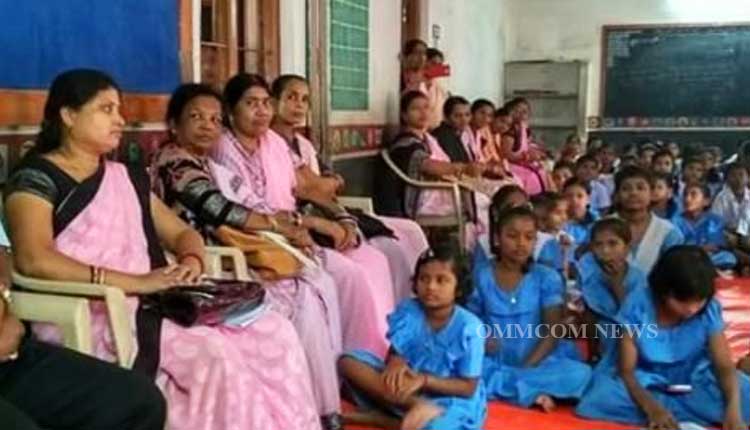
Bhubaneswar: The Odisha State Cabinet has approved the proposal to introduce the Odisha State Public Universities (Reservation in Teachers’ Cadre) Ordinance, 2025. This ordinance aims to establish a uniform reservation framework for direct recruitment of teachers across all state public universities in Odisha.
The key features of the ordinance include:
– University as a Single Unit: Treating each university as a single unit for implementing reservation, replacing the current department-wise system.
– Post-Based Roster: Maintaining a post-based roster for each cadre to ensure clarity and uniform application of reservation policies.
– Enhanced Representation: Expected to enhance representation of SC, ST, SEBC, and other eligible groups in faculty recruitment.
– Simplified Procedures: Simplifying administrative procedures and aligning with nationally accepted practices.
The ordinance underscores the State Government’s commitment to promoting fairness, transparency, and social justice in higher education.
🛞🛞🛞🛞🛞🛞🛞🛞
🎆🎆🎆🎆🎆🎆🎆🎆
Our UT news, views..
Odisha is ruled by BJP,but still it Empowers the ST MLA,the present Chief Minister.Mohan Charan Majhi ministry and because Power post on the state,our people able to do good 👍 to SC.STs for further empowerment.
See Our strength.
Total MLAs.147
St MLAs.33
Sc MLAs.24.
Total ministers.16
St ministers..4
Sc ministers..2
Total 6 out of 16.Because of this strength, the above 2025 ordinance is possible.
Benefit....increased number of posts for SC.ST.OBC.EWS..
HATS OFF TO THE CM OF ODISHA.
💪💪💪💪💪💪💪💪💐💐💐💐💐💐💐





Prakash Ambedkar says VBA ready to contest 200 seats in BMC elections 2026
Updated on: 24 December,2025 11:02 AM IST | Mumbai
Ambedkar pointed out that the Congress and the NCP (SP) were not coming together for the polls, forcing his party to decide whom to align with
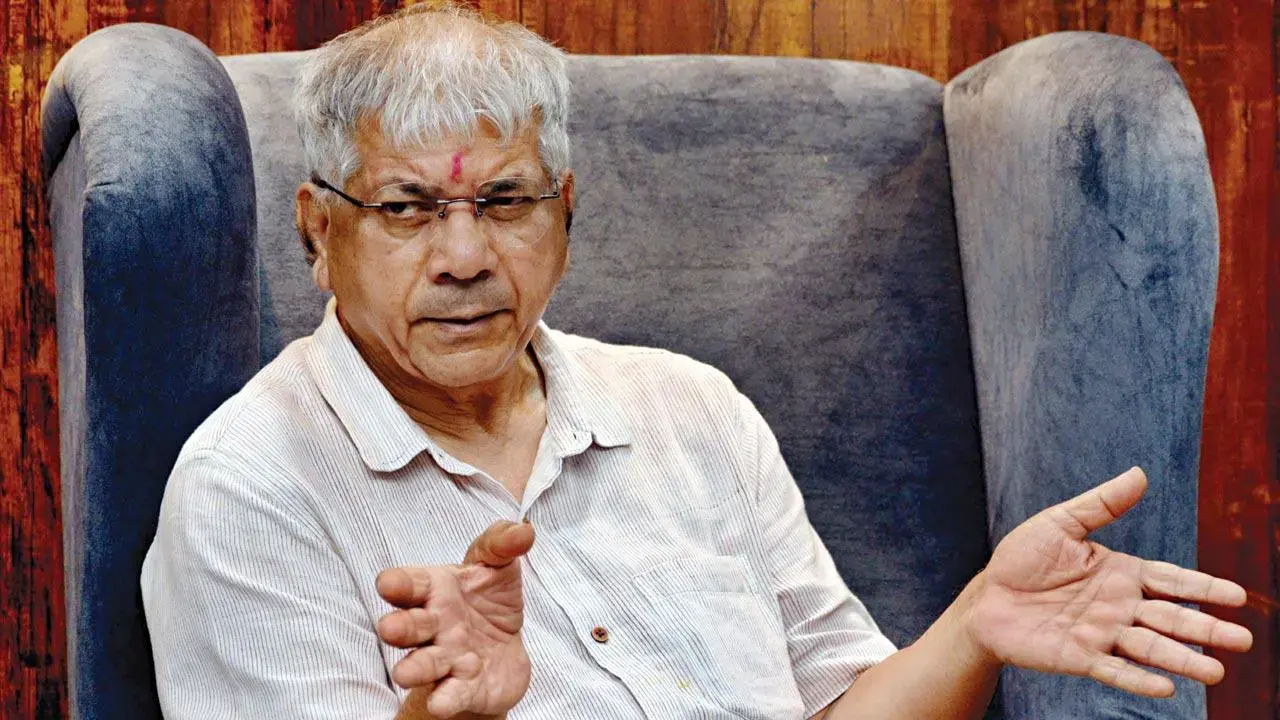
Prakash Ambedkar. File Photo
Vanchit Bahujan Aghadi (VBA) leader Prakash Ambedkar on Tuesday said his party is prepared to contest 200 seats in the 227-member Brihanmumbai Municipal Corporation (BMC) in the January 15 elections, reported news agency PTI.
Talking to reporters in Mumbai, the grandson of chief architect of the Constitution, Dr B R Ambedkar, said, "We are prepared for 200 seats in Mumbai and our insistence is on a 50-50 seat-sharing formula (in case of an alliance with Congress)," asserting his party's strength in municipal bodies was evident, reported PTI.


Reading Dr.Ambedkar is not Optional. It’s Survival.

By Shaleen Mahajan
As a law student, I sit in classrooms where the Constitution is discussed every day, yet the mind behind it is barely understood. Dr. B.R. Ambedkar is remembered in fragments. His name is memorized, his photograph displayed, his birthday celebrated. But for many, Ambedkar exists only in social media posts, not in spirit or practice. His ideas are rarely read, and even more rarely felt. In a time when reels replace books and opinions are formed in seconds, Ambedkar is reduced to slogans. This is not just unfair—it is dangerous.
Dr. B.R. Ambedkar’s relevance is not limited to history books; it lives in the moral questions he compelled society to face. Democracy, for him, was not merely casting votes—it was living together with liberty, equality, and fraternity. Without these values, constitutional promises remain hollow.
Central to his philosophy was his critique of caste. Caste is not just a label; it decides a person’s dignity, education, and opportunities from birth. Even today, a surname can reveal social standing, showing that caste is alive, not a chapter of . Ambedkar warned that merely declaring everyone equal before the law is not enough. When inequality is rooted in society itself, only structural change can truly break it.
Corrective measures like reservation are tools to counter systemic exclusion, not privileges. They are designed to ensure that identity does not predetermine destiny. Yet on social media, reservation is often dismissed as “unfair,” as if it takes opportunities away from the so-called “general category”. Generations of systemic oppression mean that achievements are rarely inherited,they are earned against immense odds. Reservation is not charity. It is a mechanism for representation, education, and participation, a way to make opportunity equitable rather than inherited.
Ambedkar’s commitment to justice extended to women. He saw women’s rights not as concessions but as a moral necessity. Through the Hindu Code Bill, he worked to secure equality in marriage, inheritance, and property—far ahead of his time. For him, equality could not be performative; it had to be built into institutions through laws, policies, and representation.
Yet today, Ambedkar is often celebrated in appearance, not essence. Statues are cleaned, photographs garlanded, birthdays trend online.But his ideas are rarely engaged with. People quote him while dismissing reservation, mocking constitutional values, or ignoring caste realities. True honor requires understanding and practicing what he stood for.
Ambedkar’s thought is not a religion to follow blindly; it is a call to think, to question, and to act with courage. In a country still struggling with caste, gender inequality, and misinformation, reading Ambedkar is not optional-it is necessary. He reminds us that equality is never automatic, justice is never symbolic, and democracy survives only when ordinary people refuse to look away. Today, when debates rage online over who deserves opportunity, when women and marginalized communities fight for spaces they have historically been denied, Ambedkar’s vision speaks louder than ever. fairness is not given, it is madeand it is our responsibility to make it real.

Here are the latest Dalit-related news updates in India on 25 December 2025:
📌 1. Dalit Atrocities and Ongoing Issues
- Caste-based violence continues to be a serious issue across India, with reports noting that violence and public humiliation of Dalits remain widespread and often underreported. Activists say more needs to be done to address deep structural inequalities.
- A shocking case in Haryana: A 12-year-old Dalit boy in Palwal was reportedly kept tied and tortured with electric shocks after being suspected of theft. Lawyers say police delayed action, and an FIR has been registered citing the SC/ST and JJ Act.
🧠 2. Reflections on Caste and Social Inequality
- On 25 December, opinion and historical pieces highlighted caste injustice in India. One article revisits broader issues of inequality and how caste intersects with everyday life, including cultural aspects like food and society.
- Educational and historical discussions about Dr. B.R. Ambedkar’s legacy and the significance of resisting caste oppression were also published.
📍 3. Dalit Rights in Politics and Policy
- Political debates around reservation rights and representation are in focus, with the Uttar Pradesh Congress alleging irregularities in recruitment and reservation implementation in recent lekhpal exams—raising concerns about inequality in access to government jobs for SC/OBC groups.
🧾 Contextual Background (Related Developments)
These stories help frame the broader conversation around Dalit injustices and rights in India:
- Dalit issues abroad: In related cross-border discussions, BSP leader Mayawati expressed strong concern over the killing of a Dalit youth in Bangladesh, urging the Indian government to act and linking the incident to ongoing concerns about caste and minority persecution.
- Ongoing marginalization: A recent report on Dalits in Bihar highlighted persistent marginalization, including low land ownership, poor income levels, and high rates of reported atrocities over time.
🧠 Historical Note
December 25 also marks the anniversary of the Kilvenmani massacre (1968) in Tamil Nadu—when 44 Dalit agricultural workers were brutally murdered, a long-remembered symbol of caste violence in India.

Here are the **major tribal (Adivasi) news developments in India around 25 December 2025 — covering incidents, government actions, and community responses:
📰 Key Recent Tribal / Adivasi Headlines
1. Assault on Tribal Youth — Calls for Stronger Charges
A young tribal (Adivasi) man, Manikandan (26) from Attapady (Palakkad, Kerala) was brutally assaulted earlier this month, allegedly over a theft accusation. Although injured severely, only minor charges have been filed so far. His family is demanding charges under the strong SC/ST (Prevention of Atrocities) law. This incident is drawing public attention following earlier killings of tribal persons in the region.
2. Tribal Intellect Forum in Jharkhand Opposes New PESA Rules
In Jharkhand, the Adivasi Buddhijivi Manch (tribal intellectual group) is opposing recently approved PESA (Panchayats Extension to Scheduled Areas) rules, saying they weaken tribal self-governance and traditional rights. The group is planning to approach the High Court against the new regulation.
3. Assam Govt Job Appointments for Tea Tribes & Adivasis
Assam Chief Minister presented appointment letters to 215 candidates from Tea Tribe and Adivasi communities for technical and non-technical posts in health services, marking implementation of reservation policies for these groups. Officials also said the 3 % reservation will apply to overall vacancies, not deducted from OBC quotas.
4. Cultural Ceremony at Medaram with Adivasi Traditions
Adivasi communities in Telangana celebrated the installation of Pagididdaraju and Govindaraju idols on new pedestals with traditional drumbeats and dances, highlighting continuing cultural preservation efforts.
5. Land Rights Tensions in Assam’s Karbi Areas
Karbi tribal groups in Assam have pushed to reclaim Village Grazing Reserves, leading to unrest and tensions with authorities and other communities. Reports of law-and-order issues have emerged, prompting the Indian Army to conduct a flag march and Rapid Action Force deployment to maintain peace.
🧭 Ongoing & Contextual Developments (Recent Weeks)
📌 Dialogue on ST Status & Adivasi Claims
Assam tribal affairs officials held talks with Adivasi leaders on recognition and classification of Adivasi communities for ST (Scheduled Tribe) status under the 2022 Adivasi Peace Accord. A field report with community data is expected to support future decision-making.
📌 Tribal Empowerment & Education Progress
Separate coverage shows a near-zero dropout rate among Particularly Vulnerable Tribal Group (PVTG) students in 2024-25, a positive sign in education access for tribal children.
📌 Broader Trend Notes on Tribal Rights & Policy
-
High Court Ruling on “Adivasi” Usage: Jharkhand HC has ruled that merely calling someone “Adivasi” isn’t an offence under SC/ST (Prevention of Atrocities) Act — the victim must legally belong to a Scheduled Tribe as per the Constitution.
-
Government Initiatives & Budgets: India’s budget for tribal welfare has seen significant boosts, and the Cabinet recently approved the Pradhan Mantri Janjati Adivasi Nyaya Maha Abhiyan focusing on infrastructure, health, education and livelihood in tribal areas.
📍 What These Stories Show
- Justice & Rights Concerns: Assaults and land-related rights debates underscore ongoing struggles for legal protection and enforcement of tribal rights.
- Government Focus: Against this backdrop, both policy actions (job appointments, welfare budgets, new missions) and grassroots resistance (against diluted PESA rules, land rights tensions) are shaping tribal discourse.
- Culture & Identity: Cultural ceremonies and educational gains reflect community efforts to preserve heritage and improve .

Here are the latest India-focused news and developments related to Buddha and Buddhism as of December 25, 2025:
🇮🇳 Recent News in India (Dec 25, 2025)
📍 Dragon Palace Temple near Nagpur gets tourism status
The Dragon Palace Temple (Peace Palace) in Kamptee near Nagpur has been officially designated as a ‘B-grade’ tourist destination by the Maharashtra government. The internationally recognized Buddhist site—with its Japanese architecture and Buddha statue—is expected to attract more visitors and boost local tourism, especially during key festivals like Dhammachakra Pravartan Din and Buddha Purnima.
🌊 Cleanup & revival of Buddha Dariya river in Ludhiana
A major environmental and community campaign along the Buddha Dariya waterway in Ludhiana has completed one year of public-led cleanup, expanding efforts into city areas to improve water quality and revive the once polluted river. The collaborative drive aims to restore the river’s natural state and make it suitable again for cultural and religious gatherings.
🕊 Birds returning to revived Buddha Dariya
Thanks to the ongoing volunteer effort led by environmental advocates, Buddha Dariya has seen significant ecological improvement, with birds and wildlife returning to restored riverbanks—symbolizing environmental success and public spirit.
📌 Relevant India-Buddhism Developments (context from late 2025)
These events have shaped India’s Buddha-related cultural and spiritual engagement this year:
📍 Bodh Gaya’s International Tipitaka Chanting Ceremony
India hosted the 20th International Tipitaka Chanting Ceremony in Bodh Gaya, Bihar—bringing together tens of thousands of monks and devotees from India and abroad for scripture recitations under the Bodhi Tree, marking the country’s spiritual heritage as Buddhism’s birthplace.
📍 Huge visitor turnout at Buddha Samyak Museum in Vaishali
The newly opened Buddha Samyak Darshan Museum and Memorial Stupa in Vaishali, featuring relics and Buddhist heritage exhibits, has attracted over 3.5 lakh visitors from across India and abroad since inauguration, solidifying its status as a major pilgrimage and tourist hub.
📍 Bihar investing in tourism facilities around Kesariya Buddha Stupa
The Bihar government is building a tourist facility centre near the historic Kesariya Buddha Stupa in East Champaran, which includes a 5D theatre to enhance visitors’ understanding of Buddhism and local heritage.
📍 Repatriation & international exposition of Buddha relics
India successfully repatriated the Piprahwa relics of Lord Buddha after 127 years and has been exhibiting sacred relics internationally (e.g., in Russia’s Kalmykia and Bhutan), reinforcing India’s role as a guardian of Buddhist heritage and strengthening cultural diplomacy.
🧠 Why this matters
India, as the birthplace of Gautama Buddha and the heart of early Buddhist history, continues to play a central role in global Buddhist cultural exchange, pilgrimage growth, restoration of heritage sites, and spiritual events drawing both domestic and international attention.

Here’s the latest Govt. PSU (Public Sector Undertaking) employment news around 25 December 2025 — including current job openings, recruitment alerts, and broader hiring trends in India:
🧑💼 Current PSU & Govt Recruitment Alerts (25 Dec 2025)
📢 Major bank & financial sector job openings this week
More than 1,900 vacancies have been announced by State Bank of India (SBI), Bank of India (BOI) and NABARD, among other public sector banks and institutions. These include roles across apprenticeships, specialist officers, and credit officer positions, offering opportunities for graduates and postgraduates.
🏛️ Structural changes in PSU banking sector
The Indian government and regulators are reportedly working on potential restructuring or merger plans in the PSU banking space — a move that could influence future appointments and workforce plans in government banks.
🛠️ RITES Recruitment 2025
Public sector enterprise RITES Ltd has opened applications for about 400 Assistant Manager posts in engineering disciplines (Civil, Electrical, Mechanical, IT, etc.). Eligible candidates can apply as per the official notification.
🌱 ONGC Apprenticeship Scheme
ONGC — a Maharatna PSU — launched its 2025 Apprenticeship Programme with 2,623 vacancies, aimed at training youth in key energy sector roles across multiple centres.
📌 Other PSU Job Openings (Recent & Ongoing)
🔹 Power Grid Corporation of India has invited applications for the Director (Finance) position — a senior executive role within the company’s Board of Directors. Deadline for applications is in early January 2026.
🔹 IOCL Apprentice Recruitment: Indian Oil Corporation Limited has announced 509 apprentice positions across trade, technician, and graduate apprentice categories in eastern and northeastern regions.
🔹 IOCL Non-Executive Jobs: Another recruitment drive has been announced for 394 non-executive posts (Junior Engineering/Technical Assistants and Quality Control roles) across multiple states.
📊 Sector-Wide Hiring Trends
According to recent employment round-ups, 2025 has been a record year for government job announcements, with over 3 lakh vacancies across government sectors including RRBs, SSC, banking, defence, and PSU hiring combined — making it one of the highest recruitment years in recent memory.
📍 Application Tips & Dates
- Most PSU job applications close in January 2026, so if you’re planning to apply, check eligibility and dates soon.
- Keep an eye on official PSU career portals such as those of IOCL, ONGC, Power Grid, RITES, SBI and BOI for notification updates and online application links.


Comments
Post a Comment