08.01.2026.Untouchability News.(News of Dalits,Adivasi,atrocity,buddhist,Dr Ambedkar,Employement,Education news details from various sources)by Sivaji.Ayyayiram UTNews.9444917060.


Improving public speaking skills is a step-by-step process, especially for students. Here’s a clear, practical roadmap that works well in classrooms, colleges, and competitive environments 👇
1. Build Confidence First (Most Important)
Many students fear judgment, not speaking itself.
How to improve:
- Start speaking in small groups (friends, classmates)
- Practice in front of a mirror
- Record short speeches on mobile and replay
- Accept mistakes as normal (even great speakers make them)
👉 Confidence grows from practice, not talent
2. Improve Content Before Style
Students often fail because they don’t know what to say clearly.
Steps:
- Write points in simple bullet format
- Use this structure:
- Introduction – What & why
- Body – 2–3 key points
- Conclusion – Summary or message
- Speak what you understand, not memorized lines
3. Daily Speaking Practice (10–15 minutes)
Short daily practice is better than long weekly sessions.
Activities:
- Speak for 1 minute on any topic
- Explain a news item in your own words
- Teach a concept to an imaginary class
- Retell a story or incident
📌 Consistency is the key
4. Language & Vocabulary Improvement
Students often stop mid-speech due to lack of words.
Simple methods:
- Learn 5 new words daily and use them in sentences
- Read newspapers aloud
- Watch good speakers and imitate tone & pauses
- Think in the language you want to speak
5. Body Language & Voice Control
Your body speaks before your mouth.
Practice:
- Stand straight, shoulders relaxed
- Maintain eye contact (3–5 seconds per person)
- Use natural hand movements
- Speak slowly and clearly
- Pause instead of saying “uh… um…”
6. Overcome Stage Fear
Fear reduces only by exposure, not motivation.
Techniques:
- Deep breathing before speaking
- Visualize success, not failure
- Focus on message, not audience reaction
- Remember: Audience wants you to succeed
7. Participate Actively
Real improvement comes from real platforms.
Encourage students to join:
- Debate clubs
- Seminars & presentations
- Morning assemblies
- Toastmasters / speech clubs
- Classroom discussions
8. Feedback & Self-Correction
After every speech, ask:
- What went well?
- Where did I hesitate?
- What can I improve next time?
🎯 Improvement = Practice + Feedback
9. Role Models to Learn From
Students should watch:
- Good teachers
- TED speakers
- Political speakers
- Social reformers’ speeches
(Observe structure, pauses, clarity, not accent)
10. Golden Rule for Students
“Clarity is more important than fluency.”
A clear message spoken simply always wins.
🐘🐘🐘🐘🐘🐘🐘🐘🛞🛞🛞🛞🛞🛞🛞🛞
Here is a simple, practical 30-day public speaking practice plan designed especially for students.
👉 Only 15–20 minutes per day is enough.
🗓️ 30-Day Public Speaking Practice Plan
🔹 WEEK 1: Confidence & Comfort (Foundation)
Goal: Remove fear, start speaking freely
Day 1:
Introduce yourself (1 min)
– Name, class, hobby, dream
Day 2:
Speak about your best friend (1–2 min)
Day 3:
Talk about your favorite subject or teacher
Day 4:
Describe your daily routine
Day 5:
Narrate a childhood incident
Day 6:
Speak in front of mirror (2 min)
– Focus on posture & eye contact
Day 7:
Record a video speech (2 min)
– Watch and note improvement areas
🔹 WEEK 2: Structure & Clarity
Goal: Learn to organize thoughts clearly
Day 8:
Speak on “Importance of Education”
(Introduction–Body–Conclusion)
Day 9:
Explain a school topic as if teaching juniors
Day 10:
Talk about a current news event
Day 11:
Compare two things (e.g., Online vs Offline classes)
Day 12:
Give a 2-minute motivational speech
Day 13:
Explain a problem and solution
(e.g., Plastic pollution)
Day 14:
Speak without notes for 2 minutes
🔹 WEEK 3: Language, Voice & Body Language
Goal: Improve fluency, tone, gestures
Day 15:
Read newspaper aloud (10 minutes)
Day 16:
Speak slowly with pauses (2 min)
Day 17:
Focus on hand gestures & expressions
Day 18:
Tell a story with emotion
Day 19:
Practice pronunciation of difficult words
Day 20:
Speak loudly and clearly in an open space
Day 21:
Deliver a 3-minute speech confidently
🔹 WEEK 4: Advanced & Stage Readiness
Goal: Speak confidently in public situations
Day 22:
Extempore speech (1 min, random topic)
Day 23:
Participate in a group discussion or mock debate
Day 24:
Give a welcome or vote of thanks speech
Day 25:
Speak to a small audience (friends/family)
Day 26:
Answer questions after your speech
Day 27:
Practice speech with eye contact only
Day 28:
Deliver a 4-minute formal speech
Day 29:
Record your best speech so far
Day 30:
Final presentation + self-evaluation
🎉 Compare Day 1 vs Day 30
🧠 Daily Rules to Follow
✔ Speak daily, no skipping
✔ Focus on clarity, not accent
✔ Mistakes are progress signs
✔ Practice loudly, not silently
🌟 After 30 Days, Students Will Gain:
✅ Confidence
✅ Clear thinking
✅ Better vocabulary
✅ Reduced stage fear
✅ Organized speech skills
🙏🙏🙏🙏🙏🙏🙏🙏

The SC ST OBC Scholarship 2026 has been announced as a key government-linked financial support initiative for students from Scheduled Caste (SC), Scheduled Tribe (ST) and Other Backward Class (OBC) communities in India.
Under this scholarship framework, multiple categories are included to ensure wide coverage and support over different stages of education.
Applications for the SC ST OBC Scholarship 2026 can be completed entirely online on the National Scholarship Portal (NSP), which is the official platform for central and state government scholarship schemes.
The SC ST OBC Scholarship 2026 includes multiple scholarship schemes catering to different communities and education levels. These include:
Pre-Matric Scholarships for students studying below Class 10
Post-Matric Scholarships for students studying Class 11 onwards
Merit-cum-Means Scholarships for professional and technical courses
Top Class Education Scholarships for students enrolled in premier institutions
Each scheme operates with specific eligibility conditions, income limits and benefit structures depending on the applicant's category and course level.
WHO CAN APPLY FOR SC ST OBC SCHOLARSHIP 2026
Must be an Indian citizen belonging to SC, ST or OBC category
Applicant must be enroled in a recognised school, college or university
Must have passed the previous qualifying examination
Annual family income must fall within limits prescribed for the selected scheme
Applicant should have a valid Aadhaar-linked bank account for DBT payments
SC ST OBC SCHOLARSHIP 2026 BENEFITS
The SC ST OBC Scholarship 2026 delivers financial support according to the applicant's level of study and specific scheme criteria. Major benefits include:
Tuition fee assistance, which may be either full or partial depending on the category and course level.
Maintenance allowance to support day-to-day living expenses while studying.
Hostel fee support for students residing in student accommodation.
Book and study material allowance to help cover costs of textbooks and other essential academic materials.
All payments under the scheme are made through Direct Benefit Transfer (DBT) directly into the student's bank account, ensuring transparency and timely access to funds.
HOW TO APPLY FOR SC ST OBC SCHOLARSHIP 2026
Visit the official National Scholarship Portal at scholarships.gov.in.
Complete One-Time Registration (OTR) using Aadhaar details to generate a user ID.
Log in with your credentials and select the academic year 2025-26.
Choose the appropriate SC ST OBC scholarship category matching your level of study.
Fill in the online application form with accurate personal, academic and income details.
Upload the required documents such as Aadhaar card, caste certificate, income certificate, mark sheets, bonafide certificate and bank passbook.
Review the entire form to ensure accuracy and submit.
After submission, note down the Application Reference Number (ARN) for future status tracking.
The SC ST OBC Scholarship 2026 remains one of the most important support systems for students from historically underprivileged communities, helping them continue their academic journeys with reduced financial pressure.
Eligible students should apply well before the deadline (yet to be announced) on the National Scholarship Portal to ensure their applications are processed smoothly.

 NewsEducation TodayNewsBihar offers free admission to SC, ST students in Ambedkar schools, apply by Feb 5
Bihar offers free admission to SC, ST students in Ambedkar schools, apply by Feb 5
The application window has opened for SC and ST students seeking admission to Dr Bhimrao Ambedkar Residential Schools in Bihar for the academic year 2026-27, offering fully-funded facilities and opportunities for holistic growth.
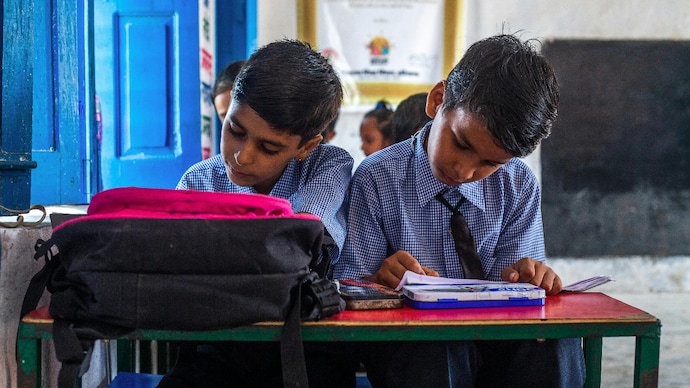

 The process for admission to 91 Dr Bhimrao Ambedkar Residential Schools in Bihar for Scheduled Caste and Scheduled Tribe students has started, marking the beginning of a new academic session for 2026-27.
Parents interested in enroling their children can submit applications from January 6 to February 5, with both online and offline options available.
These residential schools are designed to support meritorious SC and ST students by providing a comprehensive educational environment. The state government covers accommodation, meals, academic resources, sports facilities, and other essentials at no cost.
Applications are open for admission in Class 1 and Class 6. The schools aim to foster all-round development and ensure equal access to quality education for children from marginalised communities.
ADMISSION CRITERIA AND EXAM DATES
Admission to Class 1 will be determined through an online lottery system, making the process accessible and transparent for young applicants.
For Class 6, students must participate in a state-level entrance exam scheduled for February 22.
This exam will assess proficiency in Hindi, English, Mathematics, Science, and Social Science, with a total score of 100 marks.
Admit cards for the entrance test will be made available to applicants between February 15 and 20. The results of the exam will be declared on March 10, and the subsequent admission process will begin on March 11.
APPLICATION SUBMISSION PROCESS
Parents can choose to apply either online or offline based on their convenience.
For offline submissions, forms can be handed in at the Scheduled Caste and Scheduled Tribe Welfare Office in the applicant's respective district.
This dual-mode application process aims to ensure that as many eligible students as possible are able to participate.
The SC and ST Welfare Department has facilitated these measures, so parents can access resources regardless of their location or digital literacy.
All forms and instructions for the application process, whether online or offline, are provided through official channels to maintain fairness and clarity.
STATE'S ROLE IN EDUCATIONAL EQUALITY
By initiating this process, the Bihar government continues its commitment to expanding educational opportunities for disadvantaged groups. The free, well-equipped schools stand as a testament to efforts aimed at reducing inequality and empowering communities.
The comprehensive support within Ambedkar Residential Schools has helped many students pursue their academic goals in a secure environment.
With the new academic year on the horizon, the initiative has offered a structured pathway for SC and ST students to access top-tier schooling without incurring costs.
The application window for admissions has been open as of January 6 and will remain active until February 5, 2026.

Hostel for SC/ST girls in Ghaziabad now ‘houses only snakes, not students’
The UP government’s Scheduled Caste-Scheduled Tribe Hostel in Nandgram, Ghaziabad, was inaugurated on January 15, 2011, during the tenure of former Chief Minister Mayawati. However, the girls’ hostel remains vacant. While some students were accommodated toward the end of Mayawati's term, “they could stay for only a few months before relocating to another hostel in Sahibabad due to poor security and the absence of basic amenities,” according to Dharam Singh Negi, caretaker of an adjacent hostel for SC/ST boys.
Since then, the building has remained vacant. Neither the subsequent Samajwadi Party government that took office in 2012 nor the BJP government in power since 2017 has made the hostel operational. Things got so bad that in 2020-21, local authorities had proposed converting the building into a detention centre for foreign nationals living illegally in the state without valid documents, constructing seven large halls to house detainees.
However, widespread protests from students, Dalit organisations, and Mayawati forced officials to abandon the plan, leaving the building in limbo once again. When Newslaundry visited the former girls' hostel, we found a scene rife with neglect – a dilapidated structure overrun with weeds and bushes, and its doors secured by rusted locks. Students from the adjacent boys' hostel offered a stark assessment – “the building now houses only snakes, not students”.
Newslaundry even found the boys' hostel in a deplorable condition, and that any cleaning or repair work was done by students residing there using their own money and resources. Even for basic necessities, the students pool their money to make arrangements. They claimed they spent Rs 44,000 on an inverter for the library, Rs 5,656.92 on Wi-Fi, and Rs 2,720 on cleaning supplies and other essentials. Bills for all these expenses are also available.
Surprisingly, according to a board displayed at the gate of the same hostel, approximately Rs 3 crore was recently spent on repairs and beautification of the boys' hostel.
Questioning the expenditure, one of the students asked, “If crores of rupees were spent, why is the situation on the ground so deplorable?”


The caste of national, state presidents of BJP and Congress – II | Number Theory
In fact, just one sub-caste – Brahmin – dominates the list of this highest organizational post of the two parties


Ambedkar’s legacy cannot be confined to Constitution, says former judge Sudershan Reddy
Published - January 07, 2026 07:26 pm IST - HYDERABAD
B.R. Ambedkar’s legacy extends far beyond the Constitution, former Supreme Court judge B. Sudershan Reddy said on Wednesday.
"His contributions to the country are expansive, ranging from the fields of economics, banking and fiscal policy, women’s rights, universal education, the Dalit Buddhist movement and the anti-caste movement... We rarely hear about these things. But the time has come for all that and to speak more about his unexplored contributions,” the retired judge said.

With GYAN, India is rewriting the script of caste, marginalisation, and empowerment
While the language of reservation and victimhood still endures, the dominant narrative hails Dalits, OBCs, and women as aspirational stakeholders in a Bharatiya civilisational project
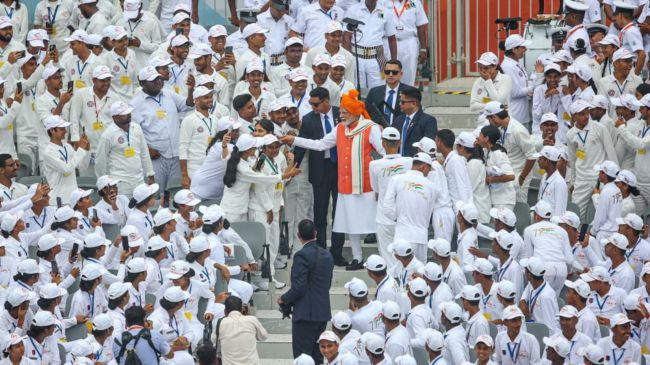 Under Narendra Modi’s tenure as Prime Minister, we have witnessed a social and economic churn, evident in development indices, intellectual capital, and the surge in the economy

The Strauss-Howe generational theory suggests that every 80 years or so, civilisations undergo an archetypal generational shift. This theory aligns with the cyclical approach of Indic traditions, which are unlike the linear Western traditions. As we enter the 80th year of Independence in 2026, our nation stands at the cusp of a new social, political, and economic climate. Caste, for most of independent India, remained a tool of exploitation. For eight decades, policy atrophy bred insecurity, blinding us to past follies, and the youth (yuva), especially women (nari) from marginal communities, were starved of opportunities. Farmers (annadatas) remained cost centres, and not engines of profit for the state, and the poor (gareeb) were seen as a mere vote bank and not contributors to growth.
Under Narendra Modi’s tenure as Prime Minister, we have witnessed a social and economic churn, evident in development indices, intellectual capital, and the surge in the economy. This reflects a dynamic shift from charity to parity. Now, the caste conversation is not around victimhood and marginalisation. It is about empowerment, embodied in the “Gareeb, Yuva, Annadata, Nari” (GYAN) quartet. Caste has been re-coded — from a politics of identity to a politics of development. Modi’s efforts resonate with Amartya Sen’s “capability approach” and seek to make the constituents of GYAN enablers and creators, not patronage seekers. Dalit women are redefining empowerment, starting their own enterprises and creating an ecosystem to inspire and support others like them who are charting their own path to success. The Dalit youth do not merely see themselves as “quota kids” seeking upward mobility through a government job. They aspire to become job creators. The frame of our ambitions has expanded with the celebration of “Azadi ka Amrit Mahotsav”.
The transformation from farmer to annadata has also resulted in a change in perspective towards agriculture. It is now seen as a way of getting discernible returns for both the annadata and consumers. Poverty and deprivation are serious concerns for any nation, and how it deals with them shows how it values its citizens. For much of its post-1947 history, India was run by some version of a self-proclaimed socialist government — an ideology premised on eliminating class divides. But the country barely moved in that direction. Every election cycle had a new slogan for garibi hatao, but this proved to be a ploy to gain power. Nothing much changed for the poor except for the kind of dole, handed down like alms. Under the Narendra Modi government, the gareeb are treated with respect. Direct Benefit Transfer has proved to be a game-changer, providing direct access to funds without making a plea before local officials.
We will face challenging times going forward. For we are not just decolonising our minds but our history too, along with ideas of caste. This is not nostalgic revivalism but a radical negation of the historical marginalisation of communities who were written out of the promise of equality, inclusivity, and justice, even as these were celebrated as the defining ethos of Indic civilisation.
While the language of reservation and victimhood still endures, the dominant narrative hails Dalits, OBCs, and women as aspirational stakeholders in a Bharatiya civilisational project of Viksit Bharat. Through timely government interventions of digital inclusion and entrepreneurial opportunity, the caste spectrum is being rewritten, encapsulated in the GYAN framework that names them as the pillars of India’s 2047 vision, Viksit Bharat has started the discourse on dignity and conscious development that can challenge the structural exclusions of caste and not merely sublimate them under the umbrella of growth.

Here’s a state-wise update on Dalits and Scheduled Caste (SC) related news/issues in India for 08 January 2026 — covering key events, violence, legal developments, policies, and social justice actions:
📌 NATIONAL (Pan-India)
Influencer Arrested for Insulting Dalits (Haryana/Delhi NCR)
A social media influencer was arrested in Gurgaon for derogatory comments targeting the Dalit community. The FIR was registered under the Scheduled Castes and Scheduled Tribes (Prevention of Atrocities) Act after the video went viral, drawing widespread condemnation.
Policy Focus — Caste Enumeration in National Census
Tamil Nadu CM M.K. Stalin urged the Centre to handle caste enumeration in the upcoming 2027 census with caution and include strong consultative processes so it reflects historical inequalities and informs reservations & welfare values.
Manual Scavenging Still a Human Rights Violation (Nationwide Concern)
A Lucknow University research paper highlighted that manual scavenging — a caste-linked occupation disproportionately imposed on Dalits — persists despite legal bans, further emphasizing systemic discrimination and public health risks.
🗂 STATEWISE INCIDENTS & DEVELOPMENTS
Uttar Pradesh
Meerut — Brutal Attack on Dalit Woman & Abduction Case
A 50-year-old Dalit woman was killed while trying to protect her daughter from abductors in Meerut. The daughter was later found safe in Haridwar, and the main suspect was arrested following public outrage.
Bareilly — Assault on Dalit Teenager
A 16-year-old Dalit boy was kidnapped at gunpoint, stripped, and physically assaulted in Bareilly; a video of the incident sparked widespread attention and law enforcement action.
Karnataka
Dalit Family Rights & Human Rights Commission Intervention
The Karnataka State Human Rights Commission visited Inam Veerapur in Dharwad following alleged caste atrocities, urging enhanced protection and speedy justice for affected Dalit family members and recommending welfare and social harmony measures.
🔎 BROADER CONTEXT & RECENT TRENDS
Here are ongoing trends and structural highlights related to Dalit / SC realities in India:
Atrocities & Crime Data (Latest Trends)
- Nearly 97.7% of atrocities against Scheduled Castes are concentrated in a few states — Uttar Pradesh, Rajasthan, Madhya Pradesh, Bihar, Odisha, Maharashtra — indicating regional hotspots of caste violence.
Policy & Reservation Reforms (States)
- Telangana implemented Scheduled Caste sub-categorisation to allocate reservation benefits more equitably among Dalit subgroups.
- Karnataka approved an internal reservation formula within its SC quota to balance representation among subgroups.
Legal Processes on SC Status
- The Central Commission examining SC status for converts to religions outside Hinduism/Sikhism/Buddhism received a tenure extension, reflecting a contested policy area on inclusion of Dalit converts.
- The Supreme Court has clarified that only Parliament can amend SC lists, limiting state governments’ authority over caste classifications.
Social Movements & Protests
- In regions like Himachal Pradesh, protests and political mobilizations have erupted over caste injustices, including responses to caste-motivated incidents and demands for justice.
🧠 Summary of Major Themes Today
| Dimension | Key Points |
|---|---|
| Violence & Crimes | Continued caste-based brutality in UP; arrests and investigations underway. |
| Legal & Policy | Census caste enumeration, SC list jurisprudence, reservations reform in Telangana and Karnataka. |
| Human Rights | Manual scavenging described as ongoing rights violations; human rights commissions engaged. |
| Social Sentiment | Public condemnation of caste insults and rising political focus on Dalit justice. |

Here’s a **state-wise summary of major news and developments on Adivasis & Scheduled Tribes (ST) in India around 08 January 2026 — including political, legal, social, and rights-based issues:
(Sources include latest news as of 8–10 Jan 2026.)
🇮🇳 NATIONAL CONTEXT
⚖️ Legal Recognition & Rights
Calcutta High Court Ruling on Abuse Based on Caste/Tribe The Calcutta High Court held that using caste or tribal labels (e.g., “Adivasi” or “Santhal”) to publicly humiliate someone can constitute an offence under the SC/ST (Prevention of Atrocities) Act if done with intent to embarrass or degrade.
🗳️ Political / Leadership
Senior Tribal Leader Passes Away Veteran Samajwadi Party MLA Vijay Singh Gond, a prominent tribal leader from Uttar Pradesh’s Sonbhadra and Dudhi region, died while undergoing treatment. He was considered a key Adivasi political figure with multiple terms as MLA.
📣 Cultural Solidarity
Birsa Munda Cyclothon Continues In tribute to tribal freedom fighter Birsa Munda, the nationwide Birsa Munda Cyclothon 2026 — a symbolic cycle rally from Ranchi to Delhi — reached Kanpur, drawing community participation and recognition of tribal heritage.
📜 Identity Issue Across States
An in-depth report highlights that certain tribal groups such as Gutti Koyas face administrative denial of ST status due to nomenclature mismatches in official lists across Chhattisgarh, Andhra Pradesh, and Telangana — reflecting wider challenges in tribal enumeration and legal recognition.
📍 State-Wise Developments
🗳️ Jharkhand
Municipal Election ST Reservations The Jharkhand State Election Commission issued its municipal election reservation list, reserving the Ranchi Mayor post for Scheduled Tribes — a significant move in local political empowerment for tribal communities.
🗣️ Assam
Protests & ST Status Debate While not specific to 8 Jan news but highly relevant to the current environment:
- Massive protests and mobilization by tribal groups in Howrah, Kolkata against inclusion of non-tribal communities in the ST list highlights wider regional resistance to dilution of ST benefits.
- Ongoing demands in Assam for Scheduled Tribe status for six communities — including tea tribes (Adivasis), Tai Ahom, Moran, Motok, Chutia, Koch-Rajbongshi — remain politically charged, with state cabinet backing recommendations and strong tribal group mobilization.
📌 Chhattisgarh
Upcoming Tribal Meeting in Bastar A divisional meeting of tribal societies in Jagdalpur (Bastar region) was scheduled for 11 Jan 2026 to discuss development, rights, and community issues — reflecting grassroots organizing among tribal groups.
Cultural Festival Visibility Preparations and themes for Bastar Pandum 2026 — a major tribal cultural festival celebrating indigenous arts, performance, and identity — are underway, attracting both cultural celebration and socio-economic interest.
📢 Rajasthan
Budget Focus on Tribal Areas Ahead of the state budget for 2026–27, the Rajasthan government has sought suggestions on a special development package for tribal areas, indicating policy attention toward tribal socio-economic upliftment.
🪵 Jharkhand (Rights Awareness)
PESA 1996 Awareness Session Communities in Bandgaon (Jharkhand) held a village-level meeting on rights under the Panchayats (Extension to Scheduled Areas) Act, 1996 (PESA) detailing tribal governance rights over land, forests, and local institutions — a key rights awareness and empowerment initiative.
🔎 Broader Trends & Issues Affecting Adivasis / STs
🏛️ Identity vs. Legal Status
The Jharkhand High Court recently quashed an FIR under the SC/ST Act on the basis that the complainant was not listed as a notified ST, clarifying that use of the generic term “Adivasi” alone does not confer ST status unless constitutionally recognized.
🧠 Social Movements
Across eastern and northeastern India, debates over who qualifies as Scheduled Tribe — inclusive of debates on religion, historical status, and socio-economic need — are fueling both protests and political negotiations ahead of key state elections.
🧠 Snapshot: Key Themes (08 Jan 2026)
| Dimension | Highlights |
|---|---|
| Legal Protection | High Court rulings affirm protections against caste/tribe-based insults. |
| Political Representation | Tribal reservation in Jharkhand civic polls; Assam ST status debates. |
| Cultural Identity | Tributes to tribal leaders and cultural festivals; mobilizations continue. |
| Grassroots Rights | Local tribal governance awareness via PESA; community meetings. |
| Development Policy | Rajasthan considers focused tribal area budget package. |


Comments
Post a Comment