21.01.2026.Untouchability News.(News of Dalits,Adivasi,atrocity,buddhist,Dr Ambedkar,Employement,Education news details from various sources)by Sivaji.Ayyayiram UTNews.9444917060.


Here’s the latest Scheduled Caste (SC)-related news in India — statewise and national context — for 21 January 2026:
📍 Tamil Nadu
- Caste-related murder case in Tirunelveli: The Madras High Court has directed the NHAI to produce CCTV footage in the case of a tech employee from a Scheduled Caste who was allegedly killed in a caste-related attack in July 2025. The accused include family members of a police sub-inspector.
- Inter-caste harassment: In Gummidipoondi (near Chennai), an inter-caste couple alleges social boycott and intimidation due to their marriage, and has sought government intervention after filing complaints with police and administration.
- General government critique includes SC/ST funding cuts: Kerala political leaders claimed that cuts in SC/ST allocations in the state slowed educational progress — highlighting welfare concerns for these communities.
📍 Karnataka
- Sharp rise in SC/ST atrocities: Recent data shows crimes against Scheduled Castes and Tribes in Karnataka have increased significantly over the past five years, with Bengaluru and other districts reporting high numbers of cases, low conviction rates, and special police units established to handle these offences.
- Political accountability case: An FIR was lodged against a transport minister in Davangere district under the SC/ST (Prevention of Atrocities) Act following allegations of casteist remarks against a Dalit farmer.
📍 National / Legal Context
- Supreme Court ruling on SC/ST Act: The Supreme Court clarified that mere abusive language alone does not constitute an offence under the SC/ST (Prevention of Atrocities) Act unless it references caste in a public context, shaping how offenses are legally treated.
Important Background Trends (Recent Data & Issues)
📊 Atrocities and Crimes Against SCs
- Crime rates rising: All-India and state data (e.g., Karnataka) show an increase in reported atrocities and caste-based violence against SC/ST communities in recent years.
- Legal protections under scrutiny: Debates continue around the effectiveness of the Scheduled Castes and Scheduled Tribes (Prevention of Atrocities) Act — enforcement issues and conviction gaps are frequently noted by analysts and rights groups.
📌 Political & Policy Context
- Several states have implemented or are considering sub-categorisation and internal reservation within SC quotas to address inequities within SC communities, based on judicial rulings.
(Note: these do not represent new developments on 21 Jan 2026, but important state policy context for SC welfare.)
Quick Statewise Snapshot (based on recent reporting & data)
| State | Key SC-related Issue |
|---|---|
| Karnataka | Rising SC/ST atrocities; govt sets up special police cells. |
| Tamil Nadu | Ongoing caste violence cases; inter-caste social exclusion reported. |
| Kerala | Political debates include cuts in SC/ST allocations. |
| National (SC/ST Act) | SC clarifies legal standards for what constitutes an atrocity under the law. |
यहाँ 21.01.2026 की अनुसूचित जाति (Scheduled Caste) से जुड़ी राज्य-वार खबरें हिंदी और तमिल में दी जा रही हैं।
🇮🇳 हिंदी (Hindi)
तमिलनाडु
- तिरुनेलवेली जाति-आधारित हत्या मामला: मद्रास हाईकोर्ट ने एनएचएआई को सीसीटीवी फुटेज पेश करने का निर्देश दिया। पीड़ित अनुसूचित जाति से था।
- अंतरजातीय विवाह पर सामाजिक बहिष्कार: गुम्मिडिपूंडी में एक अंतरजातीय दंपति ने समाजिक बहिष्कार और धमकियों की शिकायत की और सरकारी सहायता मांगी।
कर्नाटक
- एससी/एसटी पर अत्याचार में वृद्धि: पिछले पाँच वर्षों में अनुसूचित जाति/जनजाति के खिलाफ अपराधों में तेज़ बढ़ोतरी दर्ज की गई। बेंगलुरु में सबसे अधिक मामले।
- राजनीतिक नेता पर मामला: एक विधायक के खिलाफ एससी/एसटी अत्याचार अधिनियम के तहत एफआईआर दर्ज।
केरल
- एससी/एसटी बजट कटौती पर विवाद: विपक्ष ने आरोप लगाया कि कल्याण योजनाओं के लिए आवंटन कम किया गया, जिससे दलित छात्रों की शिक्षा प्रभावित हुई।
राष्ट्रीय स्तर
- सुप्रीम कोर्ट का फैसला: केवल गाली-गलौज करना अपने-आप में एससी/एसटी अत्याचार अधिनियम के तहत अपराध नहीं है, जब तक कि वह सार्वजनिक रूप से जाति के आधार पर न हो।
🇮🇳 தமிழ் (Tamil)
தமிழ்நாடு
- திருநெல்வேலி சாதி கொலை வழக்கு: எஸ்.சி சமூகத்தைச் சேர்ந்த இளைஞர் கொலை தொடர்பாக, தேசிய நெடுஞ்சாலை ஆணையம் சிசிடிவி காட்சிகளை நீதிமன்றத்தில் சமர்ப்பிக்க உயர்நீதிமன்றம் உத்தரவு.
- இடைசாதி திருமணம் – சமூக புறக்கணிப்பு: கும்மிடிப்பூண்டியில் இடைசாதி தம்பதியினர் சமூக புறக்கணிப்பு மற்றும் மிரட்டல் ஏற்பட்டதாக புகார்; அரசு உதவி கோரல்.
கர்நாடகா
- எஸ்.சி/எஸ்.டி மீதான குற்றங்கள் அதிகரிப்பு: கடந்த 5 ஆண்டுகளில் சாதி அடிப்படையிலான வன்முறைகள் அதிகரித்துள்ளதாக புள்ளிவிவரம்.
- அரசியல்வாதி மீது வழக்கு: தலித் விவசாயியை அவமதித்ததாக எஸ்.சி/எஸ்.டி வன்கொடுமை தடுப்பு சட்டத்தின் கீழ் எஃப்ஐஆர்.
கேரளா
- எஸ்.சி/எஸ்.டி நலத்திட்ட நிதி குறைப்பு சர்ச்சை: கல்வி மற்றும் நலத்திட்டங்களுக்கு ஒதுக்கீடு குறைக்கப்பட்டதாக எதிர்க்கட்சிகள் குற்றச்சாட்டு.
தேசிய அளவில்
- உச்சநீதிமன்ற தீர்ப்பு: பொதுமக்கள் முன்னிலையில் சாதியை குறிப்பிட்டு அவமதிக்காவிட்டால், வெறும் திட்டுதல் மட்டும் எஸ்.சி/எஸ்.டி சட்டத்தின் கீழ் குற்றமாகாது.

Here’s a **state-wise summary of **Scheduled Tribe (ST)/Adivasi related news around 21 January 2026 (with links so you can read full articles):
🗞️ Assam
📌 Assam Govt Appointments for Tea Tribes & Adivasi Communities
Assam Chief Minister Himanta Biswa Sarma distributed appointment letters to 296 candidates from the Tea Tribes and Adivasi communities selected through the Assam Direct Recruitment Examination (ADRE).
• This move is part of the state’s reservation policy benefiting tribal and Adivasi communities.
🔗 Read more: Assam CM distributes 296 job letters to tea tribe, Adivasi youth (Morung Express)
🔗 Also: Assam CM distributes 296 government jobs to tea tribes & Adivasi candidates (India Today NE)
🇮🇳 National / Multi-State Legal & Policy Matters
🏛️ Supreme Court Petition on Lambada ST Status (Telangana)
The Supreme Court is reviewing a long-standing issue about the Scheduled Tribe status of the Lambada (Sugali/Banjara) community in Telangana. Petitioners are challenging whether Parliament’s inclusion of the Lambadas in the ST list can be reopened legally after decades.
🔗 Read more: Supreme Court reopens Lambadas’ Scheduled Tribe status dispute (Down to Earth)
🗞️ Other Recent Statewise Tribal/ST Developments (Late Jan 2026 context)
🏞️ Chhattisgarh
Tribal groups in Surguja protested against mining and forest clearances, citing violations of tribal rights under forest/tribal protection laws (PESA & Forest Rights Act).
🔗 Source: Times of India article
🌱 Karnataka
A Scheduled Tribes forum has demanded internal reservation (sub-categories within ST) to better represent smaller tribal groups.
🔗 Source: Times of India article
🔎 Contextual Policy Notes (Background Info)
Although not dated exactly 21 Jan 2026, these are highly relevant ongoing developments affecting ST policy nationwide:
-
Assam Cabinet approved GoM report to grant ST status to six communities (Tai Ahom, Chutia, Moran, Motok, Koch-Rajbongshi, Tea Tribes). This recommendation is being debated and has sparked protests and support movements.
-
Supreme Court and high courts have issued rulings and interpretations clarifying what qualifies for ST status (e.g., naming someone as “Adivasi” doesn’t automatically attract SC/ST Act protections if the community isn’t constitutionally recognized).
-
Scholarship funding and tribal development programs such as large disbursements for ST students, continued focus on socio-economic upliftment (reported in 2025) show bigger policy context.
📌 Quick Links Recap
📍 Assam (Appointments)
• Assam job letters for 296 Tea Tribes & Adivasi — Assam CM distributes 296 job letters to tea tribe, Adivasi youth
• Same story from another source — Assam CM distributes 296 government jobs to tea tribes & Adivasi candidates
📍 Legal & Policy
• Supreme Court & Lambada ST status debate — Supreme I Court reopens Lambadas’ Scheduled Tribe status dispute (Down to Earth)
नीचे 21.01.2026 के आसपास की अनुसूचित जनजाति (ST) से जुड़ी खबरें राज्य-वार, तीन भाषाओं में दी जा रही हैं — हिंदी, तमिल और तेलुगु, साथ में पढ़ने के लिए लिंक।
🟠 हिंदी (Hindi)
असम
चाय जनजाति और आदिवासी युवाओं को सरकारी नियुक्ति पत्र
असम के मुख्यमंत्री ने चाय जनजाति और आदिवासी समुदाय के 296 युवाओं को सरकारी नौकरी के नियुक्ति पत्र वितरित किए।
🔗 स्रोत: Morung Express
🔗 स्रोत: India Today NE
तेलंगाना / राष्ट्रीय
लंबाडा (सुगाली/बंजारा) समुदाय की ST स्थिति पर सुप्रीम कोर्ट में सुनवाई
सुप्रीम कोर्ट में यह मुद्दा उठाया गया कि क्या दशकों पहले दी गई अनुसूचित जनजाति स्थिति को दोबारा चुनौती दी जा सकती है।
🔗 स्रोत: Down To Earth
छत्तीसगढ़
खनन परियोजनाओं के खिलाफ आदिवासी विरोध
सुरगुजा क्षेत्र में आदिवासी संगठनों ने वन अधिकार अधिनियम (FRA) और PESA के उल्लंघन का आरोप लगाते हुए विरोध प्रदर्शन किया।
🔗 स्रोत: Times of India
🟢 தமிழ் (Tamil)
அசாம்
தேயிலை பழங்குடி மற்றும் ஆதிவாசி இளைஞர்களுக்கு அரசு வேலை நியமன ஆணைகள்
அசாம் முதல்வர் 296 தேயிலை பழங்குடி மற்றும் ஆதிவாசி இளைஞர்களுக்கு அரசு பணிக்கான நியமன ஆணைகளை வழங்கினார்.
🔗 மூலம்: Morung Express
🔗 மூலம்: India Today NE
தெலங்கானா / தேசியம்
லம்பாடா (சுகாலி/பஞ்சாரா) சமூகத்தின் ST அந்தஸ்து – உச்சநீதிமன்றத்தில் விசாரணை
பல ஆண்டுகளுக்கு முன் வழங்கப்பட்ட ST அந்தஸ்தை மீண்டும் சவால் செய்ய முடியுமா என்பதே விவாதமாக உள்ளது.
🔗 மூலம்: Down To Earth
சத்தீஸ்கர்
சுர்குஜாவில் சுரங்கத் திட்டங்களுக்கு எதிராக பழங்குடியினர் போராட்டம்
வன உரிமைச் சட்டம் மற்றும் PESA சட்டம் மீறப்பட்டதாகக் கூறி போராட்டம் நடைபெற்றது.
🔗 மூலம்: Times of India
🔵 తెలుగు (Telugu)
అస్సాం
టీ తెగలు, ఆదివాసీ యువతకు ప్రభుత్వ ఉద్యోగ నియామక పత్రాలు
అస్సాం ముఖ్యమంత్రి టీ తెగలు మరియు ఆదివాసీ సముదాయాలకు చెందిన 296 మందికి ప్రభుత్వ ఉద్యోగ నియామక పత్రాలు అందజేశారు.
🔗 మూలం: Morung Express
🔗 మూలం: India Today NE
తెలంగాణ / జాతీయ
లంబాడా (సుగాలి/బంజారా) సముదాయం ST హోదాపై సుప్రీంకోర్టు విచారణ
దశాబ్దాల క్రితం ఇచ్చిన ST హోదాను తిరిగి ప్రశ్నించవచ్చా అనే అంశంపై సుప్రీంకోర్టు విచారణ జరుపుతోంది.
🔗 మూలం: Down To Earth
ఛత్తీస్గఢ్
గనుల ప్రాజెక్టులకు వ్యతిరేకంగా ఆదివాసీల నిరసనలు
FRA మరియు PESA చట్టాల ఉల్లంఘనలపై సుర్గుజా ప్రాంతంలో నిరసనలు జరిగాయి.
🔗 మూలం: Times of India.

Here’s the latest, state-wise and India-wide news update (as of Wednesday, 21 January 2026) related to Buddhism and Dr. B.R. Ambedkar — focusing on developments, government initiatives, social movements, and major events:
🟡 National & Cultural News
• Grand Ambedkar Statue announced (Jharkhand)
Union Minister Ramdas Athawale announced the construction of a major statue of Dr. B.R. Ambedkar near Maithon Dam, aimed at commemorating Ambedkar’s legacy and boosting tourism and cultural identity in the region.
• National discussion on Buddhist and Ambedkarite Reason & Culture (Mysuru)
In Mysuru, seminars highlighted Buddhism and Ambedkar’s ideas in the context of education, social justice, and rational thought — with scholars emphasizing critical thinking, Buddhist rationalism, and against communal narratives in education.
• Buddha praised as major historical figure (Mysuru)
At a Suggi Sambhrama event, activists and cultural speakers stressed the importance of Buddha’s teachings and Ambedkar’s contribution to modern Buddhism and social equality, underscoring Buddhism’s relevance to caste abolition and ethical living.
• Promoting Scientific Temper & Equality (National Seminar)
A minister at a seminar on equality invoked Ambedkar’s ideals, urging scientific temper, rationality, and legal action against social evils (honour killings, social boycotts) — tying these values back to the constitutional ethos Ambedkar championed.
📍 Major Continental & Government Events Involving Buddhism
**• India to host 2nd Global Buddhist Summit (New Delhi, Jan 24–25, 2026)
The Government of India, through the Ministry of Culture and International Buddhist Confederation, is hosting the 2nd Global Buddhist Summit in New Delhi later this month, focusing on collective wisdom, harmony, and Buddhist principles for contemporary challenges. Prime Minister Narendra Modi is expected to inaugurate the event.
This summit is a continuation of India’s efforts to position Buddhist philosophy as a global framework for peace, coexistence, and cultural diplomacy.
🟠 State-Level Trends & Social Movements
While there isn’t a specific state-by-state breakdown for events exactly on 21 Jan 2026, broad patterns include:
• Buddhism conversions & Ambedkarite movement ongoing in several states
Recent media reporting (not strictly from today’s news) highlights that in places like Gujarat, Dalit communities have increasingly embraced Buddhism inspired by Ambedkar’s ideals, even amid bureaucratic and legal hurdles for official recognition of conversions.
Separately, in historically mass conversion centers like Nagpur (Deekshabhoomi, Maharashtra), the Ambedkarite Buddhist community remains active — commemorating Ambedkar’s role in reviving Buddhism in modern India.
📌 Context: Buddhism & Ambedkar in India
🔹 B.R. Ambedkar’s Conversion to Buddhism (1956)
On 14 October 1956 at Deekshabhoomi, Nagpur, Dr. Ambedkar—together with ~600,000 followers—converted to Buddhism as a social protest against caste discrimination and founded Navayana Buddhism (a modern reinterpretation focused on equality and anti-caste principles).
🔹 Ongoing Influence in Society
His embrace of Buddhism continues to influence cultural discourse, social movements, and political outreach in states across India — especially in Maharashtra, Gujarat, Karnataka, and parts of the Hindi belt, where Ambedkarite institutions and communities are active.
🗓 Upcoming Important Dates Related to Buddhism & Ambedkar
- 24–25 Jan 2026 — 2nd Global Buddhist Summit in New Delhi.
- 14 Oct (annually) — Dhamma Chakra Pravartan Din: commemorates Ambedkar’s mass conversion to Buddhism.
- 6 Dec (annually) — Mahaparinirvan Diwas: Ambedkar’s death anniversary and national remembrance day.
Here’s the **latest news related to Buddhism and Dr. B.R. Ambedkar in Hindi, Tamil, and Telugu (as of 21 January 2026). I’ve focused on India-wide developments and key statements/events from recent reliable sources:
📰 Hindi (हिंदी) – 21 जनवरी 2026
🔹 आज की महत्वपूर्ण खबरें — बुद्धिज़्म / अम्बेडकर
-
आंबेडकर के प्रपौत्र का बयान (इंदौर)
— संविधान निर्माता डॉ. भीमराव आंबेडकर के पौते राजरत्न आंबेडकर ने कहा कि शिक्षा का निजीकरण और आरक्षण अब सिर्फ़ कागज़ों तक सीमित रह गया है, और संविधान के मूल सिद्धांतों को बचाए रखना आवश्यक है। -
अम्बेडकर की विरासत पर चर्चा जारी
— सामाजिक न्याय और बौद्ध मूल्यों को लेकर बहस चल रही है कि आंबेडकर के विचार आज के सामाजिक ढांचे में कैसे लागू हो रहे हैं — विशेष रूप से जाति-आधारित भेदभाव, संविधानवादी मूल्यों और बुद्धिज़्म के संदेश पर। (जनरल समेकित स्रोत आधार) -
बुद्ध की शिक्षाओं पर विचार
— एक सामाजिक कार्यक्रम में बुद्ध को पिछले 2,000 वर्षों का महानतम मानव कहा गया और अंबेडकर के नवयाना बुद्धिज़्म और सामाजिक समानता पर ज़ोर दिया गया।
🪔 पृष्ठभूमि (Hindi context)
- डॉ. भीमराव आंबेडकर ने हिंदू धर्म छोड़कर बौद्ध धर्म स्वीकार किया और जातिगत भेदभाव के खिलाफ नवयाना बुद्धिज़्म का मार्ग चुना। इससे लाखों दलित समुदाय के लोगों को नई पहचान और आत्म-सम्मान मिला।
- आज का मुख्य धर्मस्थलीकृत विषय बौद्ध धर्म और सामाजिक न्याय से जुड़ा है, न कि विशिष्ट तिथि-आधारित उत्सव।
📰 தமிழ் (Tamil) – தமிழக / இந்திய செய்திகள்
🔹 முக்கிய சம்பவங்கள் மற்றும் செய்திகள்
-
புத்த மதம் / அம்பேட்கர் சார்ந்த நேரடி ஏதேனும் முக்கிய Tamil-language news source specifically 21 Jan 2026 பற்றிய உருவாக்கப்பட்ட செய்தி இல்லை — ஆனால்
Tamil Nadu-இல் சமூக நீதி, சமத்துவம், மத மற்றும் அரசியல் விவாதங்கள் தொடர்கின்றன, இது இந்திய பௌத்த மற்றும் ஆம்பேட்கர்-சிந்தனையுடன் தொடர்புடையது. -
தமிழக அரசியல் செய்திகள்
— தமிழக சட்டசபை தேர்தல் குறித்த முக்கியத் தகவல்கள் வருகிறது (பாரதீய ஜனதா கட்சி, NDA பிரச்சாரம்). இது நேரடியாக அம்பேட்கர்/பௌத்தம் சம்பந்தமாக அல்ல ஆனால் மாநில சமூக-அரசியல் சூழலை பிரதிபலிக்கிறது.
🪔 பின்னணி
📌 தமிழில் பௌத்த சமயம்/அம்பேட்கர் தொடர்பான விரிவான Tamil-language செய்திகளுக்கு நிலையான வழி இது:
- Tamil-language newspapers (Daily Thanthi, Dinamalar, etc.)
- Social justice forums & Buddhist community events in Tamil Nadu
📰 తెలుగు (Telugu) – ఆంధ్రప్రదేశ్ / తెలంగాణ సమాచారం
🔹 తాజా ధర్మం / అంబెడ్కర్ వార్తలు
-
తెలుగు వార్తల్లోని ప్రముఖ బౌద్ధం-అంబెడ్కర్-కసోజన విశేషం ఇప్పటికీ ప్రసిద్ధి చెందలేదు, కానీ భారతీయ సామాజిక-రాజకీయ చర్చల్లో ఇవి కొనసాగుతూనే ఉన్నాయి.
-
SOCIAL JUSTICE DISCUSSIONS
— देशभर में सामाजिक సమానత్వం, అంబెడ్కర్-కారక విద్య, ధర్మ మార్పు-చర్చలు, బౌద్ధం యొక్క భావాలు మరియు ఆలోచనలు రాజకీయ/సామాజిక వేదికల్లో ప్రస్తావించబడుతున్నాయి. (ప్రముఖ Hindi/English news ఫీడ్ల ఆధారంగా)
🪔 నేపథ్యం
📌 TELUGU region కోసం Ambedkar + Buddhism వార్తలు స్థానిక Telugu daily papers (like Eenadu, Sakshi) లో ఎక్కువగా వస్తాయి, ముఖ్యంగా సమానత్వ, విద్య, మరియు సామాజిక న్యాయం-ప్రచార కార్యక్రమాల సందర్భంలో.
✨ संक्षेप में – मुख्य बिन्दु
| भाषा | मुख्य विषय | स्रोत उदाहरण |
|---|---|---|
| 🇮🇳 Hindi | अम्बेडकर-विरासत पर ठोस बयान / बुद्धिज़्म पर चर्चा | राजरत्न आंबेडकर का बयాను, बुद्ध को महान मानना |
| 🇮🇳 Tamil | நேரடி சமச்சீர் தமிழ் செய்திகள் இல்லை, ஆனால் சமூக-அரசியல் விவாதம் | Tamil politics context |
| 🇮🇳 Telugu | పరోక్ష చర్చలు కొనసాగుతున్నాయి | Region-wide socio-political context |

Poor family’s house gutted by fire in Sattichaura area: Household belongings reduced to ashes, entire family forced to live under the open sky
A thatched house belonging to a Dalit family in the Sattichaura area of Ayodhya caught fire on Monday afternoon. The entire household of Vijay Kumar Raidas, son of Rambaksh Raidas, a resident of Sundari Talab Haribandhanpur, was reduced to ashes, leaving the family homeless and forced to live under the open sky.
The incident occurred on Monday afternoon. The elderly grandmother, Ramkala, who was present in the house with four young children, tried her best to extinguish the fire, but was unsuccessful. Upon receiving the information, PRV police arrived at the spot, and with their help, the fire was brought under control.
The thatched house and all the belongings inside were completely destroyed by the fire. Approximately half a dozen family members, including young children, were forced to spend the entire night under the open sky in the biting cold. Even 24 hours after the incident, the family has not received any assistance.
Satyam Singh | Ramnagar Dhaurahra (Sohawal),
Courtesy: Hindi News

Coast Guard Academy project in Mangaluru triggers row as dalit colony loses only access road
Residents of Moodubalike, a small habitation located close to the academy site, claim that a kaccha road that provided the sole access to their colony was blocked around two months ago.
MANGALURU: The construction of India’s first Coast Guard Academy (CGA) at Kenjar on the outskirts of Mangaluru has run into controversy, with Dalit families living in the vicinity alleging that the compound wall being built for the project has cut off the only access road to their colony, affecting their daily lives.
The CGA has been allotted 159 acres of land by the Karnataka Industrial Areas Development Board (KIADB), and work is currently underway on laying the foundation for the compound wall. However, residents of Moodubalike, a small habitation located close to the academy site, claim that a kaccha road that provided the sole access to their colony was blocked around two months ago due to the construction activity.
Dalit Sangharsha Samiti (DSS) district convenor Sadashiva Padubidri said that around 10 Dalit families have been living in the area for nearly 70 years and were granted title deeds under the government’s Ashraya housing scheme in 1994. Despite having legal ownership of their homes, the families are now facing isolation due to the loss of road access, he said.
Padubidri explained that the colony is surrounded by private properties on three sides, leaving only a mud road adjoining Survey No. 116/7 as the lone access route. “This road has been crucial for all daily needs, including travel to workplaces, schools, markets and hospitals,” he said, adding that the problem will become more acute during the monsoon, when the entire area gets waterlogged.
According to DSS leaders, repeated appeals to Member of Parliament Capt. Brijesh Chowta, MLA Umanath Kotial, the Deputy Commissioner, Coast Guard officials and the Tahsildar have failed to yield any concrete response.
“The MP expressed helplessness and did not even accept our memorandum. He later asked the Tahsildar to conduct a spot inspection, but the inspection was carried out without informing the local residents,” said Raghu K. Yekkar, another DSS leader.
He added that Coast Guard officials had earlier orally assured the residents that the road would not be blocked. “We have no alternative access as the remaining three sides are private lands and the owners will not permit passage. From an existing concrete road, our houses are barely 50 metres away. If the Coast Guard gives up just a few cents of land, a proper access road can be provided to our habitation,” he said.
The DSS has demanded an immediate halt to the compound wall construction and urged the MP and the Deputy Commissioner to intervene and ensure an alternative access arrangement. Stating that access to a road is a fundamental right, the organisation warned that if the alleged injustice to the Scheduled Caste families is not addressed, it will be forced to launch protest demonstrations.
Meanwhile, a Coast Guard official, speaking on condition of anonymity, denied the allegations and said there was no question of blocking any road, as no road is shown at the location in the panchayat records.
Vincent D’ Souza
Courtesy : TNIE


Casteism in Himachal: Thakur girl marries Dalit man, faces ostracism from her own family; read the heartbreaking truth
Himachal News: A living example of how deeply rooted casteism still is in society has come to light. A young woman from a general category (Thakur) family married a man from a Scheduled Caste (SC) community, and she became a victim of taunts and discrimination from her own relatives and society. The woman shared her pain on social media, describing how her parents fully supported her, but after their death, all limits of discrimination were crossed. This story exposes the double standards of a society that prioritizes caste over humanity.
Court marriage performed with the Constitution as witness
In her post, the woman stated that she and her husband had a court marriage with the Indian Constitution as their witness. This is an inter-caste marriage. The woman belongs to a Thakur family from the general category, while her husband comes from the SC community. After the marriage, some relatives and villagers protested. They tried to instigate the woman’s parents, saying that their daughter had brought shame to the family. However, the woman’s parents and brother and sister-in-law ignored these remarks and strongly supported their daughter’s decision.
The real struggle began after the parents’ death
The victim said that as long as her parents were alive, no one dared to say anything in front of them. Her parents said that there was no greater happiness than their daughter finding a life partner of her choice. But after the death of her parents, the attitude of relatives and acquaintances completely changed. Those who used to speak respectfully before now started practicing untouchability and discrimination. The woman said that fed up with this behavior, she has distanced herself from her relatives.
Even childhood friends and landlords discriminated against her
The poison of casteism is not only spread among illiterate people but also among educated people. The woman shared a shocking incident. Her childhood friend, who had grown up with her, also started practicing untouchability towards her children. Moreover, she was asked about her caste when she was looking for rented accommodation in Rampur and Shimla. A landlady even prevented the children from putting up charts on the walls and discriminated against them. This incident shows how deeply ingrained caste-based mentality is, even in cities.
A strong reply to the trolls
After sharing her story on social media, a woman from Sirmaur (Rekha Sharma) tried to troll the young woman. The troll alleged that she had eloped from college and had dishonored her father. The young woman gave a strong reply, stating that she had married legally, not eloped. She clarified that she had never tarnished her family’s honor. She is very happy with her husband, who cherishes her and her children. The young woman clarified that her fight is not against the general category, but against the ‘Manuvadi’ ideology that spreads hatred in society.
Poonam Sharma
Courtesy: Hindi News

Ramdas Athawale Announces Grand Ambedkar Statue at Maithon Dam

Popular Resistance in India and Development
A talk on “Popular resistance in India and Development” delivered at Bahuroopi Baba Saheb – March towards Equality National Seminar, held during the Session on Ambedkar perception of labour reforms and movements, at Bahuroopi Baba Saheb National Theatre Festival 2026, Mysuru, on 18 January 2026.
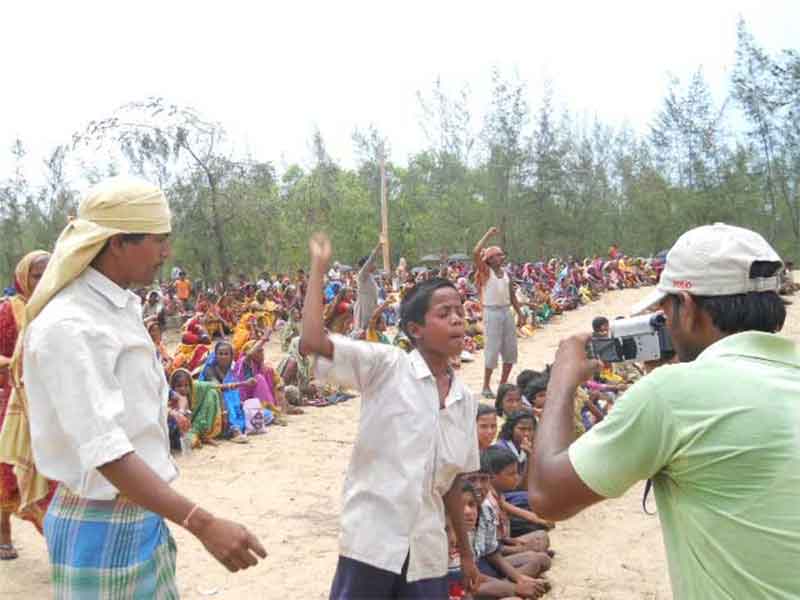
For several years now, but especially following economic liberalisation reforms of the 1991 New Economic Policy, people across our country have been agitating and protesting on a variety of matters. A significant proportion of these protests are resistance to some initiative that Central or State governments have taken, declared to be in the interest of people. They are:
# Against freedoms lost or threatened loss,
# Against laws with adverse social or economic effect,
# Demanding constitutional rights and legal entitlements denied to them.
We will only discuss the different forms of resistance for different reasons and causes, which are organised and conducted peacefully, within our democratic constitutional framework.
We The People
The first three words of the Preamble to the Constitution of India, are “We the People”. This in itself indicates the supremacy of We the People, which is foremost in the basic structure of the Constitution.
The Constitution was drafted and created by the Constituent Assembly (CA) on behalf of We the People, for We the People. But who are “We the People”?
We the People are the many millions of Indians who were denied Justice, Liberty and Equality by the British colonial regime. After Independence and until the present, We the People are the socially and economically unempowered or disempowered sections of Indians – and in particular, those who were “untouchables” – who were denied Justice, Liberty and Equality, due to the grossly unfair and morally wrong caste-stratification.
Ambedkar
Dr.B.R.Ambedkar was a luminary of outstanding moral and intellectual courage and stature, with superior education, knowledge and abilities in economics, law and philosophy. Even though he was born into a family of “untouchables”, and suffered humiliation and persecution at the hands of “upper caste” people, he rose above the fear of persecution and stood tall, with dignity. He introduced the value of Fraternity into the Preamble, “assuring the dignity of the individual and the unity and integrity of the Nation”. It is abundantly clear that without the feeling of Fraternity between people of different castes and religions, Justice, Liberty and Equality cannot be secured for We the People.
Vigilantes or others who physically or verbally attack persons of a different caste, religion or gender, are not only committing a criminal offence, but are also damaging the unity and integrity of the nation. Governments which remain silent or take no action against such offenders, may also be damaging the unity and integrity of the nation.
Babasaheb Ambedkar understood well that “outcaste” Dalit people lived in constant fear of “upper caste” people attacking or humiliating them, or forcefully denying them the basics of life. Ambedkar’s principled, courageous stand echoes the first line of Rabindranath Tagore’s Gitanjali 35: “Where the mind is without fear and the head is held high”. Indeed, Ambedkar had himself said: “Freedom of mind is the real freedom. A person whose mind is not free though he may not be in chains, is a slave, not a free man. One whose mind is not free, though he may not be in prison, is a prisoner and not a free man. One whose mind is not free though alive, is no better than dead. Freedom of mind is the proof of one’s existence”.
Ambedkar held that India had only succeeded in wresting political freedom from the British, but social and economic freedoms for We the People, were yet to be wrested from within the larger caste-stratified Indian society. Sadly, the situation is almost unchanged for the better, even today.
Governance
Beginning with India’s first elected government in 1952, We the People granted power and authority to elected representatives, to govern Indian society.
President Dr. Rajendra Prasad, speaking on 31.1.1950, said: “It is my government’s intention to establish a Planning Commission so that we can make use of such resources that we possess, for development of the nation”. Thus, development of the nation is the aim of governance.
For many years, frequently used phrases in common and journalistic parlance are “ruling party” or “[name of political party] rule”. These phrases using the word “rule”, are not merely inaccurate, but reveal acceptance of rule by governments, and may indicate an internalized remnant of British colonial rule until 15 August 1947. After Independence and upto the present, India is governed by elected State and Central governments which We the People have appointed. We the People have not relinquished rule over our Republic.
We the People gave the fundamental guidelines of governance, to direct governments to establish social and economic democracy for development of the nation, in the constitutional Directive Principles of State Policy (DPSP). These are moral duties and responsibilities of state and central governments. Some important points of the DPSP are:
1. Create a social order to promote People’s welfare.
2. Distribute ownership and control over resources for People’s common good.
3. Create an economic system that will prevent concentration of wealth and limit rich-poor disparity.
4. Create a wage structure that will enable People to have a decent standard of life.
5. Improve nutrition levels of men, women and children, so that they may be healthy and strong.
6. Create an education system for the public, and provide for public assistance to people without employment, to old people, to sick people, and to people who are disabled.
7. Provide a living wage and decent conditions of work, so that People may enjoy leisure and participate in social and cultural activities.
8. Protect and improve the environment, and safeguard forests and wildlife.
It is sad reality that successive governments over decades have neglected, even flouted, most of the DPSP-prescribed duties and responsibilities. This has changed the very idea and emphases on development, with We the People pushed to the backseat. This can be traced to the model of development that was formally instituted in 1991 as the New Economic Policy (NEP).
Development
In the context of the pressing needs of national economic development, successive state and central governments have lost sight of the social-cultural and economic development of We the People. With the World Bank-prescribed economic reforms of NEP, the concept of development came to mean economic development of the nation. This was based upon industrialization and year-on-year growth of GDP. Resultantly, We the People are not the focus of development, but are supplicants to governments for the benefits of development.
The situation of public health and nutrition has deteriorated to the point that PM Modi sanctioned free ration for 80-crores of We the People, for five years starting January 2024. Clearly the GDP-based economic model of development is not benefitting We the People.
An important component of the GDP-growth model of development is its reliance upon industrial-scale extraction (mining) of mineral resources for production of goods and services, and money-generation from trading and commerce of these goods and services.
The mineral resources are in forested areas in different states, and their extraction involves acquisition of forest land for the mining and infrastructure projects, including roads. These lands are inhabited by Adivasi (ST) and Dalit (SC) families. Thus men, women and children get forcibly displaced and lose their lands, homes and livelihoods, and suffer social disruption and destitution.
State and central governments are doing this without obtaining due consent according to PESA [Panchayat (Extension to Scheduled Areas) Act, 1996] and FRA [Scheduled Tribes and Other Traditional Forest Dwellers (Recognition of Forest Rights) Act, 2006]. Forest land acquisition initiatives by the government-corporate nexus, impact the present and future of forest dwelling communities, who are well aware of the benefit to corporates at the cost of their own lives and livelihoods. Their peaceful protests and resistance to these initiatives are, more often than not, met by police force including foisting FIRs against them.
These project-affected families (PAFs) are the victims of the model of development, which is focussed upon GDP-growth.
The news reports of the resolutions passed by the ST Panchayats, or the peaceful protests of these PAFs, do not appear in corporate-owned mainstream print or electronic media, and is therefore not known to the country at large. The reason for near-zero or government-dictated news coverage, is because the corporations which are conducting the mining operations, are in nexus with the state and/or central governments, which strongly dislike publication of news that shows their governance in poor light. Elected legislators usually look away, because their political party leaders are part of the government-corporate nexus, which is focussed on profit-over-people.
Journalists who try to meet and interview ST folk and/or report their findings, are prevented from doing so by the state governments. There are instances of journalists being pressured or charged with offences, simply because they dared to insist on meeting PAFs within their forest lands. It is small wonder that India stands 151st out of 180 countries in the 2025 World Press Freedom Index.
The development model as pursued by the government-corporate nexus almost always works against social and economic justice, and effectively denies equality of status and opportunity. This is evidenced by the economic gap widening – the top 1% of our population owns about 40% of the total wealth, and the top 10% owns 65% (World Inequality Report 2026), making India one of the most unequal nations globally.
Besides PESA 1996 (which empowered Gram Panchayats) and FRA 2006 (which recognized “historical injustice” inflicted upon forest dwellers), there are four other Central Acts which are in keeping with one or more of the Directive Principles, and assert the rights of We the People. These are EPA [Environment Protection Act, 1986], NREGA [National Rural Employment Guarantee Act, 2005], RTI [Right to Information Act, 2005], and LARR [Right to Fair Compensation and Transparency in Land Acquisition, Resettlement and Rehabilitation Act, 2013]. However, governments have diluted these laws by amendments to the Acts or Rules, or (sometimes brazenly) flouted the laws enacted by Parliaments, thus disempowering We the People.
Most recently, NREGA 2005, which enabled rural households to demand 100 days of unskilled manual labour per year, and transformed the constitutional right to work into a legal right, was repealed, and replaced by VPGRAMG Act.
Not unexpectedly, We the People activists have been resisting such disempowerment and have been peacefully protesting to re-assert their rights, and demand the freedoms that these laws provide.
Incidentally, We the People activists had a proactive role in drafting and successfully pressing government to enact NREGA 2005, RTI 2005, and LARR 2013.
Resistance and Freedoms
Activists from among project-affected people or from supportive voluntary bodies, or journalists who raise questions or write/speak dissent, are targets of coercive state power acting in favour of furtherance of mining and infrastructure projects. Dissenters are described as obstacles to development and national progress, and trolled as ‘anti-national’, ‘andolanjeevies’, ‘urban naxals’, etc. This criminalisation of democratic dissent results in charging dissenters with serious crimes under IPC (now BNS), or more draconian laws like UAPA or NSA.
Ground realities allow We the People limited options. Activists organize agitations, protests and demonstrations, to articulate their problems and objections. Significantly many, perhaps most protests, are centred on governments themselves violating laws or turning a blind eye to corporations violating them, as for example PESA 1996 and FRA 2006 mentioned earlier, or EPA 1986.
Agitations are under the watch of the intelligence and police authorities. Because the agitations often take place in relatively remote areas, activists hope to attract wider public attention, and draw the attention of governments to their demands. However, successive governments have treated the peaceful agitations as law and order problems, and magnified coercion to suppress the agitations and arrest the so-called ‘ring leaders’. For example, in the peaceful agitation against the Kudankulam nuclear power plant, police charged thousands of people with sedition (IPC s.124A) and ‘waging war against the government’ (IPC s.121). As mentioned earlier, most of the media is compliant with governments’ directions, and resistance of We the People receives little if any state or national reportage.
Public spirited advocates take up causes of PAFs in courts of law, and provide pro bono publico legal services to activists who are charged with criminal offences. Advocates also take up issues of constitutional legality on matters that impact We the People, as public interest litigation.
It is worth repeating that We the People, who agitate peacefully and within democratic norms, are not against development per se. We the People resist and oppose the development model that prioritizes corporate advancement and neglects or adversely affects people’s welfare, fragments their societies, reduces or denies their freedoms, wreaks injustices, and neglects their real-life needs. The development model has also resulted in widening economic disparity due to concentration of wealth with a minuscule minority. That brings us right back to successive governments’ neglect of the DPSP, which We the People gave to governments. It makes one wonder whether legislators of successive parliaments and state assemblies are even aware of their responsibilities and duties of the DPSP.
In effect, the pro-corporate development model works against social and economic justice and against equality of status and of opportunity for We the People, that are guaranteed in the Preamble.
Development as enhancement of freedoms
We the People view development as enhancement of their social, economic, cultural and educational status or condition. Whereas governments and the Great Indian Middle Class (the title of Pavan Varma’s book) view development as human resource development through training and skilling people for employment in jobs that will produce economic growth.
The poverty suffered by We the People is not restricted to economic poverty alone. The larger aspects of poverty that We the People endure are the poverty of freedoms – freedom from hunger; freedom to dress and eat as one pleases; freedom to choose friends or marriage partners; freedom from fear of livelihood loss, violence and rape, local mafia, or police action; freedom from violence by ‘upper caste’ people; freedom from fear of loss of home by getting bulldozed; freedom from fear of illness/accident or job loss; freedom from fear of abandonment; freedom from fear of crop loss; etc.
Were Babasaheb Ambedkar alive today to observe the course of the current development model, he would surely agree with every line of Gurudev Rabindranath Tagore’s immortal verse on freedom, in Gitanjali 35, which We the People today demand:
Where the mind is without fear and the head is held high
Where knowledge is free
Where the world has not been broken into fragments by narrow domestic walls
Where words come out from the depth of Truth
Where tireless striving stretches its arms towards perfection
Where the clear stream of reason has lost its way into the dreary desert sand of dead habit
Where the mind is led forward by Thee, into ever widening thought and action.
Into that Heaven of Freedom, my Father, let my country awake.
These are the freedoms that will lead to the development which We the People need and want. State and Central legislators and governments and their leaders, and the Judiciary at all levels, need to recognize the legitimate demands for freedom by We the People. We the People must be governed according to the Directive Principles of State Policy of the Constitution of India.
S.G.Vombatkere’s speech “Popular resistance in India and Development”, starting 18m-35s to 44m-40s
Maj Gen S.G.Vombatkere retired as the Additional Director General Discipline & Vigilance in Army HQ, New Delhi, after 35 years in the Indian Army. He holds a PhD degree in Structural Dynamics from I.I.T., Madras, and the President of India awarded him Visishta Seva Medal in 1993 for distinguished military service rendered in Ladakh.
E-mail: sg9kere@live.com


Comments
Post a Comment