08.02.2026.Untouchability News.(News of Dalits,Adivasi,atrocity,buddhist,Dr Ambedkar,Employement,Education news details from various sources)by Sivaji.Ayyayiram UTNews.9444917060


Hyderabad archbishop Cardinal Poola Anthony becomes first Dalit to head CBCI
A CBCI statement said Cardinal Poola Anthony assumes office at a crucial time, bringing decades of pastoral experience and a strong commitment to faith, justice, and human dignity.
KOCHI: Cardinal Poola Anthony has been elected president of the Catholic Bishops’ Conference of India (CBCI), becoming the first Dalit to head the apex body of the Catholic Church in the country. The 64-year-old cardinal, who serves as Archbishop of Hyderabad, was chosen during the 37th general body meeting of the CBCI, marking a historic moment for India’s nearly two crore Catholics.
The election took place at the CBCI’s general body meeting in Bengaluru on February 7, attended by bishops from across India to discuss pastoral, social, and administrative matters.
Alongside the president, new office-bearers were elected for a two-year term. Archbishop Thomas Mar Koorilos of Trivandrum was elected vice-president-first, and Archbishop Mathew Moolakkatt of Kottayam as vice-president-second. Archbishop Anil Couto was re-elected secretary general to continue coordinating CBCI’s national initiatives.
The leadership reflects the Church’s ecclesial and liturgical diversity, with representation from the Latin, Syro-Malankara, and Syro-Malabar rites, highlighting CBCI’s inclusive character. The conference also expressed appreciation for the outgoing office-bearers—Archbishop Mar Andrews Thazhath, Archbishop George Anthonysamy, and Bishop Joseph Mar Thomas—for their leadership during the previous term.
A CBCI statement said Cardinal Poola Anthony assumes office at a crucial time, bringing decades of pastoral experience and a strong commitment to faith, justice, and human dignity.
Courtesy : TNIE
2)

‘Forced to Beg, Beaten with Sticks’: Dalit Student Attacked Near Hostel in Gujarat’s Mehsana
Dalit Student Beaten Near Hostel in Gujarat’s Mehsana
An incident of alleged caste-based violence has been reported from Mehsana in north Gujarat, an area known as an educational hub. A Dalit student living in the hostel of a BBA BCA college was allegedly assaulted by four men following a minor argument. News subscription service
The victim, who is originally from Porbandar and currently studying in Mehsana, said the incident began with a small verbal altercation on February 3 inside the hostel. He alleged that a fellow hostel resident, Mitesh Purohit, abused him during a casual exchange. When the student objected to the abuse, Mitesh allegedly threatened him with consequences the next day.
According to the complaint, on the morning of February 4, when the student was leaving for college, Mitesh Purohit and three of his friends stopped him near a Hanuman temple close to the hostel. The accused allegedly pressured the student to fall at their feet and apologise. When he refused, they allegedly used caste-based slurs and assaulted him with wooden sticks and belts.
“Their words were more painful than the beating. They abused me using my caste name and tried to humiliate me by forcing me to beg for forgiveness,” the victim told the police.
The student suffered serious injuries in the attack. He first took primary treatment at a university hospital but was later shifted to Mehsana Civil Hospital by ambulance after his condition worsened.
The victim later approached the Mehsana A Division police station along with his mother and filed a formal complaint. Police have registered a case under the Atrocities Act along with sections related to assault and criminal intimidation. Efforts are underway to trace and arrest the accused, who are currently absconding.
A police official said, “A case has been registered under the SC ST Atrocities Act and other relevant sections. We are conducting raids to locate the accused.”
The college administration has also taken action following the incident. Vice Principal V K Patel said the main accused student has been suspended from the hostel with immediate effect. “Considering the seriousness of the matter, the college committee has taken strict action. Further disciplinary steps will be decided after internal review,” he said.

Dalit woman alleges rape in Inayatnagar: Exploited for six months on the pretext of getting a job, case registered
A Dalit woman from a village in the Inayatnagar police station area has accused a young man of rape, prolonged exploitation, assault, and death threats on the pretext of getting her a job. Based on the victim's complaint, the police have registered a case against the accused under various sections and have started an investigation.
In her complaint to the police, the victim stated that about six months ago, Ram Avtar, a resident of Mukimpur village, promised to get her a job. On this pretext, he took her to his house, where he allegedly drugged her and raped her. The woman alleges that the accused threatened to defame her by making the pictures of the incident public, due to which she continued to be exploited for six months.
According to the victim, on Wednesday, the accused again called her to his room and tried to force her into an illegal relationship. When the woman resisted, the accused abused her with casteist slurs, brutally assaulted her, and threatened to kill her. Due to fear, the victim did not inform her husband about the incident at that time.
The woman later reached the Inayatnagar police station and filed a complaint. Considering the seriousness of the matter, the police have registered a case against the accused under sections related to rape, assault, threats, and the Scheduled Castes and Scheduled Tribes (Prevention of Atrocities) Act, among other relevant sections.
In this regard, Inayatnagar Station House Officer Ratan Kumar Sharma said that a case has been registered based on the victim’s complaint. The matter is being investigated thoroughly, and further legal action will be taken based on the evidence.
Shiv Kumar Pandey | Milkipur
Courtesy: Hindi News

Liquor shops around Dalit bastis are not a coincidence. It’s trauma seeking an outlet
Markets follow vulnerability and the state taxes the bottle, while condemning the drinker.
I’m not an F-up,” she always says. But little did Apurva know, it takes more than having a stable job to shake that label. She started smoking weed while studying at IIT-Kanpur. It quickly spiralled into owning a bong, grinders, rolling paper, and knowing how to score in every city—this 420 fascination became a lifestyle. Having no father figure and an emotionally absent mom, this neo-Buddhist Dalit girl slowly turned into a self-proclaimed “girl who likes to smoke up”. A one-dimensional personality.
Across societies, substance abuse has long followed the fault lines of oppression. Native American communities in the United States struggle with alcoholism rooted in dispossession and cultural erasure. African Americans face higher rates of drug criminalisation and addiction shaped by slavery, segregation and systemic racism. These patterns are now widely understood as outcomes of historical trauma, not individual weakness. India, however, remains reluctant to apply the same lens to caste. When Dalits drink, smoke, or spiral into addiction, the dominant explanation is moral failure. Rarely do we ask what centuries of humiliation, violence and exclusion do to the human psyche and body over generations.
Data already tells us what public discourse refuses to admit. National surveys consistently show that alcohol and tobacco use are higher among Scheduled Castes than among upper-caste groups. The National Family Health Survey (NFHS-5) records a higher prevalence of alcohol consumption among Scheduled Caste and Scheduled Tribe men compared to forward castes, a pattern mirrored in tobacco use among both men and women.
Maharashtra, often projected as a progressive state, is no exception. Studies by Oxfam and state public health departments show disproportionate substance dependence in Dalit-dominated rural belts and urban slums, particularly among men engaged in informal, hazardous labour. Yet numbers alone do not explain why these patterns persist across generations.
To understand this, one must confront inter-generational trauma—a concept still treated with suspicion in India, as if acknowledging psychological inheritance weakens personal
responsibility. Trauma does not vanish with time; it embeds itself. When a community lives for centuries under graded inequality, is denied dignity, pushed into stigmatised labour, subjected to routine violence, and told repeatedly that they are less than human, the stress response becomes chronic. Cortisol levels remain elevated. Anxiety becomes an inherited behaviour. Silence becomes survival. Substance use, then, is not indulgence; it is regulation.
In Maharashtra, the geography of addiction often overlaps with the geography of caste. Sugarcane cutters, sanitation workers, tannery labourers, construction hands, many from Dalit communities, operate in physically brutal environments with little job security and no mental health support. Alcohol becomes a painkiller, antidepressant, and social glue. Country liquor shops cluster around labour camps and Dalit bastis not by coincidence, but because markets follow vulnerability. The state taxes the bottle, while condemning the drinker.
Moralising language, invisible struggle
What makes caste trauma distinct from other forms of deprivation is its inescapability. Poverty can change; caste sticks. A Dalit child may grow up watching a parent humiliated at work, addressed by caste name, or denied basic respect. These experiences shape self-perception long before adulthood. Research in social neuroscience increasingly shows that chronic social stress alters neural pathways related to impulse control and reward. Addiction, in this sense, is not merely learned behaviour; it is embodied memory.
Mental healthcare systems in India are neither equipped nor inclined to recognise this. Public de-addiction programmes focus on abstinence without addressing the cause. Counselling frameworks imported from Western psychology speak of “individual triggers”, while ignoring structural violence. For a Dalit man in a Maharashtra village, therapy that refuses to name caste is not neutral; it is erasure. As one Dalit rights activist from Marathwada puts it, “You cannot heal a wound while pretending the knife does not exist.”
Women in Dalit communities carry a different, quieter burden. NFHS data shows lower alcohol consumption among Dalit women compared to men, but significantly higher tobacco use than upper-caste women. Chewing tobacco becomes a socially permissible coping mechanism in lives defined by unpaid labour, domestic violence, and economic precarity. Yet policy discourse rarely recognises this as addiction at all. Dalit women’s suffering is normalised to the point of invisibility.
The moralising language around addiction also does real damage. When substance use is framed as a lack of willpower, the solution offered is punishment or shame. Families internalise blame. Communities fragment. Meanwhile, the structural conditions remain untouched. Contrast this with how addiction among urban, upper-caste youth is discussed—as stress, burnout, or existential crisis. Same substance. Different sympathy.
There is also an uncomfortable political economy at work. The Indian state profits enormously from alcohol revenue, much of it extracted from marginalised communities. In Maharashtra, excise duty constitutes a significant portion of state income, even as alcoholism devastates Dalit
households. Welfare schemes address the symptoms ie. hospitalisation, malnutrition, domestic violence, but never the root. It is easier to police bodies than to dismantle caste.
Not a personal vice
Breaking this cycle requires a shift from moral judgement to public health and social justice. Trauma-informed policy must recognise caste as a determinant of mental health. De-addiction programmes need to be community-based, culturally grounded, and explicitly caste-aware. Mental health workers must be trained to understand how humiliation, exclusion and inherited stigma shape behaviour. Employment, dignity, and psychological safety are as essential to recovery as sobriety.
Most importantly, India must abandon the convenient fiction that caste no longer matters. Addiction in Dalit communities is not a personal collapse; it is a social indictment. It reflects what happens when a civilisation normalises inequality for centuries and then feigns surprise at its consequences. Until caste oppression is addressed as a lived, embodied trauma and not a historical footnote, the bottle will remain both refuge and ruin.
Apurva has attended vipassana meditation course twice, even helping as a server. But addiction is hard to shake off when it becomes a personality trait and an escape mechanism.
India likes to speak of addiction as a personal vice because that absolves society of responsibility. It allows caste Hindus to tut-tut at Dalit addiction habits, while continuing to benefit from a social order that produces despair as efficiently as it produces labour.
As long as caste remains untouched, addiction will keep finding new forms (bottles, sachets, pills) because trauma always seeks an outlet. Until India is willing to dismantle the conditions that make numbness necessary, every sermon on sobriety is just another act of denial dressed up as concern.
The question, then, is not why Dalits drink more. It is why India refuses to see what it has done to them.
Vaibhav Wankhede is a creative marketer and writer. Views are personal.
Vaibhav Wankhede (Edited by Theres Sudeep)
Courtesy : The Print
5)

Dalit teenage girl kidnapped in Ayodhya: Went missing from a wedding ceremony, accused arrested, case registered under POCSO Act
A case of kidnapping and rape of a Dalit teenage girl has come to light in the Inayat Nagar police station area of Ayodhya. The girl had gone to attend a wedding ceremony at a relative's house, from where she suddenly went missing. Upon receiving the information, the police initiated action and arrested the accused young man within 24 hours and sent him to jail.
Went missing late at night: According to the information, the teenage girl had gone to attend a wedding. Late at night, she disappeared under suspicious circumstances. The family members searched extensively in the surrounding area, but found no trace. They then informed the local police.
Clue from the girl who accompanied her: The police, who arrived at the scene, questioned the girl who had accompanied the victim to the restroom. The girl said that a young man known to her came there and took the victim with him. Following this, the police intensified the search with the help of surveillance.
Recovery and medical examination: The police recovered the accused along with the girl within 24 hours. The victim underwent a medical examination, and her statement was recorded in court. Further action was taken based on the report and statements.
Case registered under POCSO and SC/ST Act: Police area officer Ajay Kumar Singh said that based on the complaint from the family members, a case has been registered against the accused under several sections, including rape, POCSO Act, and SC/ST Act. The accused was produced before the court and sent to jail.
Vijay Pathak | Ayodhya
Courtesy: Hindi News

Allegations of betrayal against a young woman in Khutar: After living together for 4 years, the young man refused to accept her
A case of betrayal against a Dalit woman has come to light from a village in the Khutar area of Shahjahanpur. The woman alleges that after living together for four years, the young man has refused to accept her as his wife.
The victim says that four years ago, she was married to a young man from the same village in a temple. After that, they were living together as husband and wife. The woman trusted the young man and spent her life with him.
The woman alleges that the young man, along with his family, is now flatly refusing to accept her. She said that he maintained a relationship with her for years on the promise of marriage, and now he has left her helpless.
Distraught by this incident, the victim reached the Khutar police station. She has filed a complaint against the young man and his family, demanding action.
Station House Officer Shyamveer Singh said that the matter is being investigated. Further legal action will be taken based on the facts.
Devnarayan | Chandpur (Khutar), Shahjahanpur
Courtesy: Hindi News


70 Brahmins booked in Darbhanga, Bihar minister warns against ‘misuse’ of SC/ST Act: ‘Will affect social camaraderie’
The 70 were accused of attacking people from the SC community a day after a scuffle over pending dues
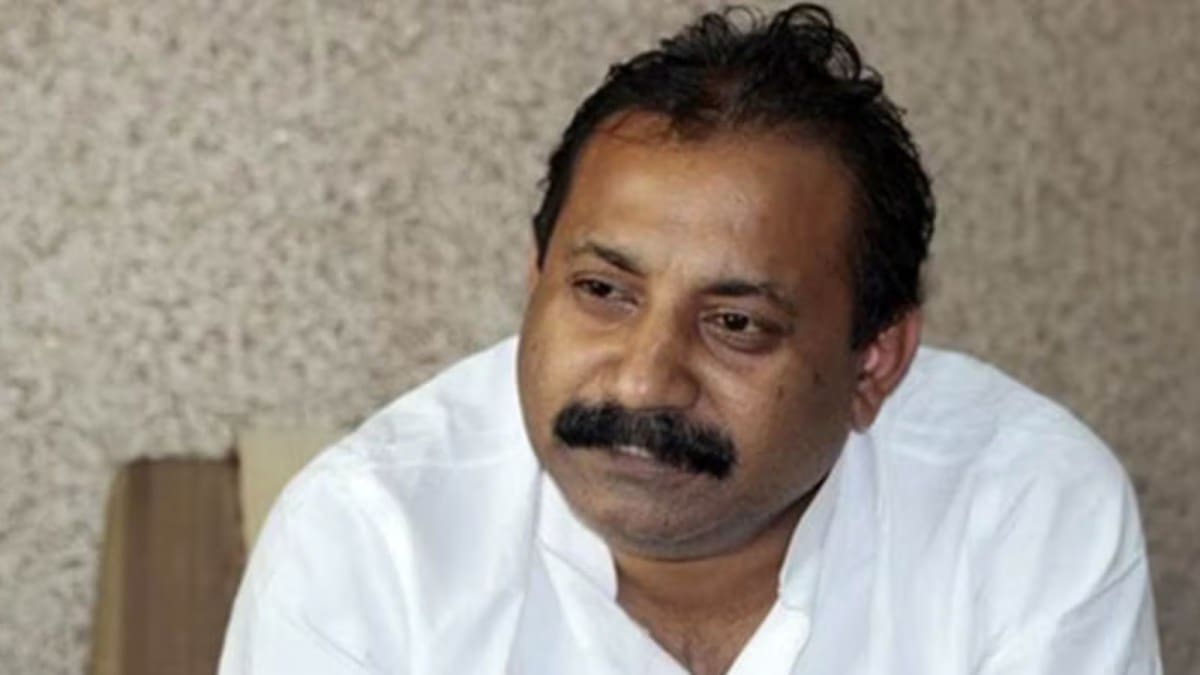 Bihar Minister Ashok Choudhary. (File)
Bihar Rural Works Department Minister and senior JD(U) leader Ashok Choudhary on Friday cautioned against misusing the Scheduled Caste and Scheduled Tribe (Prevention of Atrocities) Act.
The case pertains to an incident in Harinagar village under Kusheshwar Sthan police station.

SC/ST panel to probe SC boy's fall into burning garbage in Tiruppur
Meanwhile, the school has issued a notice to a few teachers seeking an explanation.
TIRUPPUR: The State Commission for Scheduled Castes and Scheduled Tribes has decided to investigate an incident in which a 13-year-old SC student was flung into a burning garbage pit by two classmates at a government-aided school in Kunnathur in Tiruppur district last month.
Earlier it had requested the Tiruppur District Collector to submit a detailed report by February 27.
The Commission which quizzed the boy on Thursday found that students cleaned their classrooms and burned the garbage every day and he was distressed over it.
KS Kandasamy, Member Secretary of the Commission, in a letter to the Collector pointed out the services of sanitation workers were unavailable at the school.
The alleged incident happened on January 30 evening when the garbage was set on fire by students on the school premises. Two classmates allegedly pushed the boy down, held his hands and legs, and threw him into the burning garbage.
The boy sustained severe burns and is currently receiving treatment at a private hospital in Coimbatore. His parents had claimed that caste-based abuse led to the incident but the police claimed the students were playfully pushing one another. In the course of such play, two students held the injured boy by his hands and legs and swung him, during which he accidentally lost balance and fell into the burning garbage pit.
Meanwhile, the school has issued a notice to a few teachers seeking an explanation.
A senior education department official said, "Since it is a government-aided school, the school correspondent has been instructed to take appropriate action and submit a report. Based on this, the school administration has issued notice to a few teachers seeking an explanation."
Collector Manish Narnaware said, "We have sent our report to the Commission in this regard. Further steps are being taken."

Legislation UpdatesConstitution (Amendment) Bill, 2026 Proposes Judicial Diversity, Reservation In Promotion, Sc Regional Benches & Caste Census Reform Constitution (Amendment) Bill, 2026 Proposes Judicial Diversity, Reservation in Promotion, SC Regional Benches & Caste Census Reform Introduced in the Rajya Sabha, the Bill proposes sweeping constitutional changes to judicial appointments, reservation in promotions, Supreme Court structure, High Court judges’ retirement age, and caste-based census powers. Published on February 7, 2026By Kriti Advertisement On 6 February 2026, DMK Rajya Sabha MP and Senior Advocate P. Wilson introduced the Constitution (Amendment) Bill, 2026, proposing far-reaching constitutional reforms aimed at judicial diversity, reservation in promotions for backward classes, restructuring of the Supreme Court into regional benches, enhancement of the retirement age of High Court judges, and enabling caste-based census by States. The Bill seeks to embed social justice and representation more deeply into India’s constitutional framework. Need: Recently, Parliament has extended the benefit of reservations to forward castes in the category of economically weaker sections. Due to absence of the aforesaid Constitutional mandate in promotions, the real oppressed and downtrodden are not brought into the mainstream till today. Mere entry into the service is not sufficient. Only when the OBCs are duly represented in promotional posts, a truly representative administration can be achieved, and real substantive equality is enabled. Therefore it has been proposed that Article 16 of the Constitution of India must be further amended to grant reservations in promotional posts with consequential seniority for the backward classes of citizens which would result in true social justice as it would ensure adequate representation of the backward class of citizens in higher offices of the administration. The preamble of our Constitution envisions securing social justice for all. However, the current composition of the higher judiciary does not adequately reflect this diversity. The current trend in judicial appointments shows a low representation of socially marginalized groups and there is significant overrepresentation of certain sections. A representative judiciary is pivotal for fostering public confidence in the judiciary’s ability to make sound and responsive decisions. When the judiciary includes Judges from all sections of society, it will instill greater confidence amongst the public. Further, a diverse judiciary is imperative to enhance the quality of judicial decisions. Judges bring their personal experiences and perspectives to the bench, influencing how they interpret and apply the law. Main objects of the Constitution (Amendment) Bill, 2026: To amend the Constitution of India to provide for social diversity in the appointment of Judges to the Supreme Court and High Courts, proportional to the population of Scheduled Castes, Scheduled Tribes, and Other Backward Classes and to bring transparency in judicial appointments in higher judiciary. To provide for reservation in judicial appointments, with an aim to promote social diversity which will help in improving the quality of judicial decisions, enhancing public confidence, bringing transparency to judicial appointments and upholding the constitutional values of equality and inclusivity. To divide the Supreme Court into one Constitution Bench at the capital, and 4 regional Benches. Increase the age of retirement of Judges of the High Court from 62 to 65 years. Placing the entry “Census” in the Concurrent List which would enable both the Union and the States to conduct their own census. The power to conduct a headcount by the States themselves will not only be useful for maintaining an accurate list of all classes including backward classes, and collect empirical data of communities on the basis of the local units and to grant reservations in local bodies, but also for other targeted welfare measures. This will enable the States to implement appropriate affirmative and welfare measures for all castes and communities based upon their due entitlement and share. The States can then grant reservations in accordance with this data, which would be constitutionally and legally tenable and therefore avoid judicial intervention in the grant of reservations. The Proposed Amendments: Amendment of Article 15 relating to “Prohibition of discrimination on grounds of religion, race, caste, sex or place of birth”. Amendment of Article 16 relating to “Equality of opportunity in matters of public employment”. Amendment of Article 124 relating to “Establishment and constitution of Supreme Court”: the appointment of Judges to the Supreme Court shall be made by giving due representation to members of the Scheduled Castes, Scheduled Tribes, Other Backward Classes, religious minorities and women, in proportion to their population in the country; Frame a Memorandum of Procedure for appointment of Judges of the Supreme Court in consultation with Chief Justice of India; Before appointing any Judge of the High Court as a Judge of the Supreme Court, the Central Government should consult the State Government; Central Government should either return or notify recommendations of the collegium within 60 days of receipt of the recommendation; Amendment of Article 130 relating to “Seat of the Supreme Court”: The Supreme Court should comprise a Constitution Bench sitting at New Delhi and 4 Permanent Regional Benches for northern, southern, eastern and western regions, which will sit at New Delhi, Chennai, Kolkata and Mumbai respectively. Constitution Bench at New Delhi shall hear only cases which are of constitutional importance. The 4 Permanent Regional Benches of the Supreme Court shall exercise the full jurisdiction of the Supreme Court of India, except over cases to be heard by the Constitution Bench. Territorial jurisdiction of the Permanent Regional Benches has also been proposed. The Chief Justice of India shall nominate Judges of the Supreme Court to sit at the Constitution Bench and the Permanent Regional Benches.
Amendment in Article 217 relating to “Appointment and conditions of the office of a Judge of a High Court”.
Amendment in Article 224 relating to “Appointment of additional and acting Judges”. Entry relating to “Census” to be removed from the Union List and included in the Concurrent List. The Constitution (Amendment) Bill, 2026 signals an ambitious attempt to constitutionally entrench judicial diversity, social justice in public employment, and data-driven affirmative action, while also reopening long-standing debates on the structure of the Supreme Court and the scope of caste enumeration in India. Related Reservation Policies in India April 19, 2023 In "Law made Easy" Govt. accepts Parliamentary Committee’s recommendation for Supreme Court Regional Benches February 8, 2024 In "Hot Off The Press" Constitution bench to decide the matter of establishing 4 regional Courts of Appeal to tackle the issue of pending cases July 14, 2016 In "Case Briefs"
Tags : affirmative action Caste Census Concurrent List Amendments Constitution Amendment Bill 2026 Constitutional Amendments India High Court Judges Retirement Age judicial appointments Judicial Diversity Judicial reforms OBC Reservation in Promotions Public Employment Equality Reservation Policy SC/ST/OBC Representation. Social Justice Supreme Court Regional Benches Leave a comment Post navigation PREVIOUS STORY Supreme Court appoints Aparna Mehrotra as CLPR representative on Transgender Rights Advisory Committee.


Comments
Post a Comment