22.04.2026.Untouchability News.(Anti SC.STs atrocity news by caste Hindus,News of Dalits,Adivasi,atrocity,buddhist,Dr Ambedkar,Employement,Education news details from various sources by Sivaji.Ayyayiram UTNews.9444917060.asivaji1962@gmail.com.Stationed at Tiruvannamalai.1

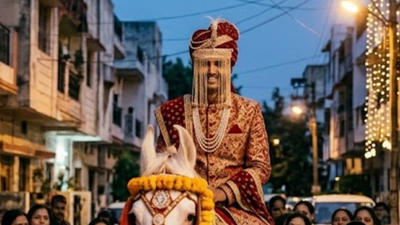
Dalit groom pulled off horse, beaten during pre-wedding procession in Madhya Pradesh

Probe ordered into manhandling of accused at Peddavaduguru police station in Anantapur dist


NHRC special rapporteur checks Keonjhar jails, police stations & shelter homes
Dalit voters of Villupuram share support across parties over lack of development and emanicpation

Even cadres within the DMK raised opposition to Lakshmanan canvassing in GRP Street, alleging that he betrayed former MLA S Pushparaj by not facilitating him a seat in Vanur in this Assembly election.
VILLUPURAM: With just a day to go for the election, the voter mood in Villupuram town is swaying in a three-cornered contest between the DMK, AIADMK and TVK. With the last leg of campaign rallies under way in the town, residents expressed dissent against the DMK government for not providing basic amenities in Dalit residential areas such as Valudareddy and GRP Street.
Both areas, which have nearly 3,000 voters each, still lack proper drinking water facilities, roads and infrastructure. With dense populations and cramped housing, the localities almost sink during peak monsoon periods, but mitigation has not been carried out through proper infrastructure development.
A Arumugam (55), a resident of Annai Indira Nagar, said, “We need to fetch water from a common pipe, so we go there as early as 4 am. This lifestyle, driven by lack of amenities, makes us wonder if we really live in the modern era.”
Meanwhile, young supporters of TVK in both areas criticised the DMK and AIADMK for playing “cunning” politics over the years. They are also influencing their parents to vote for actor-turned-politician Vijay’s whistle symbol, seeking “a fresh political space devoid of caste equations”.
“Both parties ruled us for so long, but I am still stigmatised for coming from a ‘colony’. My neighbourhood is not hygienic, decent or healthy. Whose fault is it, and why should we choose them again now? They claim social justice and equality, but in reality they do not live up to it. We don’t want to support such cunning politics,” said Kumudha (22, name changed), a resident of GRP Street and a member of TVK.
Even cadres within the DMK raised opposition to Lakshmanan canvassing in GRP Street, alleging that he betrayed former MLA S Pushparaj by not facilitating him a seat in Vanur in this Assembly election. Several supporters of the latter pointed out that Dalit emancipation has not been enabled by either AIADMK or DMK leaders in Villupuram due to casteist intentions.
In a video circulating on social media, a DMK supporter was heard saying, “Only he (Lakshmanan) wants to be minister and MLA. Why not a Scheduled Caste person come to power?”
“Pushparaj, a Dalit politician, is a resident of Villupuram. If he becomes an MLA in Vanur, that would mean social empowerment of Dalits not only in Vanur but also in Villupuram town. This is essentially a problem for dominant caste politicians in Villupuram, and the town is entrenched in casteist politics that does not allow a Dalit person to rise within party structures, especially in the DMK,” said P K Diwakar (32).
This is no different in the AIADMK. “I have been working in the party for the last 19 years, but former minister C Ve Shanmugam has not visited or even asked me about deaths in my family. Their Dalit aversion is so evident that I decided to quit politics altogether,” said a 56-year-old Dalit block-level cadre in the AIADMK from Villupuram (on condition of anonymity).
Speaking to TNIE, Viduthalai Chiruthaigal Katchi (VCK) district secretary R Periyar said the current DMK MLA had provided welfare measures to Valudareddy, including an anganwadi building, two fair price shops, a cremation shelter and borewell mechanisms that are yet to be made operational for public use.
He added that though development for Dalit residents in the town is not adequate, it is important to consider the consequences of supporting the AIADMK, which would indirectly mean supporting the BJP.
“VCK cadres will work for the victory of the DMK-led Secular Progressive Alliance in Villupuram constituency,” he said.
Though there is a broader sentiment favouring the DMK, such nuanced emotions among Dalit residents, whose votes could decide the outcome in Villupuram, cannot be overlooked. With youngsters leaning towards TVK, some elders shifting support to the AIADMK, and growing dissent against the DMK MLA, the contest is likely to be closely fought with narrow margins.
Krithika Srinivasan
Courtesy : TNIE

5️⃣📢📢📢📢📢📢📢📢📢📢📢📢📢📢📢📢📢📢📢📢📢📢5️⃣
People of goodwill urged to come together to fight caste-based injustice

“Thirteen Dalits are murdered every week across India due to ever-increasing caste-based violence. Yet many incidents of horrific caste-based discrimination and violence go unreported due to fear, social pressure and lack of support,” said Sister Manju Devarapalli, a Carmelite religious sister and General Secretary of National Dalit Christian Watch in India.
Sister Devarapalli was speaking at a conference organised by The Christian Network Against Caste Discrimination (CNACD) at the London Jesuit Centre last Thursday 16th April.
She said: “The caste system is not a relic of the corrupt past, it is an indictment of a present in which millions are being exploited and abused. It is carried out in plain sight and perpetuated by wealth, influence and an instinct to defer to those at the top.”
Sister Devarapalli urged not passive sympathy but an active response: “Legal reforms that bury abuse; international advocacy and financial support.”
She explained how India’s caste system of social stratification became a central mechanism of British colonial governance. Despite being officially outlawed at independence in 1947, it stubbornly endures.
Within this system, the Dalits – categorised as ritually unclean ‘untouchables’ – are condemned to a harsh life of segregation and exploitation. They are obliged to use separate water sources, cremation and burial grounds, and to live in marginalised communities. Their access to places of worship is restricted. Social ‘transgressions’ – such as wearing footwear or riding a horse – can be brutally punished. Those crimes which are reported against Dalits occur every 18 minutes.
Less than ten per cent of marriages are inter-caste and, in rural north India in particular, women who defy such social stigma are vulnerable to murder (the grotesquely misnamed phenomenon of ‘honour killings’).
According to Sister Devarapalli, hate speech in general is on the rise in India, with the Hindu nationalist majority, including its leadership, targeting Muslims and Christians.
She explained that the ‘upper castes’ such as Brahmins and Rajputs dominate key economic and political positions and have disproportionate ownership of the land. Conversely, most Dalits remain landless labourers and 1.3 million are ‘manual scavengers’ – responsible for cleaning dry latrines, despite a 1993 banning of this degrading work. Other Dalits carry out leather work and waste collection. Fifty million Dalits are estimated to exist under conditions of modern slavery.
Sister Devarapalli concluded by saying, “Desmond Tutu warned: if you are neutral in situations of injustice, you have chosen the side of the oppressor.”
In a video address, the Catholic cross-bench peer David Alton lamented the endless daily atrocities of the caste system which, like the Apartheid system, deprived the Dalits of essential humanity. He said, ‘We must learn from the Anti-Apartheid movement and apply economic sanctions, boycotts and diplomatic isolation.’
Dr Anderson Jeremiah, the Anglican Bishop of Edmonton, and a Dalit from Tamil Nadu, spoke of the crippling educational barriers for his community. He himself endured humiliation and obstruction, made to sit at the back of the class and only able to learn English when aged 20, but ‘I saw the power that knowledge brings.’ He also decided to become a priest. ‘I saw the Church has the capacity to provide transformation, to bring dignity, humanity and freedom to people.’
He noted that 75 per cent of Christians in India are from Dalit communities although the leadership structure is generally still from the ‘higher’ castes. He applauded the fact that the Catholic church now had a Dalit cardinal and two Dalit bishops.
Fr Roy Sebastian SJ from India, who works alongside the Dalits, spoke of the grim reality of funds for Dalit development being withheld by government, of rampant violence, and of exclusion of Dalit Christians by other Indian Christians. More positively, he was able to report of the training of 6000 community leaders thanks to Church support.
Meena Varma, Executive Director of the International Dalit Solidarity Network, spoke of the struggle to ‘get the UK government to fulfil its responsibilities’ by providing legislative protection for the Dalits, because the caste-based system remains a lived reality in the South Asian diaspora (7.5 per cent of the UK population).
It is estimated, that world-wide some 260 million people suffer from discrimination based on caste. Some 25 million are estimated to have migrated from South Asia to other countries. Caste-based prejudice and discrimination are operative in more than 100 countries where South Asians have migrated, including the UK.
Following general discussion, the conference advocated intersectional solidarity with all people of goodwill. It urged ongoing fact-finding and the need to give voice to the Dalits in the struggle to provide justice and dignity. A synodal approach should be maintained: both the Bishops’ Conferences in Britain, and the Roman conference with bishop synodal presidents reporting to Pope Leo in the autumn, should discuss this issue as a matter of serious and urgent ongoing concern.
The CNACD warmly invites people to contact it in the hope of instilling fresh momentum into its crucial work.
Dr Philip Crispin
Courtesy : ICN

6️⃣🔊🔊🔊🔊🔊🔊🔊🔊🔊🔊🔊🔊🔊🔊🔊🔊🔊🔊🔊🔊🔊🔊6️⃣
In a startling revelation that lays bare the deep-rooted caste and gender-based violence in Indian society, the Madhya Pradesh government on Tuesday presented data in the state assembly that shows a disturbing pattern of crimes against women from Scheduled Castes and Scheduled Tribes communities.
Responding to a question raised by opposition MLA Arif Masood, the government disclosed that between 2022 and 2024, a total of 7,418 rape cases were registered against women from SC/ST communities.
This translates to an average of seven Dalit or Adivasi women raped every day in the state over the past three years.
The statistics further paint a grim picture of domestic violence and sexual harassment.
As many as 1,906 SC/ST women faced domestic abuse -- meaning nearly two women from these communities were subjected to violence in their own homes every day.
In total, 44,978 crimes against SC/ST women were recorded in the last three years, which means that on average, 41 crimes were committed every day against women from these marginalised communities in Madhya Pradesh.
SCs and STs together comprise approximately 38 per cent of Madhya Pradesh's population -- 16 per cent SC and 22 per cent ST.


Students protest as Ambedkar portrait removed from JNU hostel mess
Students gathered at the site, raising slogans and demanding that the portrait be reinstated in the mess hall. The JNU Students’ Union (JNUSU) condemned the incident, alleging “broader pattern of caste insensitivity on campus”.
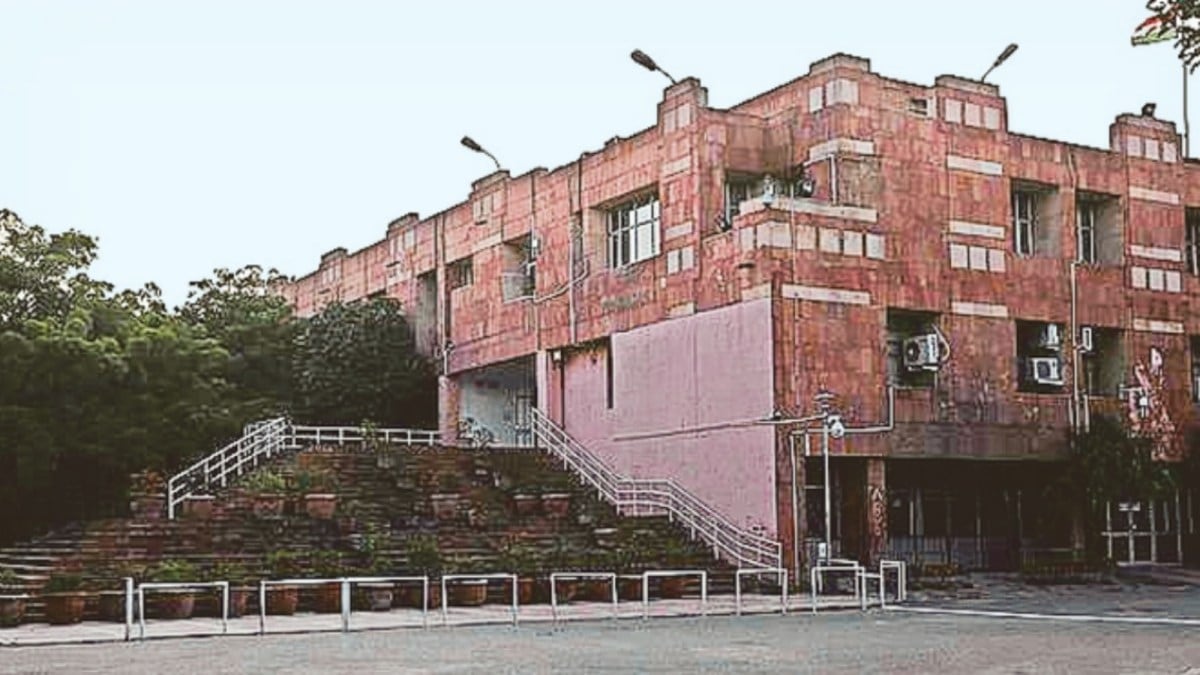 The JNU Students’ Union (JNUSU) condemned the incident, alleging “broader pattern of caste insensitivity on campus”.
Students gathered at the site, raising slogans and demanding that the portrait be reinstated in the mess hall. The JNU Students’ Union (JNUSU) condemned the incident, alleging “broader pattern of caste insensitivity on campus”.
“The protest was against the removal of Babasaheb Ambedkar’s portrait by Tapti Hostel warden Vinika Joshi. JNUSU condemns the incident in its strongest terms. Just last month, the vice-chancellor made casteist remarks. RSS-affiliated teachers and V-Cs are trying to turn the institution into a citadel of casteist and feudal orders,” JNUSU president Aditi Mishra told The Indian Express.

Vidheesha Kuntamalla is a Senior Correspondent at The Indian Express, based in New Delhi. She is known for her investigative reporting on higher education policy, international student immigration, and academic freedom on university campuses. Her work consistently connects policy decisions with lived realities, foregrounding how administrative actions, political pressure, and global shifts affect students, faculty, and institutions. Professional Profile Core Beat: Vidheesha covers education in Delhi and nationally, reporting on major public institutions including the University of Delhi (DU), Jawaharlal Nehru University (JNU), Jamia Millia Islamia, the IITs, and the IIMs. She also reports extensively on private and government schools in the National Capital Region. Prior to joining The Indian Express, she worked as a freelance journalist in Telangana and Andhra Pradesh for over a year, covering politics, rural issues, women-centric issues, and social justice. Specialisation: She has developed a strong niche in reporting on the Indian student diaspora, particularly the challenges faced by Indian students and H-1B holders in the United States. Her work examines how geopolitical shifts, immigration policy changes, and campus politics impact global education mobility. She has also reported widely on: * Mental health crises and student suicides at IITs * Policy responses to campus mental health * Academic freedom and institutional clampdowns at JNU, South Asian University (SAU), and Delhi University * Curriculum and syllabus changes under the National Education Policy Her recent reporting has included deeply reported human stories on policy changes during the Trump administration and their consequences for Indian students and researchers in the US. Reporting Style Vidheesha is recognised for a human-centric approach to policy reporting, combining investigative depth with intimate storytelling. Her work often highlights the anxieties of students and faculty navigating bureaucratic uncertainty, legal precarity, and institutional pressure. She regularly works with court records, internal documents, official data, and disciplinary frameworks to expose structural challenges to academic freedom. Recent Notable Articles (Late 2024 & 2025) 1. Express Investigation Series JNU’s fault lines move from campus to court: University fights students and faculty (November 2025) An Indian Express investigation found that since 2011, JNU has appeared in over 600 cases before the Delhi High Court, filed by the administration, faculty, staff, students, and contractual workers across the tenures of three Vice-Chancellors. JNU’s legal wars with students and faculty pile up under 3 V-Cs | Rs 30-lakh fines chill campus dissent (November 2025) The report traced how steep monetary penalties — now codified in the Chief Proctor’s Office Manual — are reshaping dissent and disciplinary action on campus. 2. International Education & Immigration ‘Free for a day. Then came ICE’: Acquitted after 43 years, Indian-origin man faces deportation — to a country he has never known (October 2025) H-1B $100,000 entry fee explained: Who pays, who’s exempt, and what’s still unclear? (September 2025) Khammam to Dallas, Jhansi to Seattle — audacious journeys in pursuit of the American dream after H-1B visa fee hike (September 2025) What a proposed 15% cap on foreign admissions in the US could mean for Indian students (October 2025) Anxiety on campus after Trump says visas of pro-Palestinian protesters will be cancelled (January 2025) ‘I couldn’t believe it’: F-1 status of some Indian students restored after US reverses abrupt visa terminations (April 2025) 3. Academic Freedom & Policy Exclusive: South Asian University fires professor for ‘inciting students’ during stipend protests (September 2025) Exclusive: Ministry seeks explanation from JNU V-C for skipping Centre’s meet, views absence ‘seriously’ (July 2025) SAU rows after Noam Chomsky mentions PM Modi, Lankan scholar resigns, PhD student exits SAU A series of five stories examining shrinking academic freedom at South Asian University after global scholar Noam Chomsky referenced Prime Minister Narendra Modi during an academic interaction, triggering administrative unease and renewed debate over political speech, surveillance, and institutional autonomy on Indian campuses. 4. Mental Health on Campuses In post-pandemic years, counselling rooms at IITs are busier than ever; IIT-wise data shows why (August 2025) Campus suicides: IIT-Delhi panel flags toxic competition, caste bias, burnout (April 2025) 5. Delhi Schools These Delhi government school grads are now success stories. Here’s what worked — and what didn’t (February 2025) ‘Ma’am… may I share something?’ Growing up online and alone, why Delhi’s teens are reaching out (December 2025)


Comments
Post a Comment