12.07.2026.News Untouchable.(Voice of Sc.STs,Buddhists,Ambedkar ites,Anti SC.ST atrocity news,Employement news)by Sivaji Ayyayiram.9444917060.asivaji1962@gmail.com.FB.sivaji yoga Tiruvannamalai.x.shivajia479023



Ambedkar wanted State Socialism in India. Nehru made it State Capitalism: VB Karnik
In the absence of economic rights, citizens do not attach much importance to political rights. This makes it difficult for democracy to strike deep roots, wrote VB Karnik in 1979.
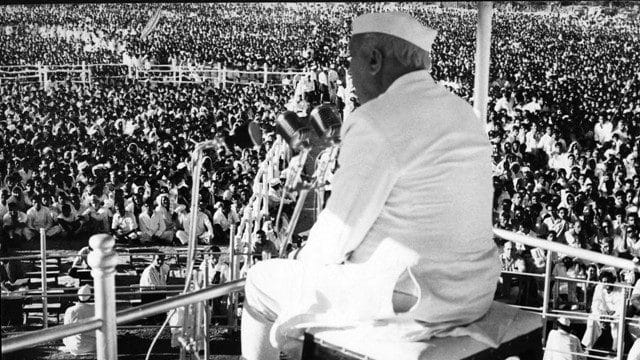



Economic rights are as much a part of human rights as political rights. It is a matter of deep regret, however, that many democratic countries concentrate on the latter to the neglect of the former. A feeling is growing, therefore, that democracy can provide only political rights and not economic rights, a feeling which is inimical to its survival and growth.
That is why in June 1975 democracy was subverted in India without much difficulty. Though it was restored nineteen months later, it will remain insecure and unstable as long as effective steps are not taken to ensure economic rights.
Denial of Rights
The right to live and to have the minimum requirements of life is the most fundamental of human rights. These include food, shelter and clothing. In a society that is not primitive, they include nutrition, health measures and education. Mr. Robert McNamara, President of the World Bank, defined his concept of that fundamental human right in an interview that he gave to the “New York Times” in April 1975: “Among the most fundamental human rights are the rights to minimum acceptable levels of nutrition, health and education.” He regretted that: “Hundreds of millions of people in developing countries, through no fault of their own, are denied these rights today.”
India is one of those developing countries where those basic human rights are denied to large masses of the people. And curiously enough, in India this number is only increasing rather than decreasing in spite of the notable progress that she has made in economic development. According to an estimate of the Planning Commission, “the percentage of the population below the poverty line in 1977–78 may be projected at 48 percent in rural areas and 41 percent in urban areas.” Other estimates place the percentage higher. But even at the lowest percentage, the number of persons who fall below the poverty line is 290 million. This is a colossal figure. What interest can this large mass of people have in a system that keeps them in that abject state of poverty?
Equally alarming is the position with regard to unemployment and underemployment. No definite figures are available as there is no countrywide system for the registration of the unemployed or underemployed. Figures have to be estimated on the basis of information collected through National Sample Surveys. The Planning Commission has arrived at an estimate of 20.6 million person-years of unemployment in March 1978. This figure is, according to it, “staggeringly large and larger than in any country in the world for which any unemployment statistics are available.” The problem is rendered more difficult by the prevalence of large-scale underemployment. The dire poverty that exists in the country is mainly due to this widespread unemployment and underemployment. Those who are the victims of this evil have little regard for the values of a society which condemns them to a life of misery and facility.
The most disturbing feature of this is that it contains a significant number of educated unemployed who are capable of contemplating and organising concerted action to put an end to the injustice unwarrantably heaped upon them. The action may be of a leftist or rightist variety. But, whatever the variety, it will be aimed at subverting the existing democratic structure. Indian society as it exists today faces this grave danger.
A
Political Rights Not Enough
It should be clear, therefore, that provision of political rights is not enough. They must be accompanied by economic rights and the State should be so organised as would facilitate immediate and vigorous action for the eradication of poverty and gross economic and social inequalities. One of the authors of the Indian Constitution, Dr. B. R. Ambedkar, was aware of this. In a memorandum presented to the Constituent Assembly in March 1947, he stated: “Old-time constitutional lawyers believed that the scope and function of Constitutional Law was to prescribe the shape and form of the political structure of the society. They never realised that it was equally essential to prescribe the shape and form of the economic structure of society, if democracy is to live up to its principle of one man one value. All countries which are late-comers in the field of constitution-making should not copy the faults of other countries. They should profit by the experience of their predecessors.” Dr. Ambedkar did not succeed in persuading the Constituent Assembly to profit by the experience to which he had drawn attention, as it was still under the influence of “old-time constitutional lawyers.” The Constitution laid down only “the political structure” and left “the economic structure” to evolve by itself.
Aware of the dangers that would flow from the failure of the Constituent Assembly to accept his suggestion, Dr. Ambedkar warned: “Political democracy cannot last unless there lies at the base of it social democracy.” He pointed out how “on the 26th of January 1950” we were entering “a life of contradictions,” as “in politics we will have equality and in social and economic life we will have inequality.”
Asking, “how long shall we continue to deny equality in our social and economic life?” he advised: “we must remove this contradiction at the earliest possible moment or else those who suffer from inequality will blow up the structure of political democracy which this Assembly has so laboriously built up.”
A
Fresh Thinking Needed
Thirty years have passed since then and no steps have been initiated to remove “the contradictions” to which Dr. Ambedkar had drawn attention. He had suggested the economic structure of “State Socialism”. The years that have passed have exposed many drawbacks and shortcomings of that structure. A few years after the promulgation of the Constitution, Pandit Nehru adopted it more or less. In his hands it became State Capitalism, resulting in the widening of economic inequalities. As commonly put, the rich became richer and the poor poorer. It is necessary, therefore, to think of another more appropriate system. However, the necessity of urgent action to abolish unemployment, reduce poverty, and establish equality cannot be denied.
The need has become all the more urgent in the new political situation that has developed with the re-emergence of authoritarian forces and their attempt to strengthen themselves by taking advantage of the poverty and ignorance of the masses. The leaders of the Janata Party have from time to time made many brave statements about ending unemployment and eradicating poverty, but in concrete terms nothing has been done so far to improve the economic condition of the people. It is true that political rights have been restored, but economic rights remain as far away as ever before. The large masses will not develop a stake in the democratic system as long as the system allows them to be oppressed and exploited. Human rights and democratic freedoms will have no meaning for them as long as they are not translated into work and food. That is the big challenge that India faces in the new year.
This piece is part of a series from the Indian Liberals archive, a project of the Centre for Civil Society. It is excerpted from the booklet Freedom First with the title “Political And Economic Rights”, which was published in January 1979. The original version can be accessed at this link.
🔴🔵🔴🔵🔴🔵🔴🔵🔴🔵🔴🔵🔴🔵🔴🔵
5️⃣

Panel for SC/STs will submit report on status of Karnataka’s nomadic communities to govt. soon
Updated - July 11, 2026 08:10 pm IST - Bengaluru

Chairman of Karnataka State Commission for SCs and STs says housing, land, education and financial facilities should be provided to members of nomadic and tribal communities. | Photo Credit: FILE PHOTO
A report on the condition of nomadic and tribal communities will be submitted to the government within 15 days, said L. Murthy, chairman of the Karnataka State Commission for Scheduled Castes (SCs) and Scheduled Tribes (ST).
Speaking on tribal communities, he said that since the Special Intensive Revision (SIR) is under way, the Secretary of the Revenue and Forest Department has been instructed not to evict tribal community members anywhere.
“If a situation arises where eviction is required, they should be provided with housing and financial assistance,” he said.
The chairman said that a meeting would be held in all four revenue divisions as per the request of the leaders to further review the situation.
The commission observed that the problems faced by members of the SC and ST communities are different even today. “Particularly those relating to land disputes, service matters, and police cases continue to be significant. Based on the observations made during district visits, the commission has prepared comprehensive reports highlighting these issues,” Mr. Murthy said.
He said that 7,296 cases related to caste issues are pending at various stages of inquiry and trial in the Department of Prosecution. “The commission has taken serious note of these delays and has recommended that regular trials be conducted to ensure the timely disposal of cases,” Mr. Murthy said.
Published - July 11, 2026 08:07 pm IST.
🔴🔵🔴🔵🔴🔵🔴🔵🔴🔵🔴🔵🔴🔵🔴🔵🔴🔵🔴🔵🔴🔵🔴🔵
6️⃣
Dr. Ambedkar National Relief to the SC/ST Victims of Atrocities Scheme (also known as DANVAS or
🔵🔴🔵🔴🔵🔴🔵🔴🔵🔴🔵🔴🔵🔴🔵🔴Dr. Ambedkar National Relief Scheme) is a central scheme administered by the Dr. Ambedkar Foundation under the Ministry of Social Justice and Empowerment.c7067c
Cvmc
Purpose
It provides instant/additional monetary relief to victims (or their families/dependents) of serious/heinous atrocities under the SC/ST (Prevention of Atrocities) Act, 1989. It acts as a contingency measure, especially for severe cases, supplementing state government relief.
Eligible Offences and Relief Amounts
Relief is provided for specific serious offences (additional to state relief):
Murder/Death:
Earning member: ₹5.00 lakh
Non-earning member: ₹2.00 lakh
Rape: ₹2.00 lakh
Arson (leading to complete homelessness): ₹3.00 lakh
Complete and Permanent Disability (leading to loss of earning capacity):
Earning member: ₹3.00 lakh
Non-earning member: ₹1.50 lakhb3be18
Cvmc
Key Features
Additional relief: Paid over and above what states provide under the PoA Rules (which range from ₹85,000 to ₹8.25 lakh+ depending on the offence).
Quick disbursement: Aimed at providing immediate support upon receipt of required documents.
Implementation: Through District Magistrates/Collectors. The scheme was later merged (effective April 2023) into the broader Centrally Sponsored Scheme for implementation of the PCR Act 1955 and SC/ST PoA Act 1989. New applications after the merger are handled under the integrated scheme, but pending cases may still be processed under the old framework.6a9569
Socialjustice
How to Apply
File an FIR under the SC/ST PoA Act for the atrocity.
Submit an application (with supporting documents like FIR copy, postmortem/medical certificate, caste certificate, etc.) to the District Magistrate/Collector of the area where the incident occurred.
The District Magistrate forwards the recommendation to the Dr. Ambedkar Foundation or the nodal authority under the merged scheme.
Relief is disbursed directly to the victim/family.
Contact for Queries:
Dr. Ambedkar Foundation, New Delhi
Email: consultant1-daf@nic.in
Phone: 011-26180211 or mobile support numbers (check official site for latest).
Current Status (as of 2026)
The standalone scheme has been integrated into the larger centrally sponsored scheme for better implementation and funding. States like Uttar Pradesh receive substantial central assistance under the broader PoA relief framework.2e60c4
Socialjustice
For the most accurate and updated application process in your state (e.g., Uttar Pradesh), contact your District Social Welfare Officer, District Magistrate, or visit the Ministry of Social Justice and Empowerment website or Dr. Ambedkar Foundation portal. You can also use the national atrocities helpline 14566 for guidance.
🔴🔵🔴🔵🔴🔵🔴🔵🔴🔵🔴🔵🔴🔵🔴🔴🔴🔵🔴🔵
7️⃣
The Uttar Pradesh (UP) SC/ST Victim Assistance Scheme primarily refers to the monetary relief and rehabilitation provided to victims of atrocities under the Scheduled Castes and Scheduled Tribes (Prevention of Atrocities) Act, 1989 (and its Rules), implemented by the UP Government’s Department of Social Welfare.e0a1cf
timesofindia.indiatimes
It is part of the broader framework for protecting SC/ST communities from caste-based atrocities, with financial assistance, rehabilitation support, legal aid, and medical help.
Key Features
Eligibility: SC/ST individuals (or their dependents/legal heirs in case of death) who are victims of offences registered under the SC/ST PoA Act. No separate application is usually needed — it is triggered by the FIR.f41aeb
timesofindia.indiatimes
Financial Assistance: Amounts are released in phases (e.g., at FIR, charge sheet, and conviction stages) based on the offence’s severity.
Ranges typically from ₹85,000 to ₹8.25 lakh (or more in specific cases), as per the notified schedule.bd6938
timesofindia.indiatimes
Examples from the central rules (applied in UP):
Murder/death of earning member: Up to ₹5 lakh+.
Rape/sexual exploitation: ₹1.2 lakh (phased).
Other humiliations/insults: ₹60,000+.
Additional support: Pension, employment/land/housing for dependents, education for children, house reconstruction if destroyed, etc.1e0d5e
socialwelfare.uk
Additional Support: Rehabilitation (e.g., restoring land, medical aid, legal assistance), and in severe cases, monthly pensions or other benefits.8ad28c
timesofindia.indiatimes
How It Works
FIR is registered under the Act.
District authorities (DM, SP, Social Welfare Dept.) process and disburse relief in stages.
Victims/families can approach the District Social Welfare Officer for help.
Uttar Pradesh has disbursed significant funds under this (over ₹1,447 crore in recent years) for thousands of cases.62c2ee
timesofindia.indiatimes
Related Schemes
Uttar Pradesh Victim Compensation Scheme, 2014: A broader state scheme for crime victims (not limited to SC/ST), funded through a Victim Compensation Fund.fd828b
Legitquest
Dr. Ambedkar National Relief Scheme: Central scheme providing additional/instant relief to SC/ST atrocity victims (often supplements state efforts).0660be
Cvmc
For the latest details, exact amounts for specific offences, or to apply, contact your District Social Welfare Officer, District Magistrate office, or visit the UP Social Welfare Department website (socialwelfare.up.gov.in or similar). Implementation is handled at the district level.
🔵🔴🔵🔴🔵🔴🔵🔴🔵🔴🔵🔵🔵🔴🔵🔴🔵🔵🔵🔴🔴🔴
8️⃣
How to File an SC/ST Atrocity Complaint (Under the SC/ST (Prevention of Atrocities) Act, 1989)?
The process is designed to be victim-friendly. Police must register an FIR immediately if a cognizable offence under the Act is disclosed — no preliminary inquiry is required.45d44c
Legalkart
Step-by-Step Process
Gather Evidence and Prepare Details
Your SC/ST caste certificate (or proof of caste).
Details of the incident: date, time, place, exact words/actions (especially caste-based abuse/insult), names/addresses of accused, witnesses.
Any supporting evidence: audio/video recordings, messages, medical reports, photos, etc.
Note: The offence must be committed because of your SC/ST identity.
File the Complaint at the Police Station
Go to the nearest police station (or the one with jurisdiction) and give a written complaint (in English, Hindi, or local language).
Clearly mention offences under Section 3 of the SC/ST PoA Act along with other relevant sections (e.g., IPC/BNS for assault, etc.).
Insist on registration of an FIR. Police cannot refuse or dilute the case.
You can also file a Zero FIR at any police station — it will be transferred to the correct one.c6e07b
Vakilsearch
If Police Refuse to Register FIR
Send a written complaint (via post/email or in person) to the Superintendent of Police (SP) of the district.
Approach the Magistrate’s Court and file an application under Section 156(3) BNSS (new criminal procedure) to direct the police to register the FIR and investigate.
You can also contact the District Atrocities Cell or Scheduled Castes and Scheduled Tribes Protection Cell.
Use Helplines for Immediate Help
National Helpline Against Atrocities: 14566 (toll-free) — available across India, including Uttar Pradesh.718c6a
State-specific helplines or District Social Welfare Officer.
Post-FIR Steps
Investigation by an officer not below DSP rank.
You are entitled to: regular updates, protection (if needed), free legal aid, and monetary relief (phased compensation from ₹85,000 to ₹8.25 lakh+ depending on the offence).
Trial in a Special Court (aimed for speedy disposal).
Important Tips (Especially in Uttar Pradesh)
Keep copies of all documents and get an FIR copy (with number) immediately.
Approach the District Social Welfare Department for relief and rehabilitation once the FIR is registered — no separate application needed in many cases.f0f2ae
timesofindia.indiatimes
Get support from local NGOs, Dalit rights organizations, or District Legal Services Authority (free legal aid).
Preserve evidence and avoid any delay — prompt filing strengthens the case.
Note: False complaints can lead to legal consequences, so ensure the incident genuinely qualifies as an atrocity under the Act.
For personalized help, contact a local lawyer, Legal Services Authority, or dial 14566. If you are in immediate danger, call the police emergency number (112) first.


Comments
Post a Comment