16.07.2026.News Untouchable.(Voice of Sc.STs,Buddhists,Ambedkar ites,Anti SC.ST atrocity news,Employement news)by Sivaji Ayyayiram.9444917060.asivaji1962@gmail.com.FB.sivaji yoga Tiruvannamalai.x.shivajia479023


UP Dalit woman murder: Probe reveals cop ‘conspired’ with brother to kill Lalita Gautam

MEERUT: A Provincial Armed Constabulary (PAC) constable was arrested on Wednesday for allegedly conspiring with his brother in the murder of a 20-year-old Dalit woman in UP.
The accused has been identified as 31-year-old Ankit.
He is the latest person to be arrested in connection with the murder of Lalita Gautam, news agency PTI reported.
His brother, Ankush Kumar, had earlier been arrested for allegedly killing Gautam following an argument.
According to police, Gautam’s father approached TP Nagar Police Station on May 16 and reported that his daughter was missing.
Her body was found the next day in a forested area near Upsiya village.

Dalit youth allegedly beaten for demanding wages: Died during treatment in Chitrakoot; family files murder case and demands action

A Dalit tribal Kol youth, injured in an alleged assault at a brick kiln in the Manikpur police station area of Chitrakoot, died while undergoing treatment at the district hospital. The family has accused the kiln operators of brutally beating him, the police of failing to listen to his complaint, and a hospital doctor of inhumane behavior. The family is demanding action by filing a murder case.
According to the family, they took the injured youth to the Manikpur police station hoping for justice, but instead of registering their complaint, they were turned away. Subsequently, the youth was admitted to the district hospital for treatment, where his condition remained critical throughout treatment.
The deceased’s family has also made serious allegations against a doctor at the district hospital. They claim that the youth’s leg was not functioning. While trying to check his leg, the doctor allegedly burned his leg with a lighter, worsening his condition.
The young man died during treatment around 10 p.m. on Wednesday night. Upon receiving the news of his death, his family was enraged. They alleged that if the police had acted promptly and the hospital had provided sensitive treatment, the young man’s life could have been saved.
The family has demanded that a murder case be filed against the kiln operators, an investigation into the role of the police officers who failed to act on the complaint, and strict action be taken against the doctor involved.
Currently, questions are being raised about the police’s performance and hospital management in the case. However, no official statement has yet been issued by the police or the health department on these allegations. Attempts were made to contact Manikpur police station in-charge Ajit Pandey, but he was unsuccessful.
Jitendra Kumar | Chitrakoot


Dalit boy stabbed by two classmates at Sivaganga school

Sivaganga: Police apprehended two 17-year-old Class XII boys on charges of stabbing a 16-year-old classmate belonging to the dalit community at the Adi Dravidar Welfare Higher Secondary School in Mallal near Sivaganga on Wednesday.
Police said the victim was admitted to the intensive care unit of Sivaganga Govt Medical College Hospital and his condition is stable. A senior police officer said the incident stemmed from bullying based on caste identity and that the attackers were thevar boys.
Last week, the victim was provoked by one of the attackers who mocked him. The enraged boy inflicted a bleeding injury on him using an iron nail. Subsequently, the school administration took up the matter with the parents of the boys and decided to drop it with warnings to both boys.
The injured 17-year-old boy was absent for the past week and returned to the school on Wednesday. Before the classes began, he along with another boy tried to attack the victim. “The two boys chased the victim around the campus and finally caught him inside the staff room. As one was holding him, another boy stabbed him using a blade at four places on his chest and back,” a police officer said.
Sipcot police rushed to the spot and detained one of the attackers, who was captured by school staff. Another boy was detained in the evening. Police registered a case under sections 296(b), 115(2), 127(2), and 109 of BNS and Scheduled Castes and Scheduled Tribes (Prevention of Atrocities) Act. The boys were lodged in a govt observation home.
The school education department has also initiated an inquiry. It may be recalled that the department last week sent an advisory to govt and private schools to avoid caste, religious, and political events in schools to strengthen the safety and unity among students.
Courtesy : TOI

Dalit woman gang-raped in Baheri, video captured and blackmailed: Victim went to village headman’s house, case filed against 3 under SC-ST Act, 2 detained

A Scheduled Caste woman in Gursauli village, under the Baheri Kotwali area, has accused three young men of gang-raping her, blackmailing her with a video, and threatening to kill her. Based on the victim’s complaint, police have registered a case under serious sections and the SC-ST Act. Two accused have been detained in the case.
According to the police report, the victim’s 30-year-old husband is disabled and was away working. On the afternoon of July 6th, the woman went to the village headman’s house to inquire about a gas connection. The village headman’s son and several other young men were present. She was told the headman was not home and was asked to return later.
The victim alleges that while returning, the three accused stopped her, forcibly took her inside a house, and raped her one by one at gunpoint. The accused also filmed the incident.
The woman said that when she protested, the accused used casteist slurs. They also threatened to make the video viral on social media and kill her and her family if she complained.
Police have registered a case against Ajay, son of Dayashankar, Guddu alias Tejpal, son of Nathu, and Shivam, son of Niranjan Lal. This action has been taken under relevant sections of the BNS and the Scheduled Castes and Scheduled Tribes (Prevention of Atrocities) Act.
Baheri Inspector Dinesh Kumar said that after preliminary investigations revealed Ajay and Shivam’s role, both have been taken into custody. Police are investigating the case based on the video and other evidence.
Mumtaz Ali | Baheri

From ‘Untouchable’ to India’s Spin Bowling Legend: How Palwankar Baloo Became an Inspiration for Dr. B.R. Ambedkar and Thousands of Dalits
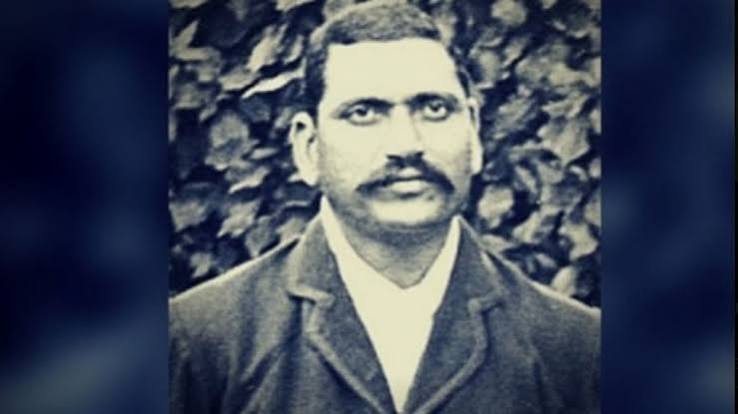
Palwankar Baloo was not only an inspiration for aspiring cricketers but also for young B.R. Ambedkar, who is known as the architect of the Indian constitution.
CRICKET IN THE SUBCONTINENT is marked by spin tracks and a few masters of the art. Bishan Singh Bedi, Bhagwat Chandrashekhar, S. Venkataraghavan are some of the legends that come to mind when we speak of Indian spinners. However, Palwankar Baloo was a name that laid the foundation on which this fortress was built. He was not only an inspiration for aspiring cricketers but also for young B.R. Ambedkar, who is known as the architect of the Indian constitution.
Despite his achievements on the field, Palwankar Baloo was never treated as an equal off it. At tea breaks, while his upper-caste teammates sat inside the pavilion drinking from porcelain cups, Baloo, a Dalit, was made to stand outside and drink from a separate clay cup. His story is not just about a legend of the sport, but an example of an era where caste discrimination persisted even in a sport often called the “gentleman’s game.”
Palwankar Baloo: From Groundsman to India’s Greatest Spin Bowler
Palwankar Baloo was born on March 19, 1876 in Dharwad to a family belonging to the Chamar community. According to historian and cricket enthusiast Ramachandra Guha’s book A Corner of a Foreign Field: The Indian History of a British Sport, Baloo’s father worked with the British Army in Poona, where Baloo and his younger brothers first learnt cricket using equipment discarded by British officers.
Like many children in poor families, he began working at a young age. His introduction to the game was not as player but as a groundsman.
“Baloo’s own first job was at a cricket club run by Parsis. Here he swept and rolled the pitch, and occasionally bowled to the members at the nets. For this work he took home Rs 3 a month,” Guha writes.
Later, he joined the prestigious Poona Club, where he prepared pitches, set up nets and bowled to British club members. One of those members was English cricketer Captain J.G. Greig, who quickly realised Baloo’s spin bowling talent.
According to Guha, Hindu cricket administrators were divided over selecting Baloo in the team because he belonged to a Dalit community. It was Greig who convinced them that leaving out such a talented bowler because of his caste would be foolish. Guha notes that Greig’s attempt shouldn’t necessarily be seen as him trying to reform society, but simply wanting to test himself against a talented net bowler in competitive matches.
Once selected, Baloo soon became the biggest weapon of the Poona Hindus team. His left-arm spin troubled even the strongest European sides. His performances also earned him a place in the historic 1911 All-India team that toured England—the first Indian cricket team to play on British soil.
Historian Prashant Kidambi writes in Cricket Country that it took “12 years and three failed attempts” before an Indian team could finally make “its debut on the playing fields of imperial Britain.”
When the team returned to Bombay on September 15, 1911, thousands gathered at the harbour to welcome them. Baloo had finished the tour as India’s leading wicket-taker and returned home as one of the country’s biggest sporting heroes.
The Spin Legend Who Was Still Treated as an ‘Untouchable’
The Indian society’s taboo was hard to forego especially in the early 20th century. Success on field did not change how Baloo was treated by his own teammates. According to Guha, caste discrimination continued even inside the cricket ground. “At the tea interval… Baloo was served the liquid outside the pavilion, and in a disposable clay matka, while his colleagues drank in white porcelain cups inside,” Guha writes.
He faced similar treatment during lunch. “Baloo also ate his lunch off a separate plate, and on a separate table. But he took plenty of wickets all the same. Due chiefly to Baloo’s bowling the Poona Hindus defeated the Poona Europeans and other local sides as well,” Guha writes.
Even then, Baloo’s performances were impossible to ignore. Social reformer Mahadev Govind Ranade publicly honoured him after one of his major victories, while Indian freedom fighter Bal Gangadhar Tilak also praised his achievements. Slowly, Baloo’s cricket started challenging many caste prejudices, even if they did not disappear.
It was also reinforced in his own family as the Palwankar family became one of Indian cricket’s first great sporting families. His brothers Shivram, Vithal, and Ganpat all went on to play at a high level. In 1923, Baloo’s younger brother Vithal Palwankar became the first Dalit captain of the Hindu team in the Bombay Quadrangular and led the side to several famous victories.
The Cricketer Who Inspired Ambedkar, But Later Became His Adversary
Dr. B.R. Ambedkar sitting on desk signing documents
Being a Dalit, Baloo’s influence reached far beyond cricket. After the 1911 England tour, Bombay’s Depressed Classes organised a public felicitation for him. According to Guha, the welcome address was delivered by a young college student who was then unknown—Bhimrao Ramji Ambedkar.
Quoting historian Eleanor Zelliot, Guha writes that this was “the first public appearance” of the man who would later become the architect of the Indian Constitution. “By virtue solely of his deeds on the cricket field, Baloo had become a hero and inspiration to countless Untouchables. And the young B.R. Ambedkar was one of them,” Guha writes.
However, when both of them became influential figures for their community, they later disagreed on the future of Dalits in India.
Guha writes that Baloo strongly believed in Mahatma Gandhi’s view that caste discrimination could be removed through reform within Hindu society. Ambedkar, on the other hand, believed the Depressed Classes would get justice only through independent political rights and by moving beyond the Hindu social order.
During Gandhi’s fast against the Communal Award in 1932—a proposal by the British government to allow ‘untouchables’ to become an electorate separate from the main Hindu community, Baloo was among those who appealed to Ambedkar to reach a compromise. The talks eventually led to the Poona Pact. Guha notes that Baloo’s decision to enter electoral politics appears to have been “a world first” for a professional cricketer, decades before famous cricketers around the world entered politics.
In 1937, the Congress fielded Baloo against Ambedkar in the Bombay Legislative Assembly elections. While Ambedkar won the election by around 2,200 votes, there was never an ill will between the two Dalit leaders.
Palwankar Baloo died on July 4, 1955. He may not be the first one named when people remember the legendary Indian spinners, but his legacy is much bigger than numbers on a scorecard. He broke barriers by simply entering the cricket field. His craft on the field inspired generations of Dalits who saw in him proof that talent could rise even against deep-rooted discrimination.
Author: Harsh Pandey
Courtesy : News Gram

Glass enclosure of Ambedkar’s statue found broken, protest held
Unlock Exclusive Insights with The Tribune Premium
Thought-provoking Opinions, Expert Analysis, In-depth Insights and other Member Only BenefitsAfter the glass enclosure of Dr BR Ambedkar was found broken at the Jalandhar Bypass Chowk, members of the Bahujan Samaj Party (BSP) held a peaceful protest. Some other activists had also condemned the act and demanded immediate arrest of miscreants who were responsible for the same.

A stone was also reportedly found near the statue which was suspected to be thrown at the glass enclosure.
After receiving information, BSP leaders and workers rushed to the spot and raised slogans against the police and administration. They said the glass was so thick that it could not be broken in one go and it seemed that some miscreants could have repeatedly hit the same.
Jatinder Adiya, a social worker, also demanded that the police should register a case and arrest the suspects.
After the incident, ADCP-1 Sameer Verma also visited the spot and directed the area SHO to intensify the probe and nab the persons involved in the act. The police are also checking footage of safe city cameras to solve the matter.


Comments
Post a Comment