20.07.2026.News Untouchable.(Voice of Sc.STs,Buddhists,Ambedkar ites,Anti SC.ST atrocity news,Employement news)by Sivaji Ayyayiram.9444917060.asivaji1962@gmail.com.FB.sivaji yoga Tiruvannamalai.x.shivajia479023


Tamil Nadu Initiates Process to Identify Untouchability-Prone Areas, Move Towards Exclusive SC/ST Police Stations | TM Special
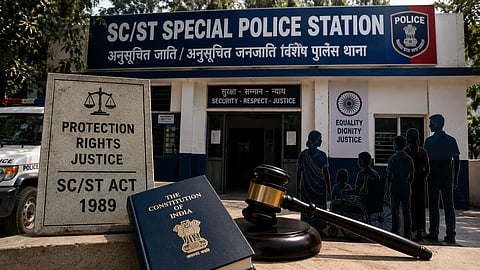

Chennai- The Tamil Nadu government has initiated administrative action to identify areas with a high incidence of untouchability-related atrocities and examine the establishment of exclusive Special Police Stations for Scheduled Castes and Scheduled Tribes (SC/ST) in such locations. The move follows directions from the National Commission for Scheduled Castes (NCSC) on a petition seeking dedicated policing in atrocity-prone areas.
At present, India has 145 Special Police Stations functioning under the Scheduled Castes and Scheduled Tribes (Prevention of Atrocities) Act across five states to ensure prompt investigation and effective enforcement of the law. Madhya Pradesh leads with 51 such police stations, followed by Bihar, Chhattisgarh, Jharkhand and Kerala.
The matter stems from a petition submitted by S. Venkatesan, a resident of Sunambedu in Chengalpattu district and associated with the Neelam Cultural Centre, to the National Commission for Scheduled Castes on June 13, 2025. In his petition, Venkatesan urged the government to officially identify areas with a high incidence of untouchability-related offences as "Areas Prone to Untouchability Atrocities" and immediately establish exclusive SC/ST police stations in such locations.

Speaking to The Mooknayak, Venkatesan said caste-based violence in Tamil Nadu remains a complex and deeply concerning issue at social, legal and political levels. While the state is widely known for its progressive politics and the legacy of the Dravidian movement, he argued that caste discrimination and violence continue to pose serious challenges at the grassroots.
Taking cognisance of the complaint, the National Commission for Scheduled Castes issued a communication dated June 23, (Letter No. APCR/OL/TN/2025/304819) directing the Tamil Nadu government to take appropriate action.
Subsequently, the Tamil Nadu Home Department issued Letter No. 12738/Police.15/2026-1 dated July 7 signed by M. Sreenan, Deputy Secretary to Government. The letter was addressed to the Director General of Police (DGP), Tamil Nadu, and the Inspector General of Police, Social Justice and Human Rights Wing.
Letter from the Deputy Secy of TN govt to the DGP.The Home Department enclosed a copy of the complaint forwarded by the NCSC and instructed the police authorities to take necessary action. It directed them to submit the details of the action taken directly to the National Commission for Scheduled Castes, Chennai, while also sending copies to the complainant, S. Venkatesan, and the state government.
The communication categorised the matter as "Most Urgent", asking the police to accord it priority and ensure that an appropriate response is sent to the Commission without delay.
Venkatesan's primary demand is that districts and localities witnessing recurring incidents of untouchability and caste atrocities should be officially notified as atrocity-prone areas and provided with dedicated SC/ST Special Police Stations to ensure prompt registration, investigation and monitoring of cases under the SC/ST (Prevention of Atrocities) Act.Legal
NCRB data shows rise in SC/ST atrocity cases
According to data presented in Parliament by the Ministry of Home Affairs and the National Crime Records Bureau (NCRB), Tamil Nadu has witnessed a steady increase in cases registered under the SC/ST (Prevention of Atrocities) Act. Around 1,274 cases were registered in 2020, while the number rose to more than 1,700–1,800 cases by 2022–2023.
Compared to the national average, Tamil Nadu has also recorded a relatively low conviction rate in caste atrocity cases reported to be around 8% to 13%, while the pendency rate has remained above 80%.
Forms of caste-based violence reported in Tamil Nadu
Caste-related violence in Tamil Nadu has taken multiple forms over the years.
Honour killings remain a major concern, particularly in cases involving inter-caste relationships, especially between Dalit men and women from dominant castes. Districts such as Tirunelveli, Madurai, Thanjavur and Krishnagiri have witnessed several such incidents.
Untouchability and social exclusion continue to be reported in several rural areas, including the persistence of the "two-tumbler system" at tea shops, denial of access to cremation grounds, restrictions on temple entry, and obstruction of Dalit panchayat presidents from exercising administrative powers.
Inhuman forms of caste oppression have also drawn national attention. Incidents such as contaminating drinking water tanks serving Dalit settlements as seen in the Vengaivayal case along with social boycotts and denial of basic civic amenities have highlighted continuing caste discrimination.
Caste tensions in educational institutions have also surfaced, particularly in southern districts including Tirunelveli and Thoothukudi, where reports have emerged of students wearing caste-identifying wristbands and violent clashes linked to caste identities.
The Tamil Nadu Police's Social Justice and Human Rights (SJ&HR) Wing is tasked with monitoring caste-sensitive regions and identifying areas vulnerable to social tensions and caste-based violence.
Major caste atrocity cases in recent years
Among the prominent recent incidents is the Kavin Selva Ganesh murder case in Tirunelveli (July 2025), in which a 27-year-old Dalit software engineer was allegedly murdered because of his relationship with a woman from a dominant caste.
In February 2024, a 26-year-old Dalit man, Praveen, was allegedly killed in Chennai's Pallikaranai by his wife's brother and associates following an inter-caste marriage.
In January 2024, the Aishwarya honour killing in Thanjavur drew widespread attention after a 19-year-old woman was allegedly murdered by her own family for marrying a Dalit man named Naveen.
The Uthangarai case in Krishnagiri (2023) involved the alleged killing of a young man, Sabash, by his father after he married a Dalit woman, Anusuya.
The Vengaivayal case in Pudukkottai (2023), in which human faeces were found mixed in an overhead water tank supplying drinking water to a Dalit settlement, became one of the country's most widely discussed caste atrocity cases.
Directions for SC/ST Protection Cells & Police Stations
The 27th National Review meeting of the Committee constituted for effective coordination to devise ways and means to curb offences of untouchability and atrocities against the members of SC/ST and effective implementation of the Protection of Civil Rights Act, 1955 and the Scheduled Castes and the Scheduled Tribes (Prevention of Atrocities) Act, 1989 was held at New Delhi on 21st November, 2023. Following the meeting, the States Government/ UT Administration were urged by the Ministry of Home Affairs, to set up the Exclusive Special Courts in sufficient number and set up SC/ST Protection Cells. Also Special Police Stations for registration of complaints of offences against members of SCs and STs were also advised to be set up, wherever feasible.
Only five states currently have Special SC/ST Police Stations
According to the latest data from the Ministry of Home Affairs and the Ministry of Social Justice and Empowerment, only five states currently have dedicated Special Police Stations for investigating offences under the SC/ST (Prevention of Atrocities) Act. Together, these states have 145 Special Police Stations, distributed as follows:
Madhya Pradesh: 51
Bihar: 40
Chhattisgarh: 27
Jharkhand: 24
Kerala: 3
The communication issued by the Tamil Nadu government does not announce the establishment of new police stations. Instead, it initiates the administrative process by seeking an action taken report from the police authorities in response to the NCSC's directions on the petition seeking exclusive SC/ST police stations in untouchability-prone areas.
 DHNS
DHNS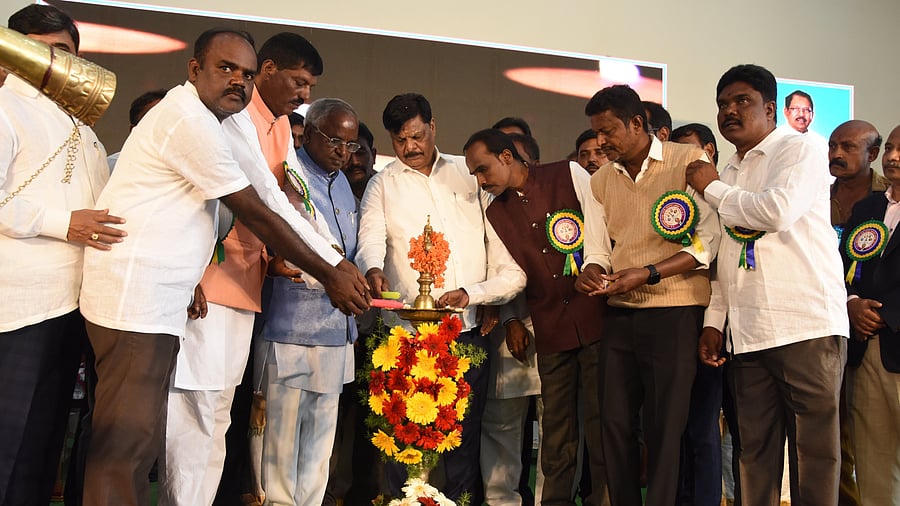
Former minister H C Mahadevappa inaugurates the Swabhimana Convention in Chikkaballapur.
Credit: DH Photo
Chikkaballapur: “Communalism and religious polarisation are gaining strength, posing a threat to the Constitution and the vision of a prosperous India. People should remain vigilant. Failure to do so could lead to a form of slave-like rule,” said former minister H C Mahadevappa.
He was speaking at the Swabhimana Convention organised by the Federation of Right-Hand Castes here on Sunday.
Mahadevappa alleged that the RSS promotes a system that treats Shudra communities as second-class citizens. The ideals of Dr B R Ambedkar and the Constitution provide the necessary tools to oppose communalism and caste discrimination.
The BJP-led Union government is attempting to deprive people of their voting rights through the Special Intensive Revision (SIR) of electoral rolls. Minorities and Dalits are being specifically targeted and efforts are being made to push them into slaverism. People should remain alert against such developments, he warned
“Those who once declared that they will change the Constitution are now carrying copies of it in their hands. We made that happen. Whenever every citizen enjoys their constitutional rights, they should remember Ambedkar,” he said. Referring to internal reservation, Mahadevappa said the community has become better organised after its implementation. They should dedicate their unity to the unity of all Dalits. “Followers of Ambedkar are people of self-respect and those who stand with Ambedkar will never accept slavery,” the ex-minister said.
He questioned why Dalits continue to face oppression and hardship despite Ambedkar having provided constitutional safeguards and opportunities. “If the Constitution has guaranteed equal rights, why are Dalits still treated as victims? Fighting against this injustice should be the foremost duty of Ambedkarites,” he said. Mahadevappa noted that former chief minister Siddaramaiah had implemented reservation in several sectors, including contracts awarded by the Karnataka Industrial Areas Development Board (KIADB) and the Public Works Department. These measures should continue to be implemented effectively under the present government led by D K Shivakumar and The community should remain vigilant on the issue, he stated.
RPI leader M Venkataswamy said the community strongly demands that H C Mahadevappa’s name be included in the list for the proposed Cabinet reshuffle.
3️⃣🔴🔴🔴🔴🔴🔴🔴🔴🔴🔴🔴🔴🔴🔴🔴

CPI(M) accuses governments of neglecting dalits, warns of protests for house site pattas
Published - July 19, 2026 08:48 pm IST - VIJAYAWADA
Communist Party of India (Marxist) State secretariat member Ch. Babu Rao on Sunday (July 19, 2026) accused the Union and State governments of neglecting the welfare of Dalits, tribals, and economically weaker sections. He said that the party would intensify its agitation for the allotment of house site pattas and implementation of welfare schemes.
4️⃣🔴🔴🔴🔴🔴🔴🔴🔴🔴🔴🔴🔴🔴🔴🔴🔴🔴🔴🔴
Rahul Gandhi asks people to identify doctors’ castes from names, claims Apollo has no Dalit, OBC or Adivasi doctors
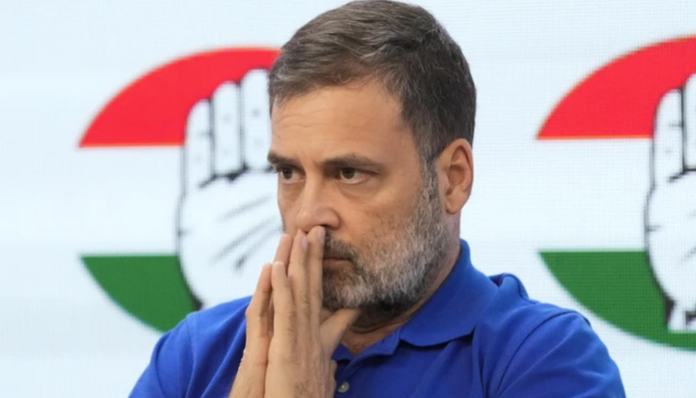
On 13th March, Congress leader Rahul Gandhi used a speech on the Constitution and social representation to claim that Apollo Hospitals does not have even one Dalit, OBC or Adivasi doctor. Gandhi was addressing a “Samvidhan Sammelan” at the Indira Gandhi Pratishthan in Lucknow.
While invoking BR Ambedkar and Kanshi Ram, he claimed that slogans and demands alone could not bring political change and called for “organisation and an ideological struggle”. He also cited Kanshi Ram’s pen analogy, which states that the privileged 15% represented its cap, while the remaining 85% formed the pen.
Gandhi claimed that this “85%” was absent from positions of power across the judiciary, Cabinet, bureaucracy, educational institutions and corporate India.
Gandhi turns surnames into caste certificates
He asked his followers to examine the CEOs and senior management of India’s 500 largest companies, claiming they would not find a single Dalit, Adivasi, backward-class or minority name. He extended the allegation to suppliers working with the Adani Group, which has been a target of Congress for over a decade.
Gandhi then asked his followers visiting private hospitals to read doctors’ names. Naming Apollo, he declared that they would not find one Dalit, backward-class or Adivasi doctor there.
However, he cited no caste audit, employment record, survey or list to support the absolute claim. Apollo’s public directory lists over 3,200 doctors and displays qualifications, specialisations, experience, languages and hospital locations. It does not disclose caste. A surname also cannot reliably establish a person’s caste across India’s different regions and communities.
Gandhi effectively asked his followers to assign castes to thousands of professionals by looking at their names and then accept the assumption as fact.
Reacting to his statement, Senior Advocate at the Supreme Court of India Mahesh Jethmalani urged people not to make the stethoscope the next victim of Gandhi’s caste arithmetic. He said, “The stethoscope cannot become the next victim of Rahul Gandhi’s caste arithmetic. CANNOT. You are corroding trust in the very people asked to save lives. Rahul’s hospital remark is dangerous politics. Do not drag healthcare into caste arithmetic and make Indians wonder whether medicine too must now be judged by quota optics over merit. A doctor is not a caste category. A doctor is a life-saving professional. Politics that blurs that line is reckless beyond words.”
Constitution does not say what Gandhi attributed to it
After the Apollo allegation, Rahul Gandhi said the Constitution declares “one man, one vote” and “jitni abaadi, utni bhagidari”. The Constitution guarantees equality, prohibits caste discrimination by the State and permits affirmative action in specified areas. It does not contain the latter slogan or mandate population-proportionate caste representation in every private hospital and company. Article 16 specifically concerns employment or appointment to offices under the State.
Gandhi contrasted these institutions with MGNREGA lists and construction workers, claiming the same 85% would be found there in overwhelming numbers. He argued that shrinking public-sector companies, hospitals, universities and small businesses had closed routes through which marginalised communities earlier entered professional and management positions.
He concluded by promising a caste census and representation for Dalits, OBCs, Adivasis, extremely backward classes and minorities in India’s “power structure”. Representation can be debated, but categorical allegations against a hospital network or a private-sector company require verifiable data, not caste profiling through surnames.
Many surnames associated with an upper caste in one state or community may belong to a Scheduled Caste or Other Backward Class (OBC) in another. In several cases, even a slight difference in spelling may refer to a different community or alter how the name appears in official caste lists. Assuming someone’s caste solely from their name can therefore create confusion, encourage caste profiling and subject individuals to unwarranted scrutiny. Congress leader Rahul Gandhi’s claims about Apollo’s doctors and corporate executives cannot be established merely by reading their names.


Comments
Post a Comment