06.08.2026.News Untouchable.(English, हिन्दी, தமிழ் )Voice of Sc.STs,Buddhists,Ambedkar ites,Anti SC.ST atrocity news,Employement news)by Sivaji Ayyayiram.9444917060.asivaji1962@gmail.com.FB.sivaji yoga Tiruvannamalai.x.shivajia479023


Social Justice at Stake? RTI Reveals Rs. 13,177 Crore from SC/ST Fund Diverted to Kalaignar Magalir Urimai Thogai Scheme


Chennai- In a significant revelation under the Right to Information (RTI) Act, it has come to light that a staggering amount of Rs. 13,177.53 crore has been utilized from the Special Component Fund earmarked for Scheduled Castes (SC) and Scheduled Tribes (ST) over the last three financial years to fund the Tamil Nadu government's flagship Kalaignar Magalir Urimai Thogai scheme.
This information was disclosed by the Commissionerate of Revenue Administration and Disaster Management, Chennai, in response to an RTI petition filed by S. Venkatesan, the State Coordinator of the SC ST Viduthalai Munnetra Munnani, hailing from Chunampet in Chengalpattu district.
The Kalaignar Magalir Urimai Thogai scheme is a flagship women welfare program by the Government of Tamil Nadu that provides ₹1,000 monthly financial assistance to eligible women. Launched on September 15, 2023, it recognizes women's unpaid household work and promotes financial independence.
Venkatesan had sought detailed information regarding the allocation and utilization of funds for the women's monthly assistance scheme. In its official reply dated July 21, the Assistant Commissioner-7, who also serves as the Public Information Officer, provided a comprehensive breakdown of the budgetary allocations and the specific amounts drawn from the SC/ST sub-plan.
According to the official data provided by the Commissionerate, the government had allocated a total of Rs. 1,85,09,05,05,000 (Rs. 18,509 crore) for the Kalaignar Magalir Urimai Thogai scheme for the current financial year (2025-2026) alone. However, the details that have sparked widespread debate concern the usage of the SC/ST Special Component Fund. The reply confirmed that from this dedicated fund, Rs. 6,191,67,32,000 (Rs. 6,191.67 crore) has been utilized for the scheme in 2025-2026.
Providing a year-by-year breakdown, the RTI response stated that in the financial year 2023-2024, Rs. 2,568,81,72,264 (Rs. 2,568.81 crore) was used from the SC/ST fund. This figure saw a significant jump in 2024-2025, with Rs. 4,417,04,63,700 (Rs. 4,417.04 crore) being diverted to the scheme. The cumulative utilization from this specific sub-head for the three years thus amounts to a colossal Rs. 13,17,75,36,79,64 (Rs. 13,177.53 crore).
The data further revealed the total annual allocations for the Magalir Urimai Thogai scheme across the three years, which were Rs. 5,812,38,30,90,00 (Rs. 5,812 crore) for 2023-2024, Rs. 5,138,07,07,41,000 (Rs. 5,138 crore) for 2024-2025, and the aforementioned Rs. 1,85,09,05,05,000 (Rs. 18,509 crore) for 2025-2026.
While the Commissionerate provided exhaustive financial data, it stated that it could not furnish information regarding the number of SC/ST women beneficiaries who received the monthly assistance, noting that such specific demographic data was not maintained in their office.
The parallel developments in both Tamil Nadu and Maharashtra have raised serious questions about whether state governments across the country are systematically diverting SC/ST funds meant for the upliftment of Dalit and tribal communities to populist schemes, potentially undermining constitutional safeguards and social justice mandates.
 The revelation has raised serious questions about the government’s commitment to protecting the financial interests of SC/ST communities and adhering to the constitutional mandate of ensuring dedicated funds for their development.
The RTI query was filed on February 14, and following a government reference, the final response was dispatched to the petitioner on July 21. Reacting to the findings, social activists and social justice advocates have voiced strong criticism. They contend that utilizing funds specifically allocated for the welfare and development of SC/ST communities for a general state-run scheme constitutes a gross violation of social justice principles and a diversion of resources meant for the upliftment of the most marginalized sections of society. The revelation has raised serious questions about the government’s commitment to protecting the financial interests of SC/ST communities and adhering to the constitutional mandate of ensuring dedicated funds for their development.
Similar Funds Diversion in Maharashtra
This pattern of fund diversion is not limited to Tamil Nadu alone. In a strikingly similar incident, the Maharashtra government had also come under fire in July when the Vanchit Bahujan Aaghadi (VBA) strongly opposed the sanctioning of ₹2.80 crore from the Social Justice and Special Assistance Department's budget for the Chief Minister Warkari Mahamandal to support the Ashadhi Ekadashi Wari pilgrimage.
Earlier, on May 20, the Maharashtra government had issued a Government Resolution approving the use of funds from the Scheduled Caste Component Plan for the flagship 'Chief Minister Majhi Ladki Bahin Yojana', with a provision of ₹3,000 crore for the financial year 2026-27, out of which ₹730.51 crore was already transferred to the Women and Child Development Department for March and April 2026.
Even Maharashtra's Social Justice Minister Sanjay Shirsat had publicly expressed displeasure over his own government's policy in February this year, calling the diversion of his department's funds for schemes like 'Ladki Bahin' unacceptable. The parallel developments in both Tamil Nadu and Maharashtra have raised serious questions about whether state governments across the country are systematically diverting SC/ST funds meant for the upliftment of Dalit and tribal communities to populist schemes, potentially undermining constitutional safeguards and social justice mandates.
சமூக நீதிக்கு ஆபத்தா? பட்டியல் சாதியினர்/பழங்குடியினர் நிதியிலிருந்து ரூ. 13,177 கோடி கலைஞர் மகளிர் உரிமைத் தோகை திட்டத்திற்குத் திருப்பிவிடப்பட்டதை தகவல் அறியும் உரிமைச் சட்டம் வெளிப்படுத்தியுள்ளது.
சென்னை - தகவல் அறியும் உரிமைச் சட்டத்தின் கீழ் வெளிவந்துள்ள ஒரு முக்கியத் தகவலில், தமிழக அரசின் முதன்மைத் திட்டமான கலைஞர் மகளிர் உறுதித் தோகை திட்டத்திற்கு நிதியளிப்பதற்காக, கடந்த மூன்று நிதியாண்டுகளில் பட்டியல் சாதியினர் (SC) மற்றும் பழங்குடியினருக்காக (ST) ஒதுக்கப்பட்ட சிறப்புக் கூறு நிதியிலிருந்து ரூ. 13,177.53 கோடி என்ற பிரம்மாண்டமான தொகை பயன்படுத்தப்பட்டுள்ளது தெரியவந்துள்ளது.
செங்கல்பட்டு மாவட்டம், சுனம்பேட்டையைச் சேர்ந்த பட்டியல் சாதியினர் மற்றும் பழங்குடியினர் விடுதலை முன்னேற்ற முன்னணியின் மாநில ஒருங்கிணைப்பாளர் எஸ். வெங்கடேசன் தாக்கல் செய்த தகவல் அறியும் உரிமை மனுவிற்கு பதிலளிக்கும் விதமாக, சென்னை வருவாய் நிர்வாகம் மற்றும் பேரிடர் மேலாண்மை ஆணையரகம் இந்தத் தகவலை வெளியிட்டுள்ளது.
கலைஞர் மகளிர் உரிமைத் தோகைத் திட்டம் என்பது, தகுதியுள்ள பெண்களுக்கு மாதந்தோறும் ₹1,000 நிதியுதவி வழங்கும் தமிழ்நாடு அரசின் ஒரு முதன்மை மகளிர் நலத் திட்டமாகும். 2023 செப்டம்பர் 15 அன்று தொடங்கப்பட்ட இத்திட்டம், பெண்களின் ஊதியம் பெறாத வீட்டு வேலைகளை அங்கீகரிப்பதோடு, நிதிச் சுதந்திரத்தையும் ஊக்குவிக்கிறது.
மகளிர் மாதாந்திர உதவித் திட்டத்திற்கான நிதி ஒதுக்கீடு மற்றும் பயன்பாடு குறித்த விரிவான தகவல்களை வெங்கடேசன் கோரியிருந்தார். ஜூலை 21 தேதியிட்ட தனது அதிகாரப்பூர்வ பதிலில், பொதுத் தகவல் அதிகாரியாகவும் பணியாற்றும் உதவி ஆணையர்-7, வரவு செலவு ஒதுக்கீடுகள் மற்றும் பட்டியல் சாதியினர்/பழங்குடியினர் துணைத் திட்டத்திலிருந்து எடுக்கப்பட்ட குறிப்பிட்ட தொகைகள் குறித்த விரிவான விவரங்களை வழங்கினார்.
ஆணையரகம் வழங்கிய அதிகாரப்பூர்வ தரவுகளின்படி, நடப்பு நிதியாண்டில் (2025-2026) மட்டும் கலைஞர் மகளிர் உரிமைத் தோகை திட்டத்திற்காக அரசு மொத்தம் ரூ. 1,85,09,05,05,000 (ரூ. 18,509 கோடி) ஒதுக்கியுள்ளது. இருப்பினும், பட்டியல் சாதியினர்/பழங்குடியினர் சிறப்பு கூறு நிதியின் பயன்பாடு குறித்த விவரங்களே பரவலான விவாதத்தைத் தூண்டியுள்ளன. இந்த பிரத்யேக நிதியிலிருந்து, 2025-2026 ஆம் ஆண்டில் இத்திட்டத்திற்காக ரூ. 6,191,67,32,000 (ரூ. 6,191.67 கோடி) பயன்படுத்தப்பட்டுள்ளது என்று அந்தப் பதில் உறுதிப்படுத்தியது.
ஆண்டுவாரியான விவரங்களை வழங்கிய தகவல் அறியும் உரிமைச் சட்டத்தின் கீழ் அளிக்கப்பட்ட பதிலில், 2023-2024 நிதியாண்டில் பட்டியல் சாதியினர்/பழங்குடியினர் நிதியிலிருந்து ரூ. 2,568,81,72,264 (ரூ. 2,568.81 கோடி) பயன்படுத்தப்பட்டுள்ளது என்று கூறப்பட்டுள்ளது. 2024-2025 நிதியாண்டில் இந்தத் தொகை கணிசமாக உயர்ந்து, இத்திட்டத்திற்கு ரூ. 4,417,04,63,700 (ரூ. 4,417.04 கோடி) திருப்பி விடப்பட்டுள்ளது. இவ்வாறு, இந்த மூன்று ஆண்டுகளில் இந்த குறிப்பிட்ட துணைத் தலைப்பின் கீழ் பயன்படுத்தப்பட்ட மொத்தத் தொகை, ரூ. 13,17,75,36,79,64 (ரூ. 13,177.53 கோடி) என்ற பிரம்மாண்டமான அளவை எட்டியுள்ளது.
மகளிர் உரிமைத் தோகை திட்டத்திற்கான மூன்று ஆண்டுகளுக்கான மொத்த ஆண்டு ஒதுக்கீடுகளை அந்தத் தரவுகள் மேலும் வெளிப்படுத்தின. அவை, 2023-2024 ஆம் ஆண்டிற்கு ரூ. 5,812,38,30,90,000 (ரூ. 5,812 கோடி), 2024-2025 ஆம் ஆண்டிற்கு ரூ. 5,138,07,07,41,000 (ரூ. 5,138 கோடி), மற்றும் 2025-2026 ஆம் ஆண்டிற்கு மேற்கூறிய ரூ. 1,85,09,05,05,000 (ரூ. 18,509 கோடி) ஆகும்.
ஆணையரகம் விரிவான நிதித் தரவுகளை வழங்கியபோதிலும், மாதாந்திர உதவித்தொகையைப் பெற்ற பட்டியல் சாதி/பழங்குடியினப் பெண் பயனாளிகளின் எண்ணிக்கை குறித்த தகவல்களை வழங்க இயலாது என்றும், அத்தகைய குறிப்பிட்ட மக்கள்தொகைத் தரவுகள் தங்கள் அலுவலகத்தில் பராமரிக்கப்படவில்லை என்றும் அது குறிப்பிட்டது.
தமிழ்நாடு மற்றும் மகாராஷ்டிரா ஆகிய இரு மாநிலங்களிலும் இணையாக நிகழ்ந்துவரும் சம்பவங்கள், நாடு முழுவதும் உள்ள மாநில அரசுகள், தலித் மற்றும் பழங்குடியின சமூகங்களின் மேம்பாட்டிற்காக ஒதுக்கப்பட்ட பட்டியல் சாதியினர்/பழங்குடியினர் நிதிகளை, அரசியலமைப்புப் பாதுகாப்புகளையும் சமூக நீதிக் கட்டளைகளையும் சீர்குலைக்கும் வகையில், மக்கள் நலன் சார்ந்த திட்டங்களுக்குத் திட்டமிட்டுத் திசைதிருப்புகின்றனவா என்ற தீவிரமான கேள்விகளை எழுப்பியுள்ளன.

தகவல் அறியும் உரிமை மனு பிப்ரவரி 14 அன்று தாக்கல் செய்யப்பட்டது. அதைத் தொடர்ந்து, அரசுப் பரிந்துரையின் பேரில், இறுதிப் பதில் ஜூலை 21 அன்று மனுதாரருக்கு அனுப்பப்பட்டது. இந்த முடிவுகளுக்கு எதிர்வினையாக, சமூக ஆர்வலர்களும் சமூக நீதிப் பாதுகாவலர்களும் கடும் விமர்சனங்களை முன்வைத்துள்ளனர். பட்டியல் சாதியினர் மற்றும் பழங்குடியினரின் நலன் மற்றும் மேம்பாட்டிற்காக பிரத்யேகமாக ஒதுக்கப்பட்ட நிதியை, ஒரு பொதுவான அரசுத் திட்டத்திற்குப் பயன்படுத்துவது, சமூக நீதிக் கோட்பாடுகளைப் பெருமளவில் மீறுவதாகவும், சமூகத்தின் மிகவும் விளிம்புநிலைப் பிரிவினரின் முன்னேற்றத்திற்காக ஒதுக்கப்பட்ட வளங்களைத் திசைதிருப்புவதாகவும் அவர்கள் வாதிடுகின்றனர். இந்த வெளிப்பாடு, பட்டியல் சாதியினர் மற்றும் பழங்குடியினரின் நிதி நலன்களைப் பாதுகாப்பதிலும், அவர்களின் மேம்பாட்டிற்காக பிரத்யேக நிதியை உறுதிசெய்ய வேண்டும் என்ற அரசியலமைப்புச் சட்ட ஆணையைப் பின்பற்றுவதிலும் அரசின் அர்ப்பணிப்பு குறித்து கடுமையான கேள்விகளை எழுப்பியுள்ளது.
மகாராஷ்டிராவில் இதேபோன்ற நிதி திசைதிருப்பல்
இந்த நிதி திசைதிருப்பல் முறை தமிழ்நாட்டிற்கு மட்டும் உரியதல்ல. இதேபோன்ற ஒரு சம்பவத்தில், ஆஷாடி ஏகாதசி வாரி யாத்திரைக்கு ஆதரவளிப்பதற்காக, முதலமைச்சர் வர்க்காரி மகா மண்டலுக்கு சமூக நீதி மற்றும் சிறப்பு உதவித் துறையின் நிதி ஒதுக்கீட்டிலிருந்து ₹2.80 கோடி நிதி ஒதுக்கீடு செய்வதை வஞ்சித் பகுஜன் ஆகாடி (VBA) கடுமையாக எதிர்த்தபோது, கடந்த ஜூலை மாதம் மகாராஷ்டிர அரசும் கடும் விமர்சனத்திற்கு உள்ளானது.
முன்னதாக, மே 20 அன்று, மகாராஷ்டிர அரசு, தனது முதன்மைத் திட்டமான 'முதலமைச்சர் மாஜி லட்கி பஹின் யோஜனா' திட்டத்திற்காக, பட்டியல் சாதி கூறு திட்டத்திலிருந்து நிதியைப் பயன்படுத்த ஒப்புதல் அளித்து ஒரு அரசாணையை வெளியிட்டிருந்தது. இத்திட்டத்தின்படி, 2026-27 நிதியாண்டிற்கு ₹3,000 கோடி ஒதுக்கீடு செய்யப்பட்டிருந்தது. இதில், மார்ச் மற்றும் ஏப்ரல் 2026-க்காக ₹730.51 கோடி ஏற்கனவே பெண்கள் மற்றும் குழந்தைகள் மேம்பாட்டுத் துறைக்கு மாற்றப்பட்டிருந்தது.
மகாராஷ்டிராவின் சமூக நீதி அமைச்சர் சஞ்சய் ஷிர்சத் கூட, இந்த ஆண்டு பிப்ரவரியில், 'லட்கி பஹின்' போன்ற திட்டங்களுக்குத் தனது துறையின் நிதியைத் திசைதிருப்புவது ஏற்றுக்கொள்ள முடியாதது என்று கூறி, தனது சொந்த அரசின் கொள்கை குறித்துப் பகிரங்கமாக அதிருப்தி தெரிவித்திருந்தார். தமிழ்நாடு மற்றும் மகாராஷ்டிரா ஆகிய இரண்டிலும் இணையாக நிகழ்ந்து வரும் இந்த நிகழ்வுகள், நாடு முழுவதும் உள்ள மாநில அரசுகள், தலித் மற்றும் பழங்குடியின சமூகங்களின் மேம்பாட்டிற்காக ஒதுக்கப்பட்ட பட்டியல் சாதியினர்/பழங்குடியினர் நிதியை, மக்கள் நலன் சார்ந்த திட்டங்களுக்குத் திட்டமிட்டுத் திசைதிருப்பி, அதன் மூலம் அரசியலமைப்புப் பாதுகாப்புகளையும் சமூக நீதிக் கட்டளைகளையும் சீர்குலைக்கின்றனவா என்ற தீவிரமான கேள்விகளை எழுப்பியுள்ளன.

TM Exclusive | 'Reservation Should Be Time-Bound, One Time for One Family': Anand Ranganathan's Reform Proposal Triggers Social Media Debate, IRS Officer Nethrapal Defends Continuity
Reservation Debate on X: Two Divergent Visions for Reform, Not Abolition
New Delhi: Can India's reservation system be reformed without dismantling it? That question has sparked a wide-ranging discussion on social media after scientist and author Anand Ranganathan released a video explaining what he described as a reform agenda for reservation. His central proposition, that reservation should ultimately become time-bound and that a family should receive reservation benefits only once, drew a detailed response from IRS officer Nethrapal, who defended the existing constitutional framework while arguing that reservation must continue until its objective of equitable representation is actually achieved.
What followed was not a typical political exchange but an unusually detailed point-by-point debate. Nethrapal responded with an extensive post addressing each of Ranganathan's arguments, and Ranganathan subsequently published an equally detailed rebuttal. Their exchange has generated significant discussion among X users, many of whom praised the fact that both participants debated policy rather than personalities.
This report is based entirely on the views expressed by Anand Ranganathan and IRS officer Nethrapal in their X posts and does not include external commentary or independent analysis.
For the unversed, Anand Ranganathan is an author, and outspoken political commentator. Nethrapal is a seasoned tax enforcement leader with over 16 years of experience in the Indian Revenue Service (IRS) and a strong passion for ensuring compliance and fairness in the tax system.
5-point formula acceptable for every rational Indian: Anand Ranganathan
Author Anand Ranganathan shared a video explainer titled "Reservations: Where We Came From, Where We Stand, What Must Change." Describing it as his detailed analysis of the reservation framework, Ranganathan said the presentation offered "a five-point formula as an overarching solution acceptable to every rational Indian." He emphasized, Reservations must be targeted and never blanket so that they cannot be turned into instruments of appeasement. Second, he argued, reservations must be time-bound so that they cannot be used for endless political one-upmanship. Thirdly, he stated, reservations must be one time, one family so that the most deserving cannot be crowded out by those already emancipated.
Fourthly, reservations must be realized through extra seats so that merit based selection processes cannot be compromised. And finally, reservations if extended to private sector must never be forced but offered through only choice.
Among his key ideas were: Protecting a fixed number of open merit seats, introducing the concept of creamy layer within SC/ST communities, preventing concentration of benefits among relatively advanced families, making reservation time-bound, supported by periodic review, introducing what he described as a "one family, one time reservation" principle so that once a family has substantially benefited through reservation, future generations would no longer automatically claim the same benefit. According to Ranganathan, reservation was intended as an instrument of social upliftment rather than a permanent hereditary entitlement.
Ranganathan stressed that if his remedies and suggestions are implemented, reservations can end in 20 years. " 2047 can herald an India without reservations, India fully emancipated, wholly united and truly Viksit", he said. " There are scientific data to back the finding that cumulative structural disadvantage is not erased by equal formal opportunity. It cannot be denied that centuries of exclusion has produced interlocking deficits in land ownership, social capital nutritional status, gender and economic openings, early cognitive stimulations and inter-generational wealth. These have compounded into measurable gaps, scientifically proven in readiness, performance and navigation through equal opportunity, Reservations based on caste, gender or economic, reduce this gap- again scientifically proven but be provided indefinitely, for then they result in doing more harm than good. To summarize, reservations must remain a targeted tool for the truly underprivileged, not a permanent political instrument. They must be time bound so that they do not become an endless electoral contest" he concluded.
His post sparked an extensive exchange after IRS officer Nethrapal published a detailed response addressing each of Ranganathan's arguments.
Reservation Will Continue in This Generation- Nethrapal
IRS officer Nethrapal responded by stating that many of Ranganathan's assumptions did not align with either constitutional provisions or judicial interpretation. Nethrapal strongly opposed proposals to overhaul or dilute SC/ST/OBC reservations through measures such as fixing merit seats while adding reserved seats only via capacity expansion, applying creamy-layer exclusion to SC/STs, introducing one-time/one-generation/one-family limits, or treating reservations as temporary. He argues these ideas ignore constitutional history, judicial precedent, data on representation, and the distinct nature of different forms of reservation. His key points are:
Capacity addition vs. fixed merit seats: The suggestion that reserved seats should come only through additional seats (so general seats remain untouched) is already how OBC reservation was implemented. Institutions were given time to expand capacity; general-category seats were not reduced and in fact increased.
Creamy layer for SC/STs: This has already been settled. Indra Sawhney and the more recent Rohit Nathan judgment hold that the creamy-layer concept for OBCs is about social status, not pure economics. Courts have held that even IAS/IPS positions do not erase the social stigma of SC/ST status. The Union Cabinet has also taken a clear position against it. Bihar caste census data further undermines the idea: only about 0.5% of SC/ST population earns above ₹66,000 per month. Creamy layer among SC/STs is described as an “absolute impossibility.”
No real benefit to general category from removing creamy layer: Even without creamy-layer exclusion, the overall reservation ratio remains roughly 50-50. Elite capture exists across all categories, including general (Brahmins, Kayasthas, Rajputs, Muslims, etc.). There is no solid data showing that only children of SC/ST IAS/IPS officers are capturing reserved seats; many such children study abroad and do not compete for government jobs. Creating a narrative is easy; proving disproportionate capture is hard.
Claims of “only a few sections” cornering benefits: Apparent over-representation of groups such as Yadavs in overall employment masks severe under-representation in Group A, IAS, and IPS posts. Effective representation (as emphasized by CJI Chandrachud) matters more than raw numbers. Both Chamars and Yadavs show better presence in Group C/D than in higher decision-making posts. Article 341/342 allows Parliament (with National Commission approval) to add or delete communities from SC/ST lists, but no deletions are being proposed because data still show inadequate representation in key positions.
Ten-year clause and permanence: Dr. Ambedkar’s ten-year limit applied only to political reservations. Educational and public-employment reservations rest on different constitutional provisions and are permanent features. Mixing the three is incorrect. OBCs lack parliamentary reservations precisely because SC+ST+OBC would approach or exceed a blocking majority; removing reservations via a two-thirds majority is politically impossible given the numbers of SC/ST/OBC/minority MPs across parties.
Fraud and elite capture elsewhere: Attacks on SC/ST/OBC reservations for “privileged” capture ignore higher rates of fraud and misuse in EWS and PwD quotas (e.g., wealthy candidates claiming EWS status in medical seats). There is also significant faking of OBC/SC/ST certificates by upper-caste candidates.
One-time / one-generation / one-family reservation: This logic is imported from U.S. first-generation college preferences, which apply uniformly across groups. Applying a generational bar only to SC/ST/OBCs is discriminatory. The same logic should apply across all castes in judiciary and politics (e.g., children of High Court judges or MLAs). Generational inequality exists among upper castes as well (e.g., North Indian vs. Tamil Brahmins).
One-time reservation is premature: The goal of reservation is to create a pool that can occupy decision-making positions. That has not yet occurred at senior levels (Joint Secretary, Additional Secretary, Secretary). Representation of SC/ST/OBCs remains dismal at the highest echelons. One-time reservation would shrink the eligible pool and leave seats unfilled. It can be considered only after roughly 50% representation is achieved at every level from Secretary down to Group D. Private elite schools also show single-digit SC/ST/OBC presence; reservation should extend there too.
Merit exists among SC/ST/OBCs: Score differences are often marginal (e.g., in MD Orthopaedics). Top ranks in medical entrance and UPSC written exams regularly include SC/ST/OBC candidates. Negative marking or low cut-offs in some non-clinical seats reflect lack of takers, not absence of merit.
Creamy layer has already hurt OBC representation: A 2015 NCBC report showed OBC representation in Group A at only about 12% against the 27% quota. Many reserved seats remain unfilled. Unfilled seats should be given to poorer candidates within the reserved categories rather than used as an argument to dilute the system.
Private sector and DEI: Parliamentary committee data show SC/ST/OBC representation in private universities is still in single digits. RTE’s 25% quota in private schools is poorly implemented. Indian corporates already practice a limited form of diversity (e.g., recruiting women) without efficiency loss and often gain business advantages by reflecting social diversity. A U.S.-style DEI approach should be adapted for SC/ST/OBCs in the private sector.
"There are four cycles of generation—Satya Yug, Treta Yug, Dvapara Yug and Kali Yug. Kali Yug is one generation. Therefore reservation will continue in this generation."- Nethrapal
Fixed Seats, Creamy Layer & One-Generation Rule: A Point-by-Point Clash
Anand Ranganathan offers a point-by-point response arguing that current reservation practices allow elite capture within reserved categories, fail to protect open seats, and treat a temporary remedial measure as a permanent group right. He maintains that reforms such as fixed open seats, creamy-layer exclusion for SC/STs, sub-categorisation, and one-generation limits are necessary and workable.
Fixed general seats vs. capacity addition
The claim that OBC reservation only expanded seats without touching general seats is incomplete. After 2006, many central colleges did not add enough seats. Once percentages are fixed, every increase in total seats automatically increases reserved seats, while open seats remain only a fixed share, not a fixed number. The reform aim is to protect a minimum absolute number of open seats so they cannot shrink indefinitely.
Creamy layer for SC/ST
Courts and Bihar data do not make exclusion impossible. Once a family has gained education, income, connections and social position through reservation, their children should not continue receiving the same benefit; otherwise the still-poor within the same caste are displaced. An IAS/IPS officer’s children enjoy coaching, schools and networks that a poor farmer’s children in the same caste do not. Refusing exclusion perpetuates intra-caste inequality.
Elite capture and “officers’ kids study abroad”
Elite capture is documented (Rohini Commission: roughly 10 OBC castes took ~25% of OBC seats; many others got almost nothing). The same pattern exists inside SC and ST lists. Claims that most officers’ children go abroad and do not compete are unproven. Even if some leave, those who remain enjoy large advantages. Lack of public data is a reason to collect it and apply rules, not to ignore the problem.
Sub-caste concentration and Group A representation
Focusing only on top jobs ignores the pipelines (college seats and lower government jobs) that feed them. Stronger sub-castes already dominate these pipelines. Rohini Commission established the problem for OBCs; the same logic applies to SC/ST lists. Articles 341/342 allow addition or deletion of communities. Courts have urged data-based sub-division and exclusion of advanced sections. Refusal to collect or use such data is a political choice, not a constitutional bar.
Ambedkar’s 10-year limit and permanence
Article 334’s time limit applied to political seats, as Ranganathan himself noted. Ambedkar viewed reservation as temporary. Absence of an explicit time limit in Articles 15(4) and 16(4) does not convert it into a permanent group entitlement. The argument that SC+ST+OBC numbers make a two-thirds majority impossible is an admission that the system now continues because of political arithmetic rather than demonstrated continuing need. Time limits, data reviews and one-generation rules are preferable to waiting for an unattainable majority.
Fraud in EWS/PwD vs. elite capture
Fraud exists in every category and must be checked strictly. Pointing to EWS or disability fraud does not justify ignoring elite capture inside SC/ST/OBC categories. The proper response is rigorous verification across the board, not deflection.
One-generation / one-family limit
After a family has used reservation to secure education, a government job and social position, continued preference for their children becomes inherited advantage rather than help for the disadvantaged. Applying a generation rule only inside reserved categories is coherent because reservation itself is a special, temporary group benefit. Extending the same hard rule to every judge’s or MLA’s child is a separate debate about political dynasties and does not require abandoning the limited rule inside reservation.
One-time reservation and the goal of filling top posts
A large pool of graduates and officers from these groups already exists in absolute numbers. Maintaining fixed percentages indefinitely turns a temporary ladder into a permanent parallel system. Lower EWS cut-offs reflect poor category design and low applicant numbers, not proof that reserved-category candidates remain as disadvantaged as in 1950. Individual toppers are welcome, but systematically lower entry bars have real consequences for quality in medicine, engineering and administration.
Merit and mark differences
No serious reform claim asserts zero merit among SC/ST/OBC candidates. The issue is that average preparation levels and cut-off marks differ. In professional courses those differences affect outcomes in patient safety, engineering standards and administrative competence. Highlighting individual high scorers while ignoring the lower entry threshold does not address the full picture.
Creamy layer’s effect on OBC Group
A share and empty seats If creamy-layer exclusion has reduced OBC numbers in Group A, that indicates the rule is working by shifting benefits toward less advanced sections. The response should be better implementation and Rohini-style sub-categorisation, not abandonment of the rule. Unfilled reserved seats are better opened to general competition than fragmented into ever-smaller sub-quotas.
Private sector, elite schools and DEI
Low SC/ST/OBC presence in top private schools and universities is real. The solution is not forced caste quotas in private companies but targeted scholarships, early academic support, and strict non-creamy deployment of existing reserved seats. Importing American DEI language does not solve India’s specific problems of intra-group elite capture and never-ending preference.
Unlike many social media exchanges, the discussion between Anand Ranganathan and Nethrapal remained focused almost entirely on policy design. The disagreement was not over whether historical discrimination existed, but over how reservation should evolve in the future. One side argued that reservation should gradually transition toward time-bound, family-limited benefits backed by periodic review. The other maintained that representation, not the passage of time or advancement of individual families, must determine when reservation has fulfilled its constitutional purpose. The exchange continues to attract extensive discussion on X, where users are debating both visions for the future of India's reservation policy.
The exchange has attracted extensive public engagement on X. Users have expressed support for both sides, while many have welcomed the detailed point-by-point discussion. The debate continues to generate conversations about the objectives of reservation, its implementation and possible reforms, based entirely on the arguments presented by the two participants in their respective posts.

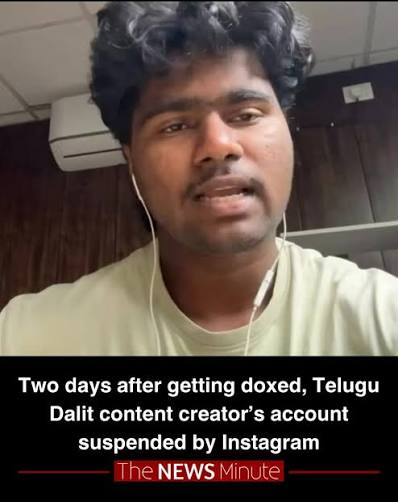
Following the doxing, Ajay approached the Panjagutta police station to register an FIR. While Ajay’s complaint petition has been noted, the FIR is yet to be lodged.
A day after Telugu content creator Ajay Radha Kumar was doxed by a Hindutva digital creator, his account was suspended by Instagram on Wednesday, August 5 for not following Instagram’s “Terms of Use on intellectual property.” Ajay, a 23-year-old content creator who has amassed over 1 lakh followers, is well known in the Telugu media landscape for posting feminist, Ambedkarite content.
Over the past few weeks, Ajay has been posting videos related to the Cockroach Janata Party (CJP) protests and public dissatisfaction with the Bharatiya Janata Party (BJP)-led Union government. He has also posted videos criticising the Telugu Desam Party (TDP) government’s push for data centres and the privatisation of medical colleges in Andhra Pradesh.
Since Saturday, August 1, a Hindutva digital creator identified as TD Rakesh Sharma has made a series of videos criticising Ajay.
“I can only assume this is in response to a video I did regarding posters at the CJP protest where PM Narendra Modi’s face was morphed and affixed on women’s bodies,” Ajay, a Dalit residing in Hyderabad, told TNM. In his video, Ajay is criticising the posters for the underlying sexism of correlating the Prime Minister’s inefficiency with womanhood.
In response to that video, Rakesh Sharma posted another stating that Ajay could lodge a complaint against him to the police if he wanted to. “But then you also have to explain how you justified PM Modi being presented as a woman,” Rakesh said. It is unclear how Rakesh arrived at this conclusion, as Ajay’s video does not justify the posters in question.
“He doesn’t seem to understand what I was saying. I spoke in Telugu, but still it was lost on him and other right-wing supporters,” Ajay said.
In a second video published on Sunday, August 2, Rakesh can be seen abusing Ajay for criticising PM Modi and Andhra Deputy CM Pawan Kalyan.
Things, however, took a turn on Monday, August 3, when Rakesh put out a reel on Instagram accusing him of duping women.
“He (Ajay) targeted women students at law colleges and converted one such Hindu woman in Badhrachalam into an atheist,” Rakesh can be seen saying. Ajay told TNM that the woman in question was a friend of his who had her own political views. Rakesh also accused Ajay of making ‘anti-Hindu videos’ and made casteist remarks against him.
But without stopping there, Rakesh put Ajay’s phone number on the video.
“On Monday evening alone between 6 pm and 12:30 am, I got at least 100-120 calls,” Ajay told TNM. “I started to block them because I kept getting calls and messages incessantly,” he said. TNM also saw a few screenshots sent to Ajay which included messages from strangers abusing Ajay, his family and making outright casteist and communal remarks.
Addressing the doxing, Ajay added that Rakesh had put out a lot of information about his identity. “A lot of information about me is factually incorrect. For instance, he said my mother is a Zilla Parishad Territorial Constituency (ZPTC) member, which is untrue, and made misleading statements about my family,” Ajay added.
Following the doxing, Ajay approached the Panjagutta police station to register an FIR. While Ajay’s complaint petition has been noted, the FIR is yet to be lodged. Rakesh also posted further videos accusing Ajay of “using women” and making further videos on Ajay’s caste location.
At the time of writing this article, Rakesh has posted 11 videos targeting Ajay.
Written by:Anjana Meenakshi
Edited by:Nandini Chandrashekar
Courtesy : TNM

DV Rao discussed the Dalit Panther movement of the 1970s and stressed the Agrarian Revolution
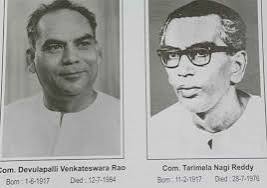
DV Rao, while dealing with politics of caste and casteism, commented on Dalit Panther movement (founded in 1972 May by Namdeo Dhasal, Raja Dhale, JV Pawar and others) and wrote on it way back in March 1974 issue of Proletarian Path, a journal published for sometime from Kolkata (then spelled as Calcutta) and edited jointly by DV Rao and Moni Guha.
The article is of historic interest and importance at a time a new book (see cover page below) appeared 50 years after the dalit panthers appeared. In the context of assertions by some people that communists ignored the caste question, and in the background of some confessions made by some communists, including those of ML groups, this article draws attention to what com DV Rao wrote more than half a century ago, much before the subaltern and identity movements entered India.
In fact, DV Rao discussed the related issues ever since his earliest available writings of 1946, during the Telangana struggle (1939-51 Oct) days. So did com T.Nagi Reddy (1917-1976 July 28), whose 50th death anniversary was observed in the two Telugu states recently. Several articles on these two comrades and their revolutionary contributions were published and archived by the countercurrents.org (See at the end of this article).
The latest book is titled:
Dalit Panther : The Truth Underlined by Arjun Dangle
( Translated from the original Marathi by Maya Pandit, Rs 990.
Published by Orient Blackswan Private Limited, 2026… 3-6-752 Himayatnagar, Hyderabad, Telangana 500 029, India. .. info@orientblackswan.com).
The blurb of the book says:
The Author Arjun Dangle is a major writer of the Dalit literary, socio-cultural and political movements in Maharashtra. He was a founder member of the the Dalit Panthers, and later was also the president of the State Unit of the Bharatiya Republican Party of India. His published works include Dalit Sahitya: Ek Abhyas (1978), his poetry collection Chhavani Halte Ahe, which won the Maharashtra State Award in 1978, and the edited volumes of translations from modern Marathi Dalit literature, Homeless in My Land (1992) and Poisoned Bread (2009).
About the movement it says:
Led by powerful writer-activists such as Namdev Dhasal, J. V. Pawar, Raja Dhale, Bhai Sangare, Avinash Mahatekar and Arjun Dangle, the Panther mounted a fierce challenge to the casteist political and literary establishment of Maharashtra, while sharing solidarity with the struggles of workers, women and farmers. In documenting this history, Dangle also revisits the enduring debate on the relationship between the Dalit movement and the Left, and between Ambedkarism and Marxism.
A Review of the book by scholar-activist Dr Anand Teltumbde is cited toward the end of this article.
DV Rao (1917 June -1984 July 12) discussed the caste question and dealt with atrocities against dalits from his earliest available writings of 1946. DV called for militant resistance against the same as an inseparable part of the agrarian revolution, which includes the struggle for abolition of landlordism and for distribution of land to the tiller. The dalit question is inseparable from the land question, without which it remains merely formal and verbal.
Words such as ‘Harijans’ and ‘Negroes’, it may be noted, were common in the political literature of those days, including this article of 1974, replaced later by the words ‘dalit’ and ‘Blacks’. The full text of the article, with its title, is given below (all emphases added).
*** ***
Dalit Panther movement and atrocities of landlords against the down-trodden
That the Indian society is stinking with caste divisions from time immemorial is a fact beyond dispute. That the religions and social reformist movements, which claimed and still claim preaching equality between one and all, failed to dismantle these divisions is also a fact which cannot be disputed. Therefore, a new approach is needed to solve the problem.
That there is a need to carry out an intense ideological struggle against the caste system cannot be denied by any one, who is for abolition of the system. Casteism intensifies caste division. A social reformist movement has some form of casteism as its content, or else it reduced itself into an idealist talk. Therefore, a revolutionary ideology is needed to fight it to the finish.
Caste system, a survival of slavery and feudalism, is linked with the present-day political system in India. Though the Constitution provides equality for all citizens, economic inequality (capitalist and labour, landlord and landless) i.e., legal and social inequality is practised.There is a law prohibiting untouchabi’ity, but it is practised. In the name of providing facilities, existence of scheduled and backward classes is legalised. All the parliamentary parties have their own share in encouraging casteism for the sake of votes, representation in parliament and legislatures, jobs and other facilities etc. To expect abolition of casteism from such parties is nothing sort of hoping against hope. On the other hand, a revolutionary power, which enforces the abolition of caste system with all the force at its command, can alone do away with it.
Behind the ideological-political frame work, there is the economic foundation of semi-slavery and semi-feudal relations in our country. The overwhelming majority of rural and urban poor, in which agricultural labour, poor peasants and industrial labour are included, come from certain castes in which the so-called Harijans ( ‘untouchables’ ) constitute considerable number. The landlords and the urban rich come from certain castes, in which poor and middle classes form a major part, as the rich is always smaller in number. There are some rich persons, though small in number, from the former category of caste, which are legally called as backward and scheduled castes.
The backbone of the casteism consists of this upper strata of society which is exploiting it for its ends, political as well as economic. Therefore abolition of landlordism is the first essential task to root out the caste division and untouchability. Hence the need of an agrarian revolution.
Not a day passes when we do not see the news of a landlord or a group of landlords harassing, torturing and killing the agricultural laborers and poor peasants in general, and untouchables and adivasis in particular. Not a single state is an exception. Such incidents are often described as atrocities committed by upper castes on the so-called lower castes. True, the landlords, by using their political power and economic domination, are able to divide the poorer strata. They are able to use the poor of the upper castes—often their own castes—for the purpose of committing such atrocities. Though the element of casteism is present in all these classes, they are essentially the atrocities by the landlords on the rural poor.
It is easy for the landlords to crush the resistance by the poor, as the former have arms while the latter have no arms and are disorganized. To characterise the clashes as inter-caste rivalries is to divert the attention of the people from the agrarian revolution for which conditions are matured.
The latest event, which has drawn the attention of the entire people in our country is the resistance put up by Dalit Panthers against the police and the poorer strata of upper castes in Bombay. Maharastra is the birth place of Dr. Ambedkar who has fought against untouchability in his own way, with the help of social reformist movement. He advised his followers to adopt Buddhism as their religion which is opposed to caste-division. A sizeable section has readily agreed and adopted it. They are called new-Buddhist. The Republican Party consists of Dr. Ambedkar’s foilowers. As a parliamentary party, it has become a victim of opportunism and careerism which the ruling Congress Party could utilise to split it so that it is no longer a force to reckon with. A section of the younger generation has organised itself into Dalit Panthers on the pattern of Black Panthers in USA, which is a Negro movement against the racial discrimination practised by the whites in that country.
Dalit Panthers are for the unity of the oppressed, irrespective of caste or creed. They are putting up a militant resistance to the atrocities of the upper caste Hindus and the police, a major part of whose officer-cadre belongs to the former. They have boycotted the parliamentary elections in the Central Bombay. For this they have had to face the wrath of the Congress in the form of police repressions. These are welcome features of their policy. They are yet to clarify their attitude towards ruling classes and the democratic revolution.
Experience has shown that social reformist movements and statutory safeguards can never emancipate the oppressed castes as long as the present political system continues because it defends the foreign interests and their native agents among whom landlords occupy an important position. One must adopt a revolutionary programme and policy and unite with all revolutionary forces which are working for emancipation of the oppressed people, to achieve abolition of casteism.
Agrarian Revolution- forms the axis of Peoples Democratic Revolution in India, for which revolutionary communists are working. Agrarian revolution alone can emancipate the rural poor from landlordism.
A revolutionary working class movement uniting all the oppressed in the urban areas, irrespective of castes or creed will have a leading role not only for the emancipation of the urban poor but for agrarian revolution also. Untouchables, being the most oppressed and forming the major part of the poor, have a key role to play among the poor.
Ruling classes and their party Congress are not sitting idle with folded hands. They are wooing the leadership of the Dalit Panthers. They do desire to retain its reformist and caste character, while the overwhelming majority of the Dalit Panthers are for a revolutionary line. This demands vigilance on their part against the machinations of the ruling party.
All the parliamentary parties have their own share in encouraging casteism for the sake of votes, representation in parliament and legislatures, jobs and other facilities etc. To expect abolition of casteism from such parties is nothing sort of hoping against hope.
They (Dalit Panthers) must unite with the revolutionary forces, which are working in our country.
The first and foremost task of the revolutionaries in India, is to organise these oppressed sections into a revolutionary movement and unite with them wherever they are organised on the basis of genuine anti-imperialist, anti-landlord programme. Revolutionaries will not only oppose but organise resistance against all sorts of oppression either by the upper strata or upper castes and help the oppressed (to) realize that the path of the emancipation lies in the path of revolution.
*** ***
Both comrades DV Rao and T.Nagi Reddy discussed the caste issue and dalit oppression in their writings, as also in their court statements of 1971.
The above article was written in 1974. We can today see, more clearly than ever, how this wooing by the ruling classes, which DV Rao mentioned in 1974, increasingly enticed and entrapped the later-day Ambedkarites, in UP, Maharashtra, Bihar, Jharkhand, Tamilnadu etc., who joined hands with forces they called as reactionary and brahminical. BSP joined hands not only with Congress but also with BJP in UP, more than once. RPI factions, as well as some successors of Dr. BR Ambedkar, joined hands alternatingly with Congress-led UPA as well as NDA led by BJP, and are working under PM Modi too. Some of them even merged into BJP. Ram Vilas Paswan and Manjhi of Bihar were typical opportunists. Udit Raj is another. Even some leaders from Dalit Panthers joined chauvinist, rabid ‘Hindutva tigers’ of Shiv Sena. Both the Congress and BJP played Hindutva card in relation to reservations that were extended to converts into Buddhism and Sikhism, but denied to those who converted to Christianity or Islam. Some Ambedkarites fell in line and opposed reservations for such converted dalits.
In such a context, one can examine DV Rao’s suggestions for unity among genuine forces on both sides.
*** ***
DV Rao contemplated the need for proletarian dictatorship in relation to casteism.
DV Rao was well aware of the deep roots of casteism. Even while he narrated experiences of unifying oppressed masses and revolutionary classes, dalits, adivasis, as well other rural poor, through revolutionary movements and struggles, with agrarian revolution as the principal task, he saw the possible need for the use of revolutionary state power when, in the same passage, he wrote:
“On the other hand, a revolutionary power, which enforces the abolition of caste system with all the force at its command can alone do away with it….”
*** ***
Scholar-activist Anand Teltumbde wrote a Review of the book, captioned,
Dalit Panthers: Beyond the Battle of the Founders, published by The india forum, JULY 06, 2026.
“ For readers unfamiliar with the period, it offers an invaluable introduction to one of the most remarkable episodes in post-Ambedkar politics; for those who lived through those years, it revives memories of an extraordinary political moment..
“Arjun Dangle’s memoir of the Dalit Panthers attributes their decline to personality clashes b/w founders. But the deeper crisis was structural: an inherited political culture of personalised authority, doctrinal Ambedkarism, and weak democratic structures that equality movements struggle to overcome,” he wrote in the review.”
Teltumbde points out:
“The Panther manifesto was intellectually bold: it expanded the category “Dalit” to encompass all oppressed and exploited people, drawing simultaneously on Ambedkar, Marxism, anti-caste radicalism, and Third World liberation struggles. It sought to transcend the limitations of conventional Ambedkarite politics without abandoning its emancipatory core. It was the first serious attempt to rethink Dalit politics for a new historical moment..
“That this project faltered is the central fact. Explaining why requires going beyond personalities.”
Despite all their divisions, the ruling classes are united with the urge for power, Teltumbde notes,and adds: .
“Movements of the oppressed possess no such adhesive. Their cohesion must be consciously constructed through democratic structures, ideological clarity, and shared strategic purpose. Where these are weak or underdeveloped, personal rivalries quickly acquire organisational significance, leadership becomes personalised, factionalism proliferates, and fragmentation follows almost as a structural tendency rather than an accidental outcome.”
“Understanding their significance requires looking back still further. Towards the end of his life, Ambedkar recognised with increasing clarity that the constitutional safeguards he had fought to secure would primarily benefit a relatively small stratum of educated urban Dalits.
“ The overwhelming majority remained in villages as landless agricultural labourers trapped in relationships of economic dependence that constitutional equality alone could not dissolve. It was this recognition that led him to contemplate a struggle for land—a shift from the politics of representation to the politics of material transformation..”
However, most Ambedkarites remained grooved, as noted by Teltumbde, who stresses as below :
“ Yet such economic struggles were routinely viewed with suspicion within Ambedkarite circles—communist terrain, not Dalit terrain—and the politics of dignity increasingly overshadowed the politics of material transformation.”
“Whenever Dalit mobilisation moved towards questions of land, labour and economic redistribution, it acquired an expansive social character capable of forging wider alliances among the oppressed.”
(For full text of the review, visit:
https://www.theindiaforum.in/. )
*** ***
It is in this background, DV Rao’s message, rooted in Telangana peasant armed struggle, assumes all importance:
“The backbone of the casteism consists of this upper strata of society which is exploiting it for its ends, political as well as economic. Therefore abolition of landlordism is the first essential task to root out the caste division and untouchability. Hence the need of an agrarian revolution.”
By MA Krishna
Courtesy : Counter Currents

Dalit youth in Tamil Nadu killed over horse grazing on an upper-caste man’s land
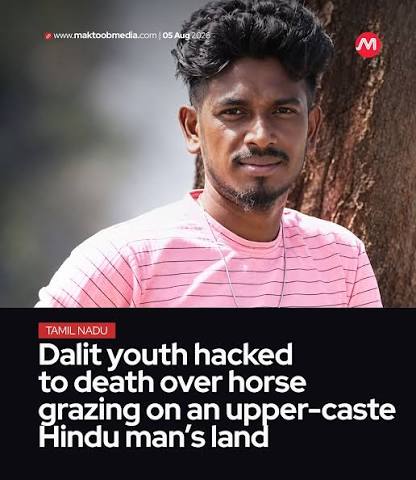
The organisation called for the immediate arrest of all the accused, statutory compensation for Ramar’s family, a government job for his wife, educational assistance for his two children, and advanced medical treatment for Prasanth.
A 26-year-old Dalit man was allegedly hacked to death in Tamil Nadu’s Dindigul district after being lured out of his home over a dispute involving a horse, with the Tamil Nadu Untouchability Eradication Front (TNUEF) describing the incident as a brutal caste-based murder and demanding the immediate arrest of all those involved, along with police protection for the surviving victim and his family.
According to TNUEF, the deceased, Ramar (26), and Prasanth (20), both residents of Poombarai village in Kodaikanal taluk, earned a living by transporting vegetables from the hills using horses before loading them into vehicles, Maktoob
Media reported.
The organisation alleged that on the night of July 30, a man identified as Raghu, who belongs to a dominant caste community, came to Ramar’s house claiming that their horse had grazed on his land and took him to the location.
TNUEF claimed that Ramar was then attacked by a group of five men armed with sickles, sustaining multiple cut injuries that proved fatal. It added that Prasanth, who had accompanied him, suffered serious injuries in the attack and is undergoing treatment at Theni Government Medical College Hospital.
Police have registered a case under the Scheduled Castes and Scheduled Tribes (Prevention of Atrocities) Act. However, TNUEF said that only one accused has been arrested so far, while the remaining suspects are yet to be apprehended.
The organisation called for the immediate arrest of all the accused, statutory compensation for Ramar’s family, a government job for his wife, educational assistance for his two children, and advanced medical treatment for Prasanth.
According to TNUEF, Prasanth’s mother informed a delegation that the family continued to receive threats after the attack and feared for her son’s safety.
TNUEF state president K. Sellakkannu urged the Tamil Nadu government to provide permanent police protection to Prasanth and his family, arrest all those allegedly involved in the murder and attempted murder without delay, and invoke stringent provisions of the SC/ST (Prevention of Atrocities) Act against the accused.
Meanwhile, TNUEF and the CPI(M) have been staging protests outside Dindigul Government Hospital, demanding the arrest of all the accused and justice for Ramar’s family. The organisations also alleged that district authorities attempted to pressure Ramar’s parents into accepting the body.
Courtesy : Madhyamam


Cyberabad Municipal Corporation considers dedicated grievance mechanism for SC/ST communities
Updated - August 05, 2026 08:24 pm IST - HYDERABAD

Cyberabad Municipal Corporation Commissioner G. Srijana interacting with Chairman of Telangana State Commission for SCs and STs, Bakki Venkataiah, in Hyderabad, on Wednesday.
The Cyberabad Municipal Corporation (CMC) is considering setting up a dedicated mechanism to address grievances of Scheduled Caste (SC) and Scheduled Tribe (ST) communities, as part of a series of welfare and development measures reviewed by the civic body on Wednesday.


Why Babasaheb Ambedkar considered Buddha's Dhamma to be the only religion suitable for the modern world?


"From time to time, people begin to question the beliefs and ideas that they have inherited from the past.
They compare these old beliefs with their present experiences and new knowledge. They try to find a way of thinking that is logical, satisfies the mind and heart, and gives them confidence to face the future.
Today, many people are studying religion more seriously than before.
This is happening for several reasons:
Science has progressed rapidly. New discoveries have changed the way people understand the world.
As a result, many traditional religious beliefs are being questioned.
People have become more thoughtful and intellectually curious. They want to understand religion through reason, evidence, and careful thinking, instead of accepting beliefs blindly.
Across the world, there is a strong desire to reform religion.
Many people want to remove superstition and irrational beliefs. Some even feel that religion should be replaced by a philosophy that is more rational, scientific, and beneficial to humanity.
Major social, political, and international events have also influenced religion. Wars, injustice, inequality, and social movements have forced people to think again about the role and value of religion in society.
Whenever people begin to question whether something is morally right or wrong, they also begin to question religion itself.
In times of great social change or personal crisis, people naturally ask some fundamental questions:
What is justice?
What is the purpose of human life?
Is there a God?
What is the nature of the universe?
How should we live?
These questions also lead people to examine whether their beliefs are true, how we gain knowledge, and what is real".
This is the background in which Dr. Babasaheb Ambedkar wrote "The Buddha and His Dhamma'.
He believed that religion should not be based on blind faith, miracles, rituals, or superstition.
It should be based on reason, morality, compassion, equality, and human welfare.
Therefore, he presented the Buddha's Dhamma as a rational and scientific way of life that helps human beings solve the problems of suffering and build a just society.
This is the reason why Dr. Babasaheb Ambedkar chose Buddhism.
Before introducing the Buddha's teachings, he explained that the modern world needs a religion that can stand the test of reason, science, morality, and social justice.
That is why Dr. Babasaheb Ambedkar considered the Buddha's Dhamma to be the only religion suitable for the modern age.
- Dr. Alka Raj (Dhoke) is a Mumbai based MBBS, MD (Obst. & Gynae) physician and a passionate student of Dr. B.R. Ambedkar’s philosophy, dedicated to making his profound teachings accessible to all through simple, clear language.


Comments
Post a Comment